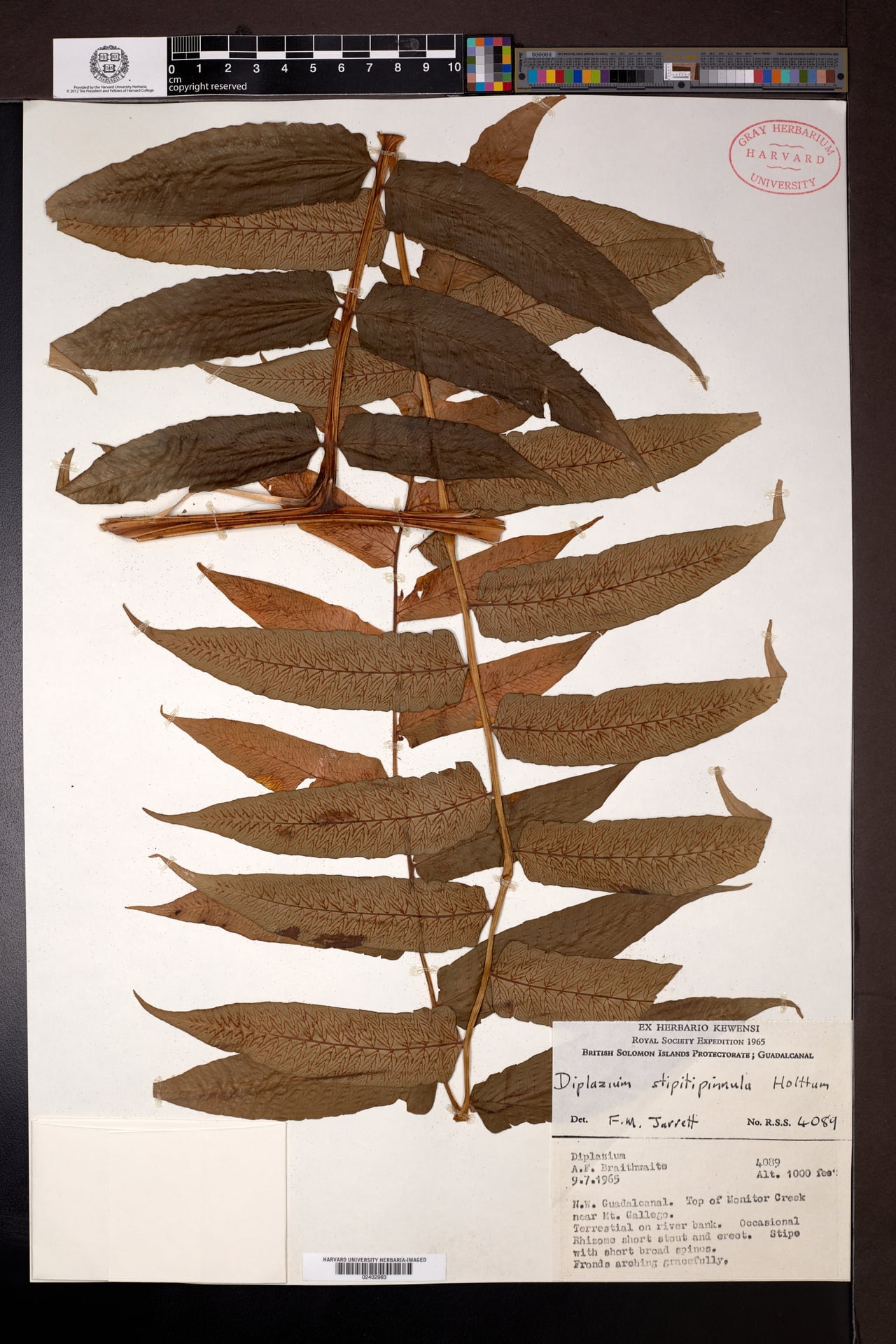
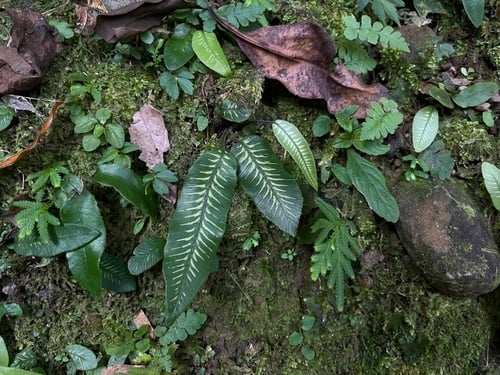
Allantodia maxima
(D. Don) Ching
gbif· cc-by-nc-sa
MBG
gbif· cc-by
Meise Botanic Garden
gbif· cc-by
Meise Botanic Garden
Description
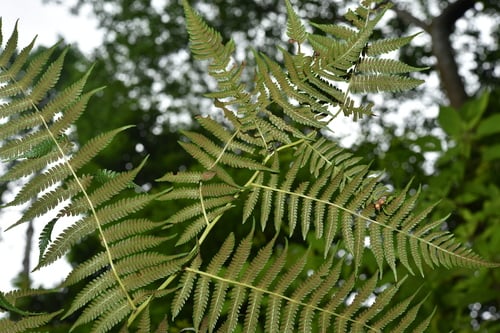
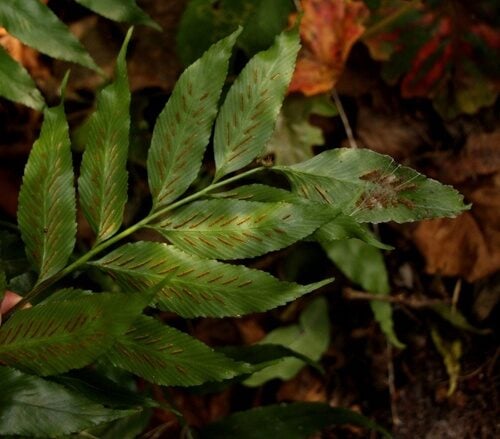
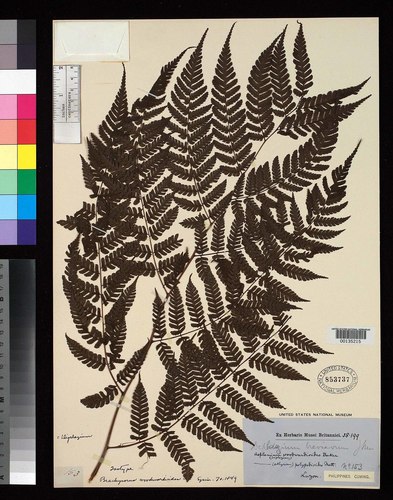
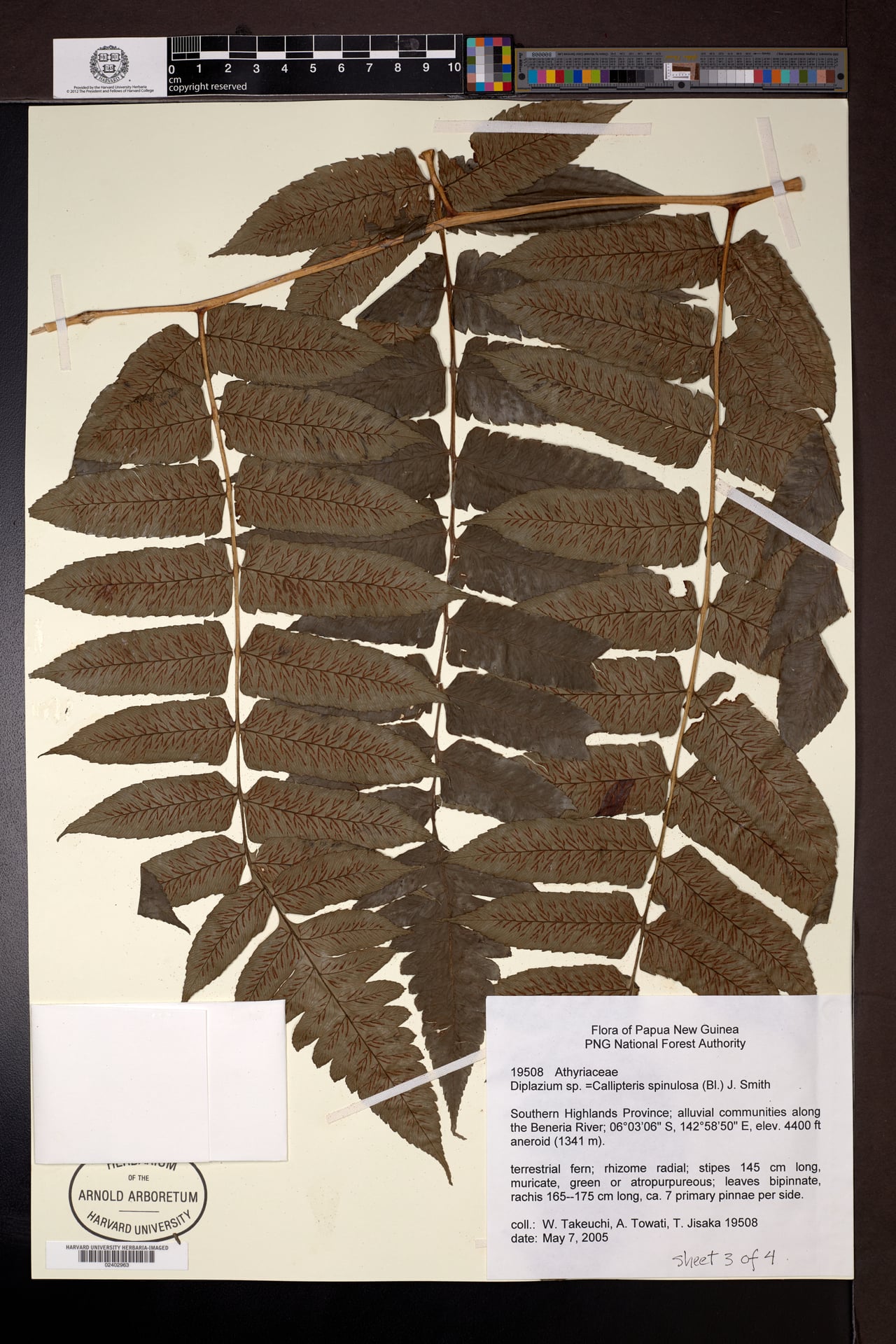
A fern. It grows 1-2 m tall. The rhizome is thick and scaly. The stalks are 40-80 cm long. They are erect in tufts. The blades are 60-120 cm long by 30-60 cm wide. They are divided once or twice. There are 9-12 leaflets 15-30 cm long.
Edible Uses
The leaves and fronds are boiled and eaten as a vegetable. The fronds are rubbed with cloth to remove hairs, then fried or pickled. Fronds are sold in local markets.
Traditional Uses
The leaves are boiled and eaten as a vegetable. They are rubbed with a cloth to remove hairs and then fried or used for pickles.
This uses section is brief — help expand it
Distribution
It is a tropical plant. It grows in ravines between 1,200-3,000 m above sea level.
Where It Grows
Asia, Australia, Bhutan, China, Himalayas, India, Indochina, Indonesia, Myanmar, Nepal, New Caledonia, Northeastern India, Pakistan, Philippines, SE Asia, Sikkim, Taiwan, Vietnam,
Other Information
Fronds are sold in local markets.
Notes
Also put in the family Woodsiaceae.
Synonyms
Also Known As
Cha-kawk, Khasrod, Lengadu, Neuro, Sanq hav dal laiv
References (8)
- Chettri, S., et al, 2018, Nutrient and Elemental Composition of Wild Edible Ferns of the Himalaya. American Fern Journal 108(3):95–106 (As Diplazium maximum)
- Joshi, N., et al, 2007, Traditional neglected vegetables of Nepal: Their sustainable utilization for meeting human needs. Tropentag 2007. Conference on International Agricultural Research for Development. (As Diplazium maximum)
- Kar, A., et al, 2013, Wild Edible Plant Resources used by the Mizos of Mizoram, India. Kathmandu University Journal of Science, Engineering and Technology. Vol. 9, No. 1, July, 2013, 106-126 (As Diplazium maximum)
- Masoodi, H. U. R. & Sundriyal, R. C., 2020, Richness of non-timber forest products in Himalayan communities—diversity, distribution, use pattern and conservation status. Journal of Ethnobiology and Ethnomedicine 16:56 (As Diplazium maximum)
- Ojha, R. & Devkota, H. P., 2021, Edible and Medicinal Pteridophytes of Nepal: A Review. Ethnobotany Research & Applications 22:16 (As Diplazium maximum)
Show all 8 references Hide references
- Rana, D., et al, 2019, Ethnobotanical knowledge among the semi-pastoral Gujjar tribe in the high altitude (Adhwari’s) of Churah subdivision, district Chamba, Western Himalaya. Journal of Ethnobiology and Ethnomedicine (2019) 15:10 (As Diplazium maximum)
- Thakur, D., et al, 2017, Why they eat, what they eat: patterns of wild edible plants consumption in a tribal area of Western Himalaya. Journal of Ethnobiology and Ethnomedicine (2017) 13:70 (As Diplazium maximum)
- Tsherig, K., 2012, Edible Wild Plants of Bhutan and their contribution to Food and Nutrition Security. Ministry of Ag. and Forests, Bhutan. www.fao.org (As Diplazium maximum)