Stereospermum fimbriatum
(Wall. ex G. Don) DC.;
Lilac padri tree, Snake padri tree
iNaturalist· cc-by-nc-nd
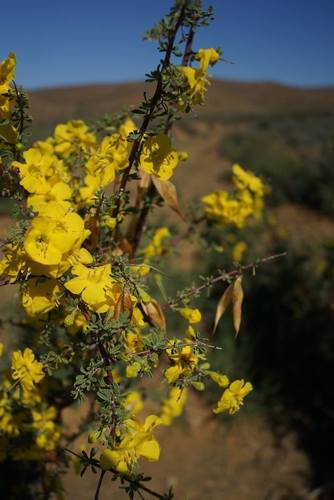
(c) Evan HB, some rights reserved (CC BY-NC-ND)
iNaturalist· cc-by-nc
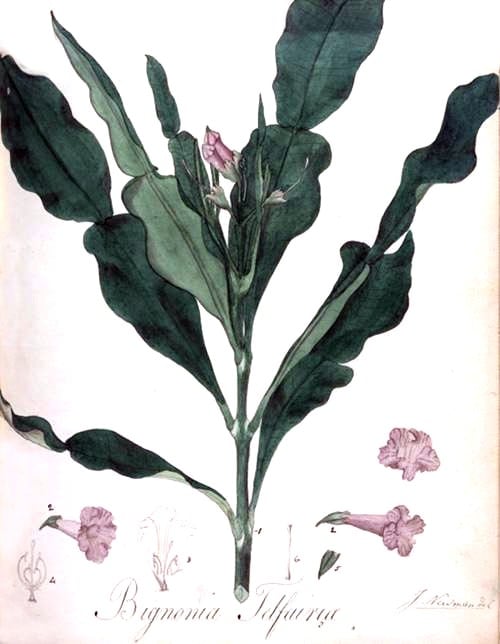
(c) Татьяна Химера, some rights reserved (CC BY-NC)
iNaturalist· cc-by-nc
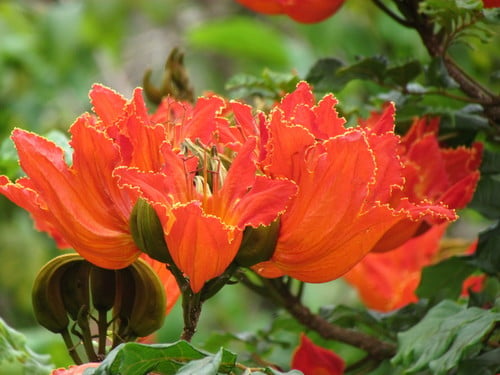
(c) Makena, some rights reserved (CC BY-NC)
Description
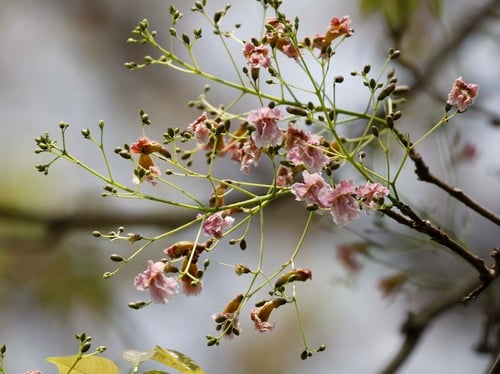
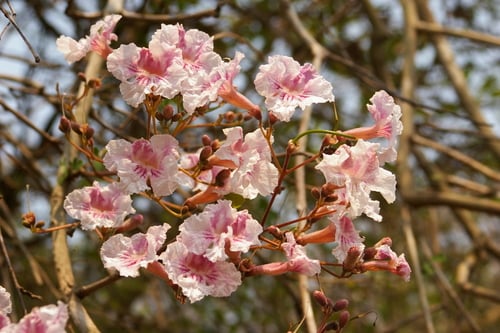
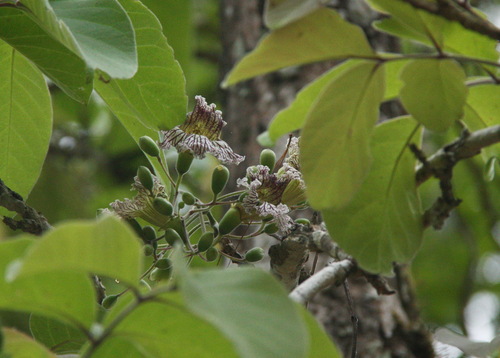
A tree. It grows 10-30 m tall. The trunk is straight and 150 cm across. It is slightly fluted. The bark is light grey and cracked and scaly. The leaves are compound with 3-4 pairs of leaflets. These are narrowly oval or oblong and 8-20 cm long by 3-8 cm wide. The base is unequal. They have a long point at the tip. The flowers are bell shaped and 7-8 cm long by 4-5 cm wide. They are hairy and have deeply fringed petals. They are lilac and hang down. The fruit is a cylinder shaped pod 37=75 cm long. It is rough, woody and twisted. It hangs from the branches and splits open. The seeds are flat and 2-3.5 cm long. They have wings at both ends.
Edible Uses
The fruit is eaten.
Medicinal Uses
The juice from the leaves is applied to the leaves to relieve earache. Mixed with limes it is used to relieve skin itchiness. A decoction of the roots is given to the mother as a protective medicine after childbirth.
Distribution
It is a tropical plant. It grows in lowland and hill forests and on rocky coasts up to 1,000 m above sea level.
Where It Grows
Asia, Himalayas, India, Indochina, Indonesia, Laos, Myanmar, Nepal, SE Asia,
Cultivation
Plants can be grown from seeds or by air-layering.
Other Uses
The rather dark coloured wood is hard and quite durable, even in contact with the soil. It is good for posts and beams. The tree can be used within its native range as a pioneer species for restoring native woodland on soils degraded by slash and burn cultivation and also for the consolidation of terraces and slopes,
Synonyms
Also Known As
Paw-taw-yer, Pohon polong ular, Pohon padri nila, Thakut-po, Than-that, Than-thit
References (2)
- A Rapid Participatory Biodiversity Assessment. 2007, Southern Lao PDR. IUCN p 42
- Sukarya, D. G., (Ed.) 2013, 3,500 Plant Species of the Botanic Gardens of Indonesia. LIPI p 527