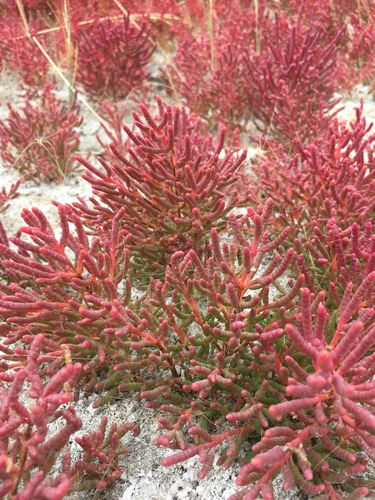
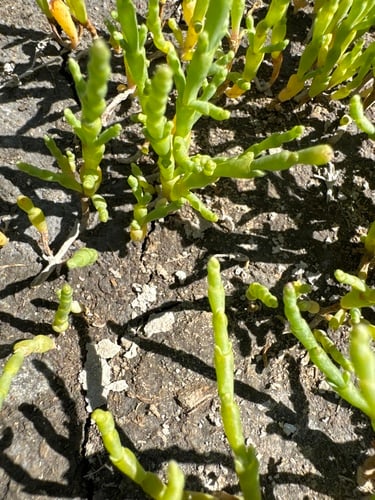
Chenopodium vulvaria
L.
Stinking Goosefoot
iNaturalist· cc-by-nc
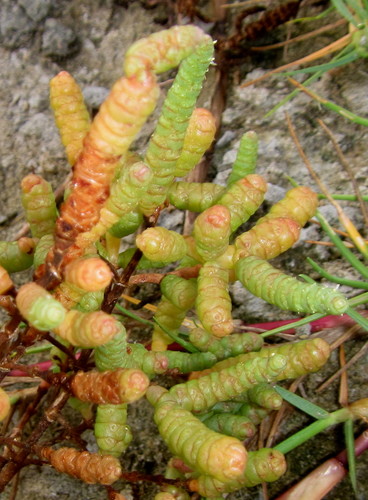
(c) Javier Peralta de Andrés, some rights reserved (CC BY-NC), uploaded by Javier Peralta de Andrés
iNaturalist· cc-by-nc
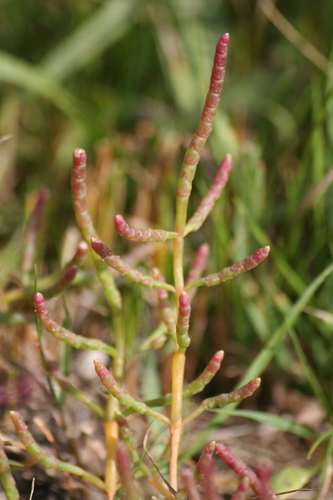
(c) Erik Grijalva, some rights reserved (CC BY-NC), uploaded by Erik Grijalva
iNaturalist· cc-by
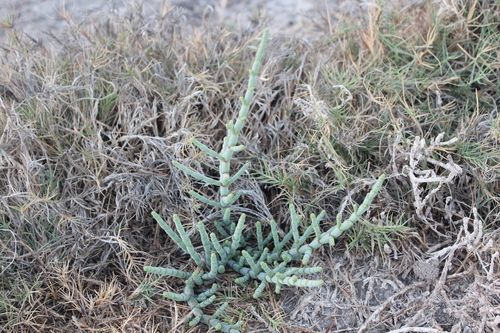
(c) John Barkla, some rights reserved (CC BY)
Summary
Source: WikipediaChenopodium vulvaria, stinking goosefoot is a foul-smelling plant that grows on bare ground in coastal habitats in the Mediterranean region and is associated with dung heaps and disturbed ground inland. It is native to southern Europe and western Asia and has spread to northern Europe and other temperate parts of the world with agriculture.
Description
A compact annual herb reaching 0.3 m (1 ft) tall, hardy to UK zone 4. Flowers July to September with seeds ripening August to October. Hermaphrodite and wind-pollinated. Grows in light, medium, and heavy soils, tolerates saline conditions, with mildly acid to basic pH. Requires full sun and prefers moist soil.
Edible Uses
Leaves and flower buds can be cooked and used like spinach, though raw leaves should only be eaten in small quantities due to toxicity concerns. It is worth noting that the strong smell of the leaves would discourage most people from using this plant, despite it being edible. The seed can be cooked and ground into a powder, then mixed with wheat or other cereal flours for making bread and similar foods. Seeds are small and fiddly; soak them overnight and rinse thoroughly before use to remove any saponins.
Medicinal Uses
The whole plant is antispasmodic and emmenagogue. It has been used to expel worms from the bowel, to treat fungal infections, and as a cardiac stimulant, as well as in the treatment of acute gout. An infusion of the dried leaves is used for hysteria and nervous complaints connected with women's ailments. In Chinese medicine, wormseed oil is used for rheumatism, eczema, and bites.
Known Hazards
Following the doctrine of signatures, mediaeval herbals contain mainly gynaecological uses for stinking goosefoot. Culpeper was enthusiastic in his praise for this plant: "it is common almost upon every dunghill. The works of God are freely given to man, his medicines are common and cheap, and easily to be found. I commend it for an universal medicine for the womb, and such a medicine as will easily, safely, and speedily cure any disease thereof." By the 20th century, however, it had rather fallen out of favour with herbalists. The chemical that gives stinking goosefoot its characteristic smell, TMA is now used in chemical processes and is known to be toxic at high concentrations.
Distribution
It is a temperate plant. It can grow in arid places. Tasmania Herbarium.
Where It Grows
Africa, Albania, Armenia, Australia, Austria, Azores, Balkans, Belarus, Britain, Caucasus, Central Africa, Central Asia, Chad, Czech Republic, Denmark, Egypt, Europe, Finland, France, Germany, Greece, Hungary, Israel, Italy, Kazakhstan, Luxembourg, Mediterranean, Middle East, Netherlands, North Africa, Pakistan, Poland, Portugal, Romania, Scandinavia, Spain, Sweden, Switzerland, Tajikistan, Tasmania, Turkey, Türkiye, Ukraine, Western Sahara,
Cultivation
An easily grown plant, succeeding in most soils but disliking shade. It prefers a moderately fertile soil. The plant contains trimethylamine, and when touched it gives off the nauseous odour of stale salt fish.
Propagation
Sow seed in spring directly in situ. Most of the seed typically germinates within a few days of sowing.
Other Uses
Gold and green dyes can be obtained from the whole plant.
Notes
There are about 100-150-250 Chenopodium species. They are mostly in temperate regions. Also put in the family Chenopodiaceae.
Synonyms
Also Known As
Jangli batoon, Chitta batoon, Goyalo, Kurund, Lulur, Sufaid bathoo
References (9)
- Ertug, F, Yenen Bitkiler. Resimli Türkiye Florası -I- Flora of Turkey - Ethnobotany supplement
- Flora of Australia, Volume 4, Phytolaccaceae to Chenopodiaceae, Australian Government Publishing Service, Canberra (1984) p 139
- Jardin, C., 1970, List of Foods Used In Africa, FAO Nutrition Information Document Series No 2.p 40
- Lazarides, M. & Hince, B., 1993, Handbook of Economic Plants of Australia, CSIRO. p 57
- Majeed, M., et al, 2021, Gathered Wild Food Plants among Diverse Religious Groups in Jhelum District, Punjab, Pakistan. Foods 2021, 10, 594.
Show all 9 references Hide references
- Plants for a Future database, The Field, Penpol, Lostwithiel, Cornwall, PL22 0NG, UK. http://www.scs.leeds.ac.uk/pfaf/
- Royal Botanic Gardens, Kew (1999). Survey of Economic Plants for Arid and Semi-Arid Lands (SEPASAL) database. Published on the Internet; http://www.rbgkew.org.uk/ceb/sepasal/internet [Accessed 8th April 2011]
- Sp. pl. 1:220. 1753
- Tasmanian Herbarium Vascular Plants list p 21