Chenopodium pallidicaule
Aellen
Canahua, Canihua, Quaniwa, Kaniwa
iNaturalist· cc-by
(c) Humber Alberto, some rights reserved (CC BY), uploaded by Humber Alberto
iNaturalist· cc-by
(c) Humber Alberto, some rights reserved (CC BY)
Summary
Source: WikipediaChenopodium pallidicaule, known as cañihua, canihua or cañahua (from Quechua 'qañiwa, qañawa or qañawi') and also kañiwa or kaniwa, is a species of goosefoot, similar in character and uses to the closely related quinoa (Chenopodium quinoa). Cañihua is native to the Andean region, with more than 200 varieties, and it has been farmed in the Altiplano for millennia. As a crop, cañihua has distinct characteristics, including tolerance of high mountain conditions, high content of protein and dietary fiber, and rich phenolic content.
Description
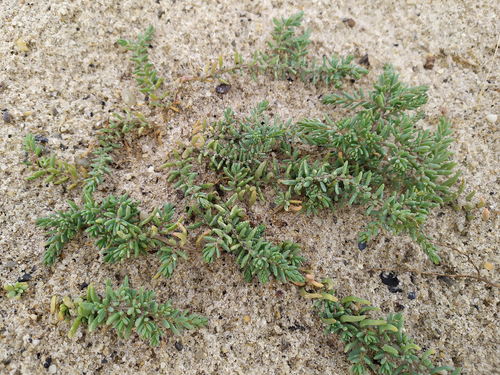
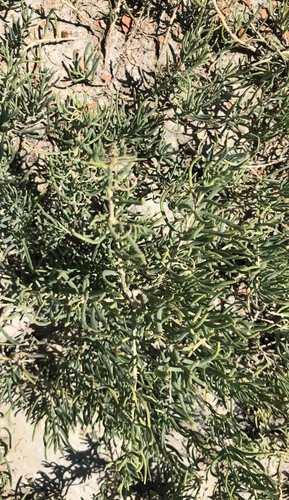
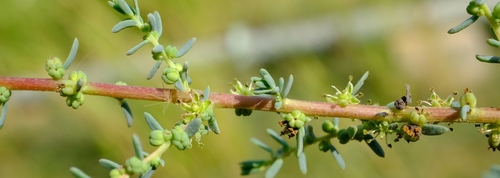
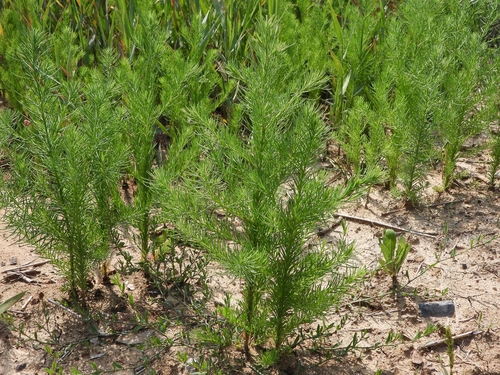
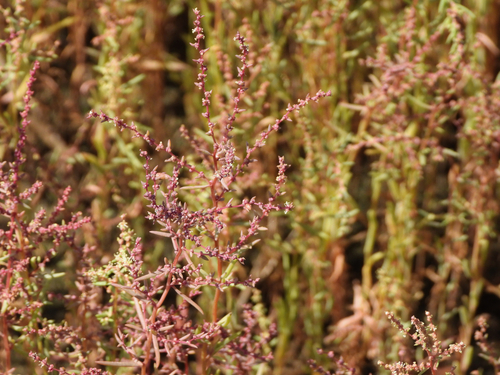
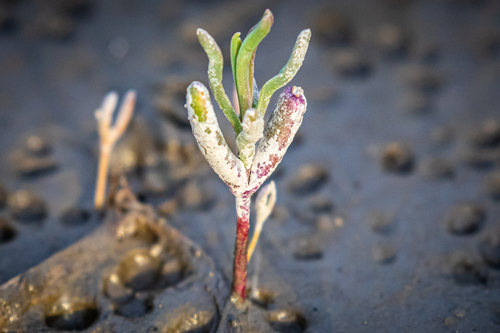
An annual plant. It grows 25-70 cm high. Two kinds occur. One is more erect while the other in more branching. The leaves have 3 lobes and have leaf stalks. The leaves are alternate. At maturity the leaves and stem turn yellow, pink, orange, red or purple. The flowers are on top and at the ends of branches. The flowers are small. The seed is 0.5-1.5 mm across. They are brown or black.
Edible Uses
The leaves are cooked and used like spinach, and raw leaves should only be eaten in small quantities due to toxicity. Young leaves contain up to 30% protein by dry weight. The seed, about 1mm in diameter, is very small but abundantly produced. It can be toasted and ground into a nutty-tasting powder suitable for use as a breakfast cereal, mixed with flour for bread, or made into biscuits. A hot beverage similar to hot chocolate can also be made from the seed. Unlike many related species, the seed contains little or no saponins and can be used without pre-treatment. Nutritionally, the seed is exceptional, containing around 16% high-quality protein — notably rich in lysine, isoleucine, and tryptophan — along with almost 60% carbohydrate and 8% fat.
Traditional Uses
The seed is used to make a flour called canihuaco. This is used in soups, stews, desserts and to flavour drinks. Up to 20% can be added to bread flour. The toasted seed can be ground and mixed with sugar and milk as a breakfast cereal.
Medicinal Uses
None known.
Known Hazards
The leaves and seeds of all members of this genus are more or less edible. However, many of the species in this genus contain saponins, though usually in quantities too small to do any harm. Although toxic, saponins are poorly absorbed by the body and most pass straight through without any problem. They are also broken down to a large extent in the cooking process. Saponins are found in many foods, such as some beans. Saponins are much more toxic to some creatures, such as fish, and hunting tribes have traditionally put large quantities of them in streams, lakes etc in order to stupefy or kill the fish. The plants also contain some oxalic acid, which in large quantities can lock up some of the nutrients in the food. However, even considering this, they are very nutritious vegetables in reasonable quantities. Cooking the plants will reduce their content of oxalic acid. People with a tendency to rheumatism, arthritis, gout, kidney stones or hyperacidity should take especial caution if including this plant in their diet since it can aggravate their condition.
Distribution
A tropical plant. It is cold resistant. It is more tolerant of cold than quinoa. It can tolerate frost and dry soils. It grows in the high Andes. It grows between 3,500 and 4,100 m altitude. It is not affected by daylength. The plant needs 500-800 mm of rain. It can tolerate drought. It cannot stand high humidity when young. It can tolerate temperatures down to -10°C and up to 28°C. It needs a pH between 4.8 and 8.5. It can tolerate some salinity.
Where It Grows
Andes, Argentina, Bolivia, Ecuador, Peru, South America,
Cultivation
Succeeds on most soils, including shallow soils, but dislikes shade. Prefers a moderately fertile soil. Once the plant is about 5cm tall it is very drought tolerant. The plant has short stout stems and resists wind and heavy rain. It is also more resistant than barley or quinoa to low night temperatures. Plants do not like excess humidity. They tolerate a pH in the range from 4.8 to 8.5 and shows some salt tolerance. Adult plants are unaffected by night frosts in the growing season, the seed can germinate at a soil temperature of 5°c, whilst the plant will flower at 10°c and ripen its seed at 15°c. Cañihua was once often cultivated for its edible seed in S. America, though it is seldom grown now. There are some named varieties. The seed is somewhat laborious to harvest and dehusk, it is enveloped in a papery husk and this is removed by soaking in water and then rubbing. Most varieties take about 150 days from seed sowing to harvest, but at least one quick-maturing type can be harvested in 95 days. Yields of 2.4 tonnes per hectare are average, but twice this has been recorded. Plants seem to be quite resistant to most pests and diseases. The flowers are closed at fertility and so seem to be almost exclusively self-pollinating. Plants are day-length neutral and have matured crops as far north as latitude 64°north in Finland. Although used in much the same way, this species is not very closely related to quinoa, C. quinoa.
Propagation
Sow seed in spring in situ. Most of the seed usually germinates within a few days of sowing.
Other Uses
Gold and green dyes can be obtained from the whole plant.
Production
Seeds ripe gradually. Plants are therefore pulled up and shaken but threshed again after 10-15 days. Yields of 400-800 kg per hectare are possible.
Other Information
It is a cultivated food plant.
Notes
There are about 100-150-250 Chenopodium species. They are mostly in temperate regions. It is 15-19 % protein. Also put in the family Chenopodiaceae.
Synonyms
References (19)
- Castillo, R. O., 1995, Plant Genetic Resources in the Andes: Impact, Conservation, and Management. Crop Science 35:355-360
- Dias, A. C., et al, 1955, Nutrient Content and Protein Quality of Quinua and Canihua, Edible Seed Products of the Andes Mountains. Journal of Agricultural and Food Composition 3: 531
- Etkin, N.L. (Ed.), 1994, Eating on the Wild Side, Univ. of Arizona. p 50 (As Chenopodium canihua)
- Facciola, S., 1998, Cornucopia 2: a Source Book of Edible Plants. Kampong Publications, p 77
- Hermandez Bermejo, J.E., and Leon, J. (Eds.), 1994, Neglected Crops. 1492 from a different perspective. FAO Plant Production and Protection Series No 26. FAO, Rome. p 12, 131
Show all 19 references Hide references
- Kew Plants of the World onLine
- Kiple, K.F. & Ornelas, K.C., (eds), 2000, The Cambridge World History of Food. CUP p 1744, 1750, 1841
- Plant Ecology - Reviews of Research. 1955, Arid Zone Research VI. UNESCO p 101
- Plants for a Future database, The Field, Penpol, Lostwithiel, Cornwall, PL22 0NG, UK. http://www.scs.leeds.ac.uk/pfaf/ (Also as Chenopodium canihua)
- Repert. Spec. Nov. Regni Veg. 26:126. 1929
- Repo-Currasco-Valencia, R. et al., 2009, Chemical and Functional Characteristics of Kaniwa (Chenopodium pallidicaule) Grain, Extrudate and Bran. Plant Foods for Human Nutrition. 64:94-101
- Simmonds, N.W., 1979, Quinoa and relatives, in Simmonds N.W.,(ed), Crop Plant Evolution. Longmans. London. p 29
- Tapia, M. E., The role of under-utilised plant species with regard to increased food security and improved health of poor poeople, in mountain regions. IIAP-PNUD/Peru
- Torre, de la L., et al, 2008, Enciclopedia de las Plantas Útiles del Ecuador. Herbario QCA. Pontificia Universidad Católica del Ecuador. p 157
- Ulian, T., et al, 2020, Unlocking plant resources to support food security and promote sustainable agriculture. Plants, People, Planet. 2020;2:421–445.
- USDA, ARS, National Genetic Resources Program. Germplasm Resources Information Network - (GRIN). [Online Database] National Germplasm Resources Laboratory, Beltsville, Maryland. Available: www.ars-grin.gov/cgi-bin/npgs/html/econ.pl (10 April 2000)
- van Wyk, B., 2005, Food Plants of the World. An illustrated guide. Timber press. p 130
- Wiersema, J. H. & Leon, B., 2013, World Economic Plants. A Standard Reference CRC Press. 2nd Ed. p 168
- World Checklist of Useful Plant Species 2020. Royal Botanic Gardens, Kew