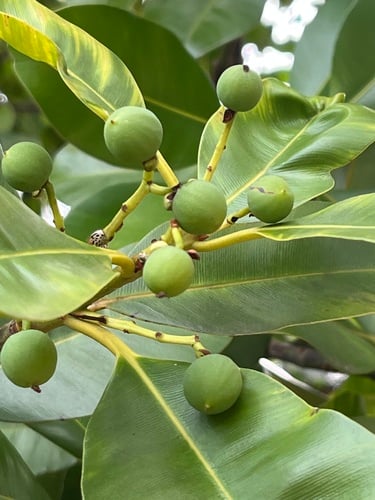
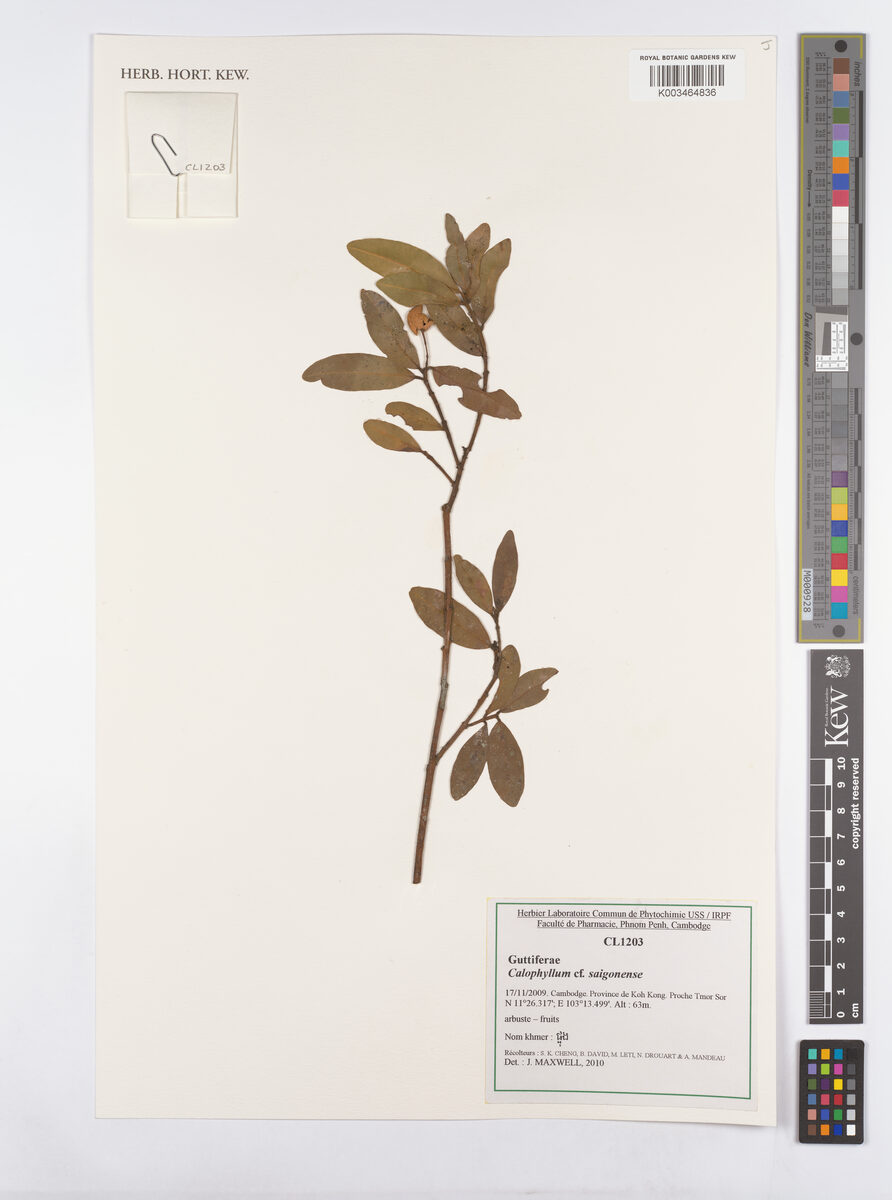
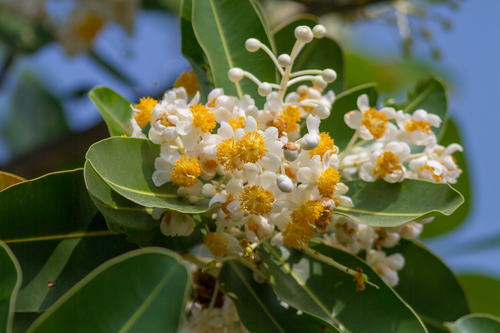
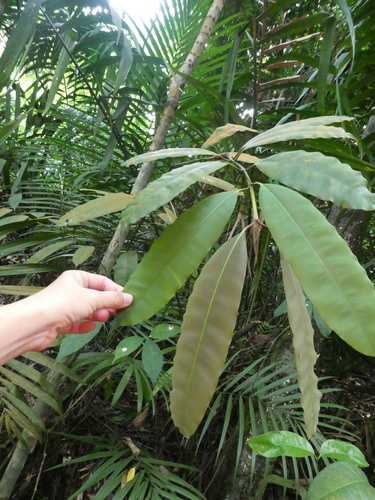
Calophyllum calaba
L.
iNaturalist· cc-by-sa
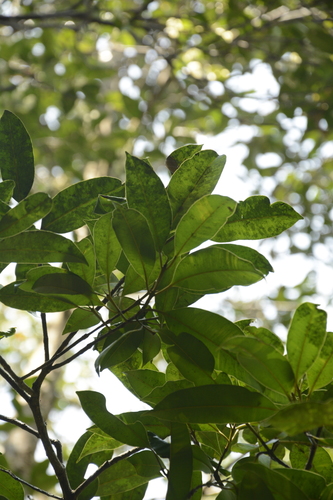
(c) Michael Reck, some rights reserved (CC BY-SA)
iNaturalist· cc-by-nc
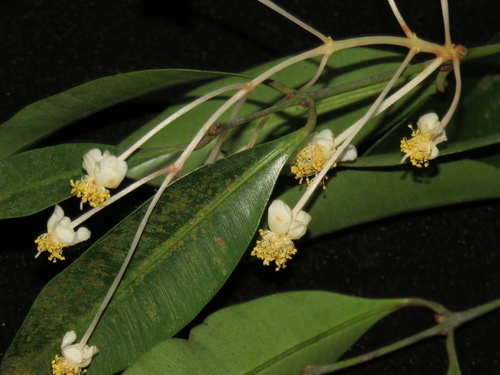
(c) Russell Cumming, some rights reserved (CC BY-NC)
iNaturalist· cc-by-nc
(c) Russell Cumming, some rights reserved (CC BY-NC)
Summary
Source: WikipediaCalophyllum bracteatum is a species of flowering plant in the Calophyllaceae family. It is found in Sri Lanka where it is known as ගුරු කින (guru kina) by local people.
Description
An evergreen tree. It grows 40 m tall. The trunk can be 1.5 m across. The leaves are narrowly oval and wedge shaped at the base. The flowers are in groups in the axils of leaves. The fruit are bright orange.
Edible Uses
The bright orange fruit are eaten raw and have a pleasant acid flavor.
Traditional Uses
The fruit are eaten raw. The fruit are pleasant and acid.
This uses section is brief — help expand it
Distribution
It is a tropical plant. It grows in the dry forest zone. It grows from sea level to 620 m above sea level. It is resistant to fire. It can sprout from stumps. It grows in areas with a rainfall between 1,500-2,000 mm per year. It grows in areas with an average temperate of 25°C.
Where It Grows
Andamans, Asia, Australia, Bolivia, Brazil, Cambodia, Caribbean, Grenada, Guianas, India, Indonesia, Laos, Malaysia, Mexico, North America, Peru, Puerto Rico*, SE Asia, Singapore, South America, Sri Lanka, Thailand, Trinidad, USA, Virgin Islands, West Indies,
Cultivation
Plants can be grown from seeds.
Other Uses
The sapwood is brown to whitish; the heartwood reddish to dark brown. The wood is used for construction, bullock cart poles, spars and axe handles.
Notes
Also put in the family Calophyllaceae.
Synonyms
Also Known As
Balud, Bangkur, Bintangor bunga, Guru kina, Kayu paku, Maria, Mu-ta-ngoh, Phaong, Ta ngo
References (3)
- Ashton, M. S., et al 1997, A Field Guide to the Common Trees and Shrubs of Sri Lanka. WHT Publications Ltd. p 145
- Fern, K., 2012, Tropical Species Database http://theferns.info/tropical/
- Soerianegara, I. & Lemmens, R. H. M. L., (Eds.) 1993, Timber trees: Major commercial timbers. Plant Resources of South-East Asia. Wageningen. No. 5(1). p 120