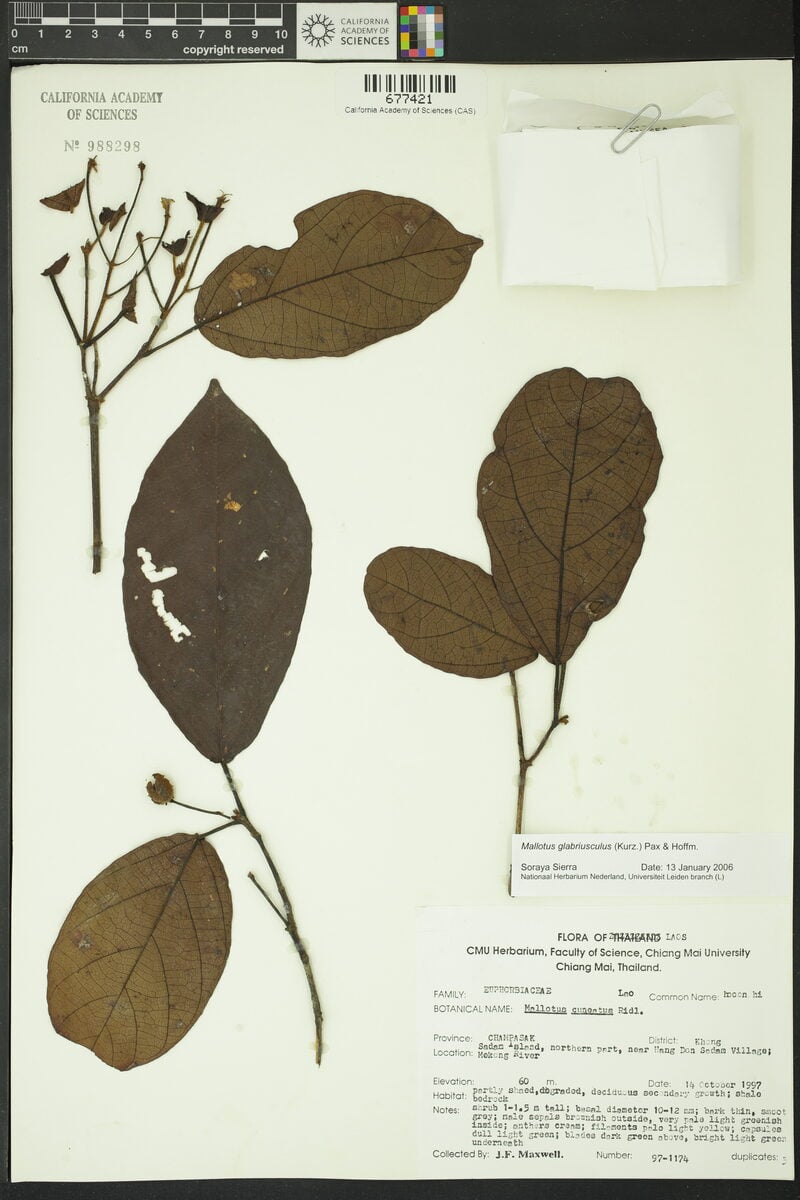
Triadica cochinchinensis
Lour.
iNaturalist· cc-by-nc-nd
(c) loupok, some rights reserved (CC BY-NC-ND)
iNaturalist· cc-by-nc
(c) 博甫, some rights reserved (CC BY-NC)
iNaturalist· cc-by-nc
(c) 博甫, some rights reserved (CC BY-NC)
Summary
Source: WikipediaTriadica cochinchinensis is a species of flowering plant in the spurge family, Euphorbiaceae. This tree is sometimes referred to by the common name mountain tallow tree. The seeds (as well as from those of Triadica sebifera) are the sources of stillingia oil, a drying oil used in paints and varnishes. The fatty coat of the seeds is known as stillingia tallow, hence its common name. The two species were formerly classified in the genus Stillingia, as Stillingia discolor and Stillingia sebifera (hence the name of the oil and tallow). At some time before 1950, this tree was reclassified into the genus Sapium as Sapium discolor. In 2002 or so it was reclassified again into the genus Triadica with its present name.
Description
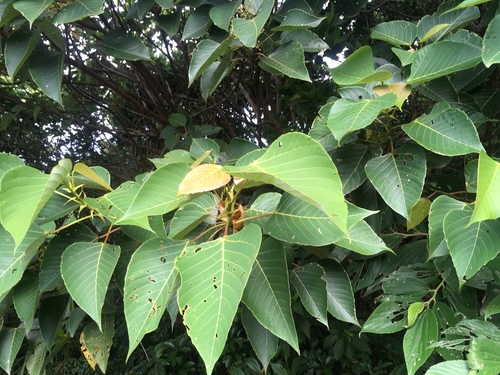
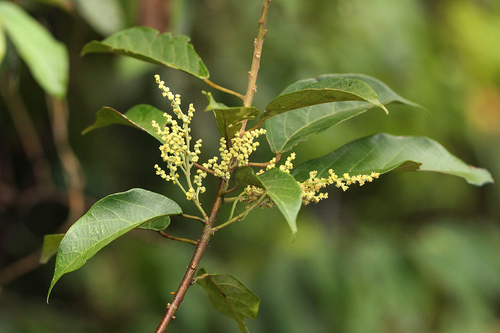
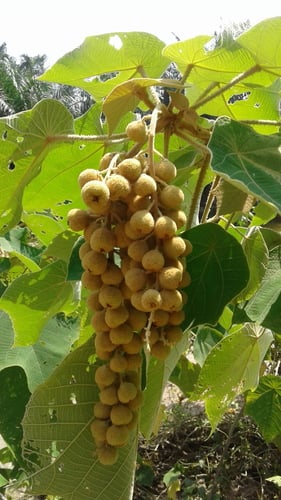
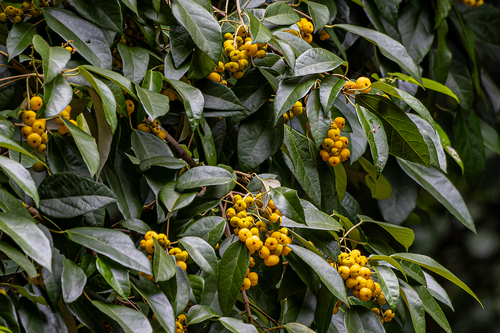
A tree. It grows 12-20 m tall. The small branches are grey-brown. The leaves are alternate. The leaf stalks are 2-8 cm long. The leaf blade is narrowly oval and 4-10 cm long by 3-5 cm wide. There are glands near the edge underneath. The flowers are in groups 4-9 cm long. The female flowers are in the lower part and the male flowers in the upper part. The fruit are black round capsules 7-9 mm across. The seeds are 4-5 mm long. There is a thin waxy aril or layer around the seeds.
Medicinal Uses
The roots and leaves are used in the treatment of traumatic injury and to detoxify snakebites.
Distribution
It is a subtropical plant. It grows in broad-leaved evergreen forests. In south China it grows between 100-1,100 m above sea level. In Sichuan and Yunnan.
Where It Grows
Asia, Cambodia, China, India, Indochina, Indonesia, Laos, Malaysia, Myanmar, Northeastern India, Philippines, SE Asia, Taiwan, Thailand, Vietnam,
Cultivation
The plant has a prolonged flowering season and often produces fruit all year round.
Propagation
Seed - do not cold stratify the seed since this can lead to secondary dormancy. It usually germinates within 4 weeks. Prick out the seedlings into individual pots when they are large enough to handle and plant out when large enough. Cuttings of half-ripe wood. Layering.
Other Uses
The seed is covered by a waxy aril. The seed coat is a source of oil, similar to that of Triadica sebifera, but poorer in palmitic acid and so not used commercially. The oil obtained from the kernel of the seed is used to make soap. The wood is soft, light and not of great use. A timber tree. It is used for making matchsticks, tea boxes etc.
Notes
Seeds are used for fat for candles.
Synonyms
Also Known As
Apianareo, Shan wu jiu
References (1)
- Singh, V. B., et al, (Ed.) Horticulture for Sustainable Income and Environmental Protection. Vol. 1 p 219 (As Sapium eugeniaefolium)