Chenopodium hybridum
L.
Maple-leaved goosefoot, Sowbane
iNaturalist· cc-by-nc
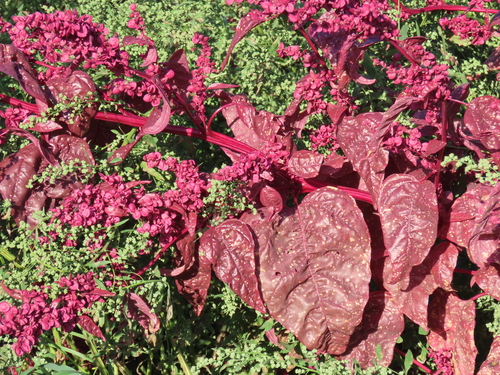
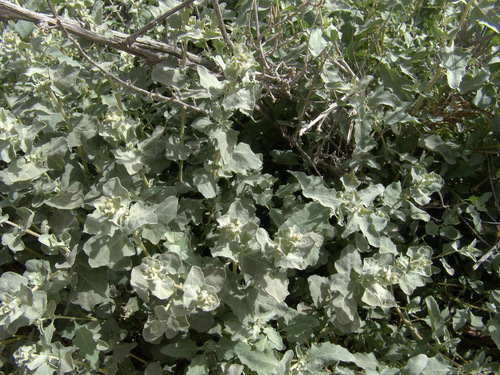
(c) Valentin Hamon, some rights reserved (CC BY-NC)
iNaturalist· cc-by-nc
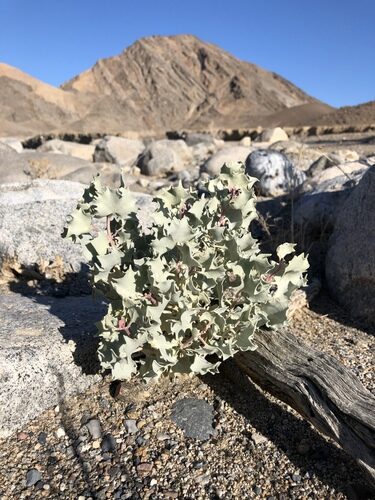
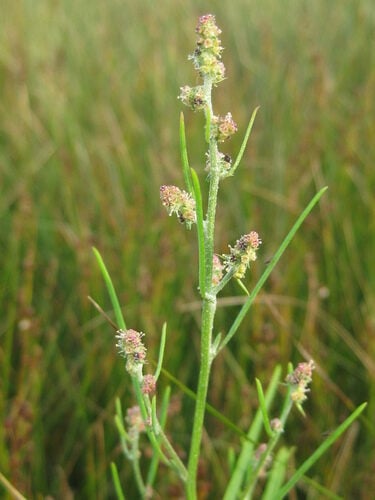
(c) James, some rights reserved (CC BY-NC)
iNaturalist· cc-by-nc
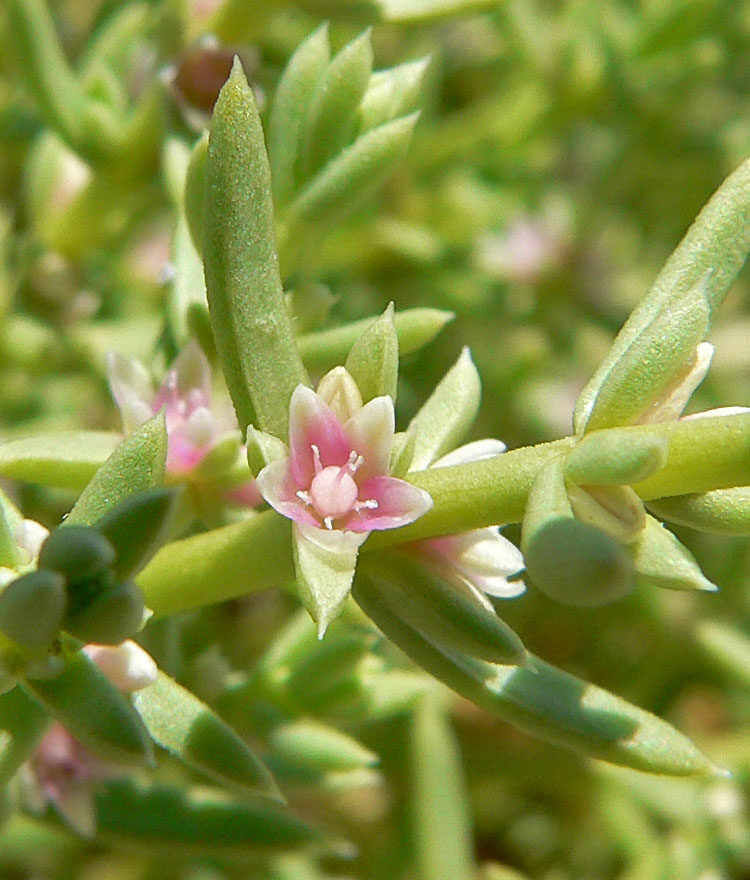
(c) James, some rights reserved (CC BY-NC)
Summary
Source: WikipediaAnnual herb growing 1.5 m tall. Flowers July to October with seeds ripening August to October. Hermaphroditic and wind-pollinated. Grows in light, medium, or heavy soils across mildly acidic to basic pH ranges. Requires full sun and moist conditions.
Description
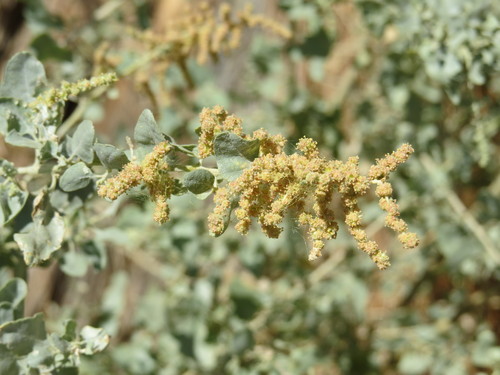
An upright herb. It grows 20-220 cm tall. It has many branches. The small branches are angular. The leaves are broadly oval or triangle shaped. They are 6-17 cm long and 5-13 cm wide. The flowers are green. They occur as several together in a loose group. The seed in black and 2-3 mm across.
Edible Uses
The leaves are cooked and eaten like spinach, and are probably best used as a pot herb. Raw leaves should only be eaten in small quantities due to toxicity concerns. The seed is small and fiddly and can be ground into a powder and mixed with wheat or other cereals for making bread. Before use, soak the seed overnight and rinse thoroughly to remove saponins.
Traditional Uses
The young shoots are repeatedly harvested before flowering and cooked and eaten as a leafy green.
This uses section is brief — help expand it
Medicinal Uses
Analgesic.
Known Hazards
The leaves and seeds of all members of this genus are more or less edible. However, many of the species in this genus contain saponins, though usually in quantities too small to do any harm. Although toxic, saponins are poorly absorbed by the body and most pass straight through without any problem. They are also broken down to a large extent in the cooking process. Saponins are found in many foods, such as some beans. Saponins are much more toxic to some creatures, such as fish, and hunting tribes have traditionally put large quantities of them in streams, lakes etc in order to stupefy or kill the fish. The plants also contain some oxalic acid, which in large quantities can lock up some of the nutrients in the food. However, even considering this, they are very nutritious vegetables in reasonable quantities. Cooking the plants will reduce their content of oxalic acid. People with a tendency to rheumatism, arthritis, gout, kidney stones or hyperacidity should take especial caution if including this plant in their diet since it can aggravate their condition. The plant contains 'leucine', a general analgesic, it is poisonous to swine.
Distribution
It is a temperate plant. It grows in forest margins, slopes, brush, valley margins. In Sichuan.
Where It Grows
Asia, Canada, China, Europe, C Asia, India, Korea, Japan, E India, Hawaii, Luxembourg, Mongolia, North America, Pacific, Russia, SE Asia, Siberia, Slovenia, Tibet, USA, Vietnam,
Cultivation
We have very little information on this species and do not know how well it will grow in Britain, but it should succeed as a spring sown annual. The following notes are based on the general needs of the genus. An easily grown plant, succeeding in most soils but disliking shade. It prefers a moderately fertile soil.
Propagation
Sow seed in spring in situ. Most of the seed usually germinates within a few days of sowing.
Other Uses
Gold and green dyes can be obtained from the whole plant.
Notes
There are about 100-150-250 Chenopodium species. They are mostly in temperate regions.
Synonyms
Also Known As
Izrodna metlika, Ji wo ju wo, Kinhgioi lai, Lie zha, Za pei li
References (11)
- Ambasta, S.P. (Ed.), 2000, The Useful Plants of India. CSIR India. p 119
- Chen, W., et al, 2021, Wild plants used by the Lhoba people in Douyu Village, characterized by high mountains and valleys, in southeastern Tibet, China. Journal of Ethnobiology and Ethnomedicine (2021) 17:46
- Hammer, K. & Spahillari, M., 1999, Crops of European origin. in Report of a networking group on minor crops. IPGRI p 44
- Hu, Shiu-ying, 2005, Food Plants of China. The Chinese University Press. p 377
- Michael, P., 2007, Edible Wild Plants and Herbs. Grub Street. London. p 101
Show all 11 references Hide references
- Plants for a Future database, The Field, Penpol, Lostwithiel, Cornwall, PL22 0NG, UK. http://www.scs.leeds.ac.uk/pfaf/
- Sp. pl. 1:219. 1753
- Wang, J. et al, 2013, A Study on the Utilization of Wild Plants for Food in Liangshan Yi Autonomous Prefecture. Plant Diversity and Resources. 35(4): 416-471
- Wang, J., et al, 2020, An ethnobotanical survey of wild edible plants used by the Yi people of Liangshan Prefecture, Sichuan Province, China. Journal of Ethnobiology and Ethnomedicine 16:10
- www.eFloras.org Flora of China
- Zhu Gelin (Chu Ge-ling); Steven E. Clemants, CHENOPODIACEAE [Draft], Flora of China