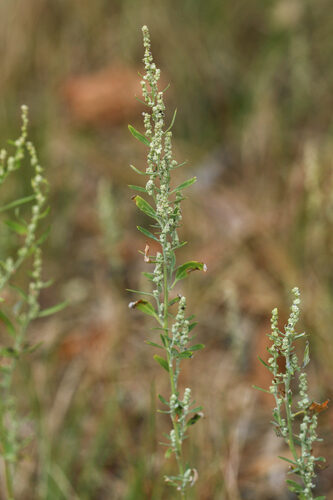
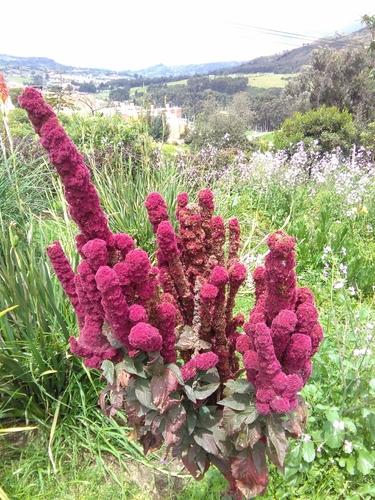
Chenopodium incisum
Poir.
Foetid goosefoot
iNaturalist· cc-by-nc
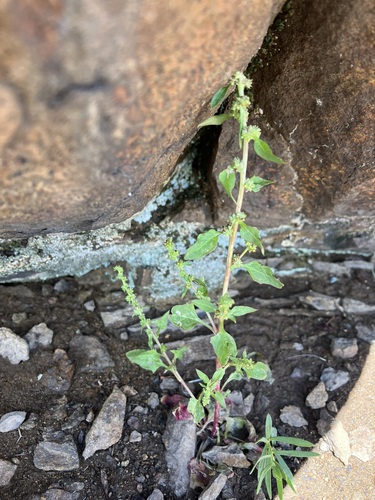
(c) Kat, some rights reserved (CC BY-NC)
iNaturalist· cc-by-nc
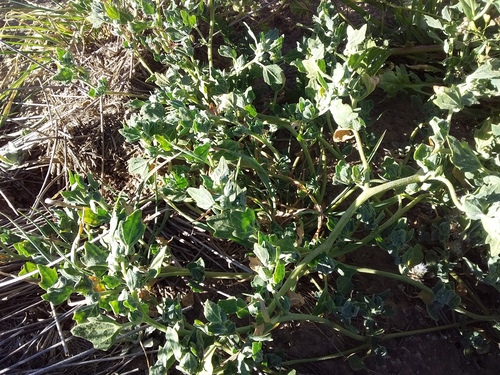
(c) Kat, some rights reserved (CC BY-NC)
iNaturalist· cc-by-nc
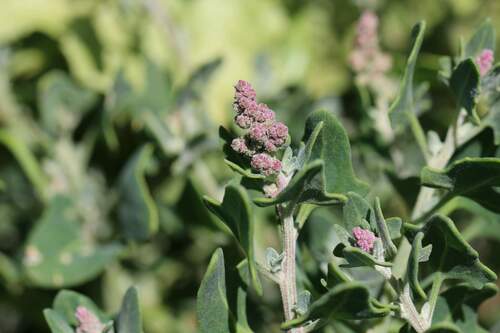
(c) Brandt Magic, some rights reserved (CC BY-NC)
Description
Foetid goosefoot is an annual herb in the Amaranthaceae family that grows 20-90 cm tall. It is found in temperate and subtropical regions, and in the tropics up to 1,800 m elevation.
Edible Uses
The leaves are eaten raw or cooked. The seeds are ground into flour and used in bread and dumplings.
Traditional Uses
The leaves are eaten raw or cooked. The seeds are ground into flour and used in bread and dumplings. Caution: It can contain saponins. These are poorly absorbed. The seeds should be soaked overnight then rinsed.
Known Hazards
It can contain saponins, which are poorly absorbed. The seeds should be soaked overnight then rinsed before use.
Distribution
It grows in temperate and subtropical places. In the tropics it grows up to 1,800 m above sea level.
Where It Grows
Central America, Mexico, North America, USA,
Cultivation
Plants can be grown from seed. Seed germinate easily and quickly.
Notes
There are about 100-150-250 Chenopodium species. They are mostly in temperate regions. Also put in the family Chenopodiaceae.
Synonyms
Also Known As
Epazote morado, Yerba del zorillo
References (5)
- Enum. pl. 1:290. 1809 (As Chenopodium graveolens)
- Fern, K., 2012, Tropical Species Database http://theferns.info/tropical/ (As Chenopodium graveolens)
- Piedra-Malagón, E. M. et al, 2022, Edible native plants of the Gulf of Mexico Province. Biodiversity Data Journal 10: e80565 p 8
- Plants for a Future database, The Field, Penpol, Lostwithiel, Cornwall, PL22 0NG, UK. http://www.scs.leeds.ac.uk/pfaf/ (As Chenopodium graveolens)
- van Wyk, B., 2005, Food Plants of the World. An illustrated guide. Timber press. p 129 (As Chenopodium graveolens)