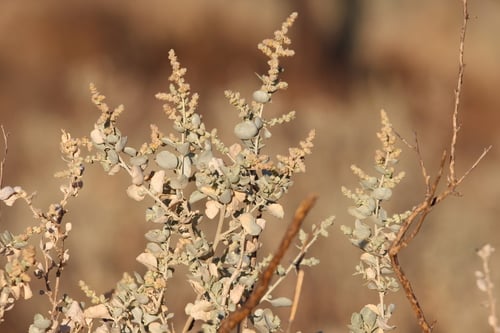
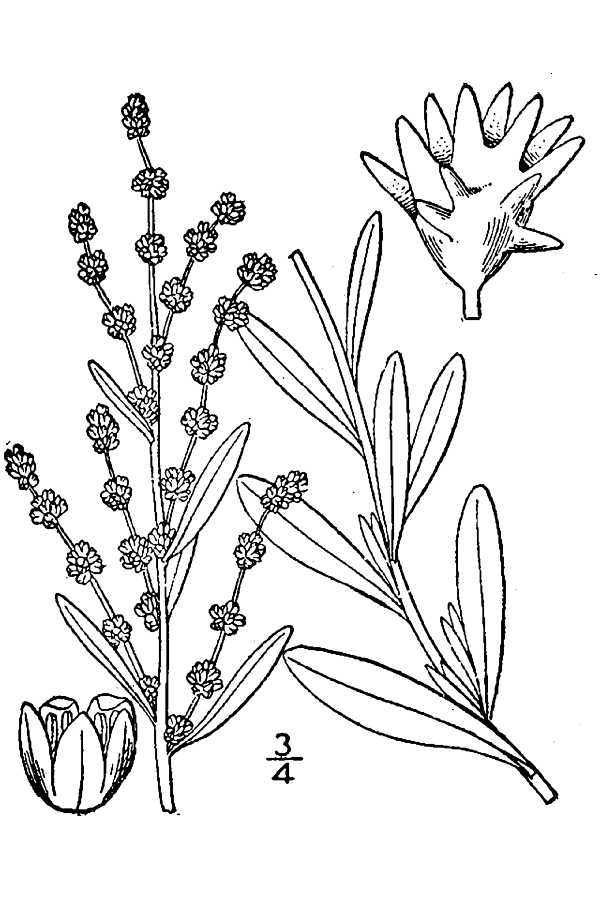
Chenopodium giganteum
G. Don.
Goosefoot, Tree spinach
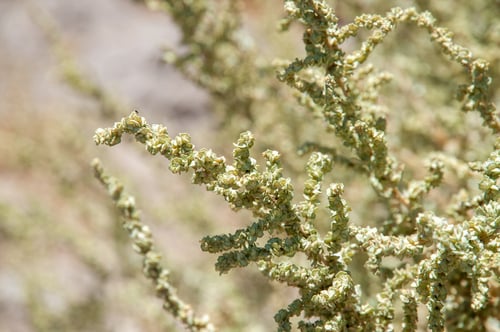
iNaturalist· cc-by
(c) candiru, some rights reserved (CC BY)
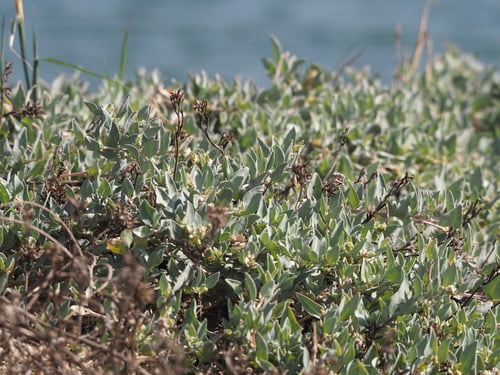
iNaturalist· cc-by-nc-sa
(c) London Permaculture, some rights reserved (CC BY-NC-SA)
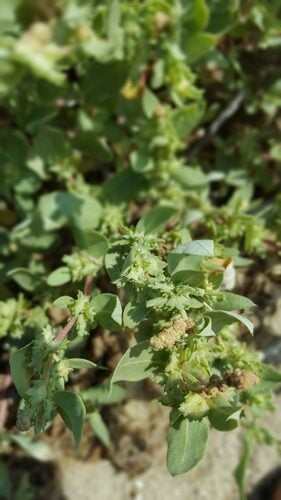
iNaturalist· cc-by-nc-sa
(c) Søren Holt, some rights reserved (CC BY-NC-SA)
Summary
Source: WikipediaChenopodium giganteum, also known as tree spinach, is an annual, upright many-branched forb with a stem diameter of up to 5 cm at the base, that can grow to a height of up to 3 m.
Description
A large annual herb. It grows up to 3 m tall. It spreads to 90 cm wide. The leaves are triangle shaped. The leaves are 15 cm long. The shoots are much branched. They have a purple tip. The flower clusters are purple. The seeds are 1.5 mm across and black.
Edible Uses
The leaves are cooked and make an excellent spinach substitute. Raw leaves should only be eaten in small quantities due to toxicity concerns. The seed, about 1.5mm in diameter, is small and fiddly but can be ground into a powder and mixed with wheat or other cereals for making bread. Before use, soak the seed overnight and rinse thoroughly to remove saponins.
Traditional Uses
The leaves are used as a potherb. The young leaves are fried.
This uses section is brief — help expand it
Medicinal Uses
None known.
Known Hazards
The leaves and seeds of all members of this genus are more or less edible. However, many of the species in this genus contain saponins, though usually in quantities too small to do any harm. Although toxic, saponins are poorly absorbed by the body and most pass straight through without any problem. They are also broken down to a large extent in the cooking process. Saponins are found in many foods, such as some beans. Saponins are much more toxic to some creatures, such as fish, and hunting tribes have traditionally put large quantities of them in streams, lakes etc in order to stupefy or kill the fish. The plants also contain some oxalic acid, which in large quantities can lock up some of the nutrients in the food. However, even considering this, they are very nutritious vegetables in reasonable quantities. Cooking the plants will reduce their content of oxalic acid. People with a tendency to rheumatism, arthritis, gout, kidney stones or hyperacidity should take especial caution if including this plant in their diet since it can aggravate their condition.
Distribution
It is a warm temperate plant. It is native to northern India. It suits hardiness zones 8-11.
Where It Grows
Africa, Argentina, Asia, Australia, Britain, China, East Africa, Eswatini, Europe, France, Himalayas, India*, Japan, Korea, Madagascar, Nepal, South Africa, Southern Africa, South America, Swaziland, Taiwan, Zambia, Zimbabwe,
Cultivation
An easily grown plant, succeeding in most soils but disliking shade. It prefers a moderately fertile soil. This species is closely related to C. album, and was probably derived from it through cultivation. The tree spinach is sometimes cultivated for its edible leaves, there are some named varieties. 'Magentaspreen' is a vigorous plant growing 1.5 metres tall. It has large leaves, the new growth is a brilliant magenta colour. Tastiest when young, the leaves are eaten raw or cooked like spinach. A warm climate is required in order to ripen the seed.
Propagation
Sow seed in spring in situ. Most of the seed usually germinates within a few days of sowing.
Other Uses
Gold and green dyes can be obtained from the whole plant. The stout stems have been used for making walking sticks.
Other Information
It is an attractive cooked vegetable. It is often cultivated.
Notes
There are about 100-150-250 Chenopodium species. They are mostly in temperate regions. Also put in the family Chenopodiaceae.
Synonyms
Also Known As
Bothua, Zhang li
References (20)
- Bircher, A. G. & Bircher, W. H., 2000, Encyclopedia of Fruit Trees and Edible Flowering Plants in Egypt and the Subtropics. AUC Press. p 22 (As Chenopodium amaranticolor)
- Biswas, K. & Das, A. P., 2011, Documentation of wild leafy vegetables from the tribal dominated parts of Malda District of Paschimbanga, India. Recent Studies in Biodiversity and Traditional Knowledge in India 301 - 306. 2011.
- Bull. Soc. Bot. France 54:181. 1907 (As Chenopodium amaranticolor)
- Chen, B. & Qiu, Z., Consumer's Attitudes towards Edible Wild Plants, Ishikawa Prefecture, Japan. p 22 www.hindawi.com/journals/ijfr/aip/872413.pdf (As Chenopodium album var. centrorubrum)
- Cundall, P., (ed.), 2004, Gardening Australia: flora: the gardener's bible. ABC Books. p 370
Show all 20 references Hide references
- Facciola, S., 1998, Cornucopia 2: a Source Book of Edible Plants. Kampong Publications, p 77
- Grubben, G. J. H. and Denton, O. A. (eds), 2004, Plant Resources of Tropical Africa 2. Vegetables. PROTA, Wageningen, Netherlands. p 179
- Hu, Shiu-ying, 2005, Food Plants of China. The Chinese University Press. p 377
- Hwang, HS, et al, 2014, Distribution characteristics of plant in the Ungseokbong Mountain, Gyeongsangnam-do, Korea. Journal of Asia-Pacific Biodiversity. 7(2014) e164-e178 (As Chenopodium album var. centrorubrum)
- Jardin, C., 1970, List of Foods Used In Africa, FAO Nutrition Information Document Series No 2.p 66
- Kang, Y., et al, 2012, Wild food plants and wild edible fungi in two valleys on the Qinling Mountains (Shaanxi, central China) Journal of Ethnobiology and Ethnomedicine; 9:26
- Kim, H. & Song, M., 2013, Ethnobotanical analysis for traditional knowledge of wild edible plants in North Jeolla Province (Korea). Genetic. Resour. Crop Evol. (2013) 60:1571-1585 (As Chenopodium album var. centrorubrum)
- Plants for a Future database, The Field, Penpol, Lostwithiel, Cornwall, PL22 0NG, UK. http://www.scs.leeds.ac.uk/pfaf/
- Prodr. fl. nepal. 75. 1825
- Swaziland's Flora Database http://www.sntc.org.sz/flora
- Ulian, T., et al, 2020, Unlocking plant resources to support food security and promote sustainable agriculture. Plants, People, Planet. 2020;2:421–445.
- USDA, ARS, National Genetic Resources Program. Germplasm Resources Information Network - (GRIN). [Online Database] National Germplasm Resources Laboratory, Beltsville, Maryland. Available: www.ars-grin.gov/cgi-bin/npgs/html/econ.pl (10 April 2000)
- Wiersema, J. H. & Leon, B., 2013, World Economic Plants. A Standard Reference CRC Press. 2nd Ed. p 168
- World Checklist of Useful Plant Species 2020. Royal Botanic Gardens, Kew
- Zhu Gelin (Chu Ge-ling); Steven E. Clemants, CHENOPODIACEAE [Draft], Flora of China