Maytenus acuminata
(L.f.) Loes.
iNaturalist· cc-by-nc
(c) Felix Riegel, some rights reserved (CC BY-NC), uploaded by Felix Riegel
iNaturalist· cc-by-nc
(c) Sally Adam, some rights reserved (CC BY-NC), uploaded by Sally Adam
iNaturalist· cc-by-sa
(c) Tony Rebelo, some rights reserved (CC BY-SA), uploaded by Tony Rebelo
Summary
Source: WikipediaMaytenus acuminata (also called the silky bark, umNama or Sybas) is a variable, medium-sized, evergreen tree indigenous to Africa, including South Africa. Here it is especially common on the verges of afro-montane forest. It produces small, white flowers and bright orange or red berries. In cultivation it is useful as a light shade tree, as an ornamental, or for attracting birds. The reference to "silk" in some of its common names derives from the way in which some of its sap will congeal into silky threads on contact with air. This can most easily be demonstrated by carefully breaking a leaf across, then gently pulling the two halves apart (see illustration). The threads appear at points that coincide with the positions where major veins in the leaf have broken. The threads do not appear to have any practical use, least of all as fibre.
Description
A shrub or small tree. It can grow 1-15 m tall. The leaves are dark green and shiny above and more pale underneath. They are 2-12 cm long by 1-5 cm wide. They are narrowly oval. The flower petals are green or white and can be tinged with red. The fruit capsule is orange to red and 4-11 mm long. It has 3 lobes. There are 1-3 seeds and they ate brown.
Edible Uses
The roots are used in soup. The fruit and roots are edible portions.
Traditional Uses
The roots are used in soup.
This uses section is brief — help expand it
Distribution
It is a tropical plant. It grows between 1,400-2,400 m above sea level.
Where It Grows
Africa, Asia, Bangladesh, Burundi, Cameroon, Central Africa, Congo DR, East Africa, Gabon, Kenya, Malawi, Mozambique, Myanmar, Rwanda, SE Asia, South Africa, Swaziland, Tanzania, Uganda, Zambia, Zimbabwe,
Synonyms
Also Known As
Lacucuku
References (2)
- Mutie, F. M., et al, 2023, Important Medicinal and Food Taxa (Orders and Families) in Kenya, Based on Three Quantitative Approaches. Plants 2023, 12, 1145
- Oryema, C., et al, 2013, Edible wild fruit species of Gulu District, Uganda. International Journal of Biology and Biological Sciences Vol 2(4) pp 068-082
More from Celastraceae
Elaeodendron sphaerophyllum
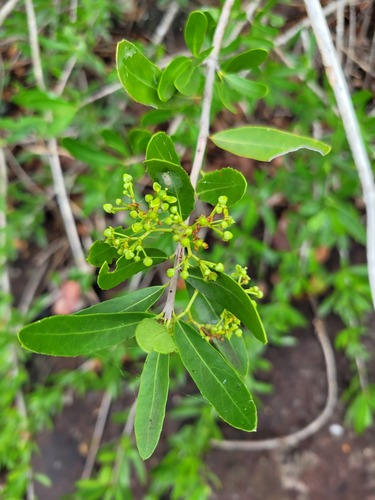
Elaeodendron transvaalense
Transvaal saffronwood, Three-petalled cassine
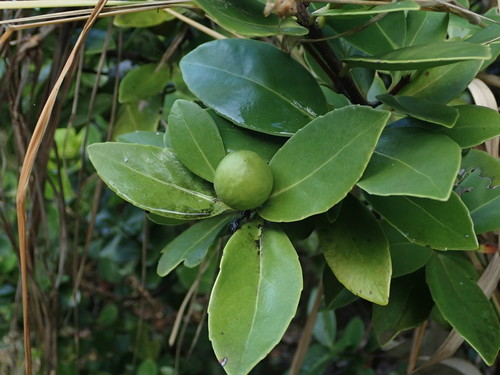
Elaeodendron xylocarpum
Marble tree, Olive wood
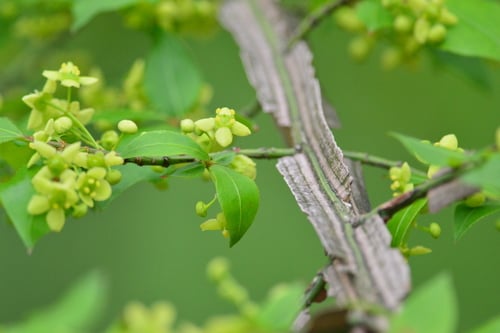
Euonymus alatus
Winged spindle tree, Cork bush, Winged Euonymus, Burning bush
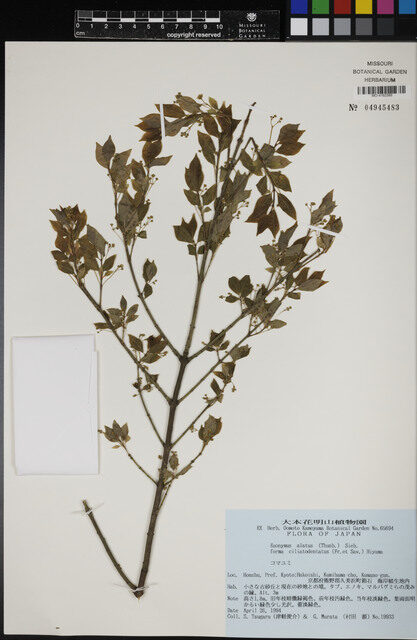
Euonymus alatus apterus
Winged Spindle Tree
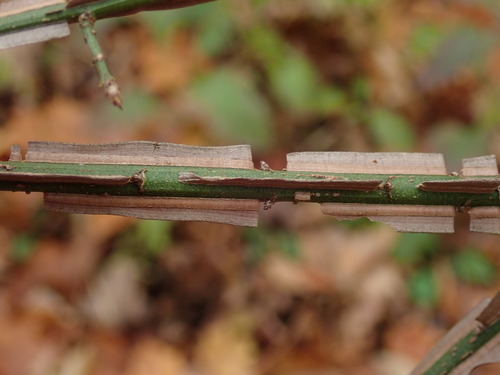
Euonymus alatus subsp. apterus
Winged spindle tree