Cassine peragua
L.
Cape cherry
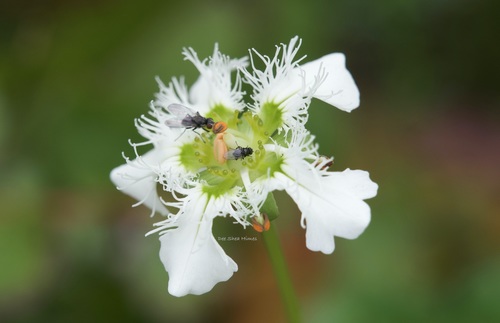
iNaturalist· cc-by-nc
(c) songeziwe, some rights reserved (CC BY-NC)
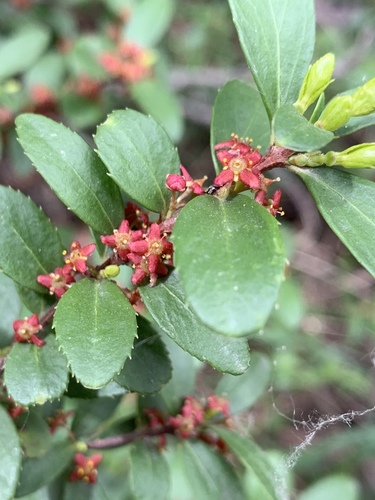
iNaturalist· cc-by-nc
(c) Andrew Massyn, some rights reserved (CC BY-NC), uploaded by Andrew Massyn
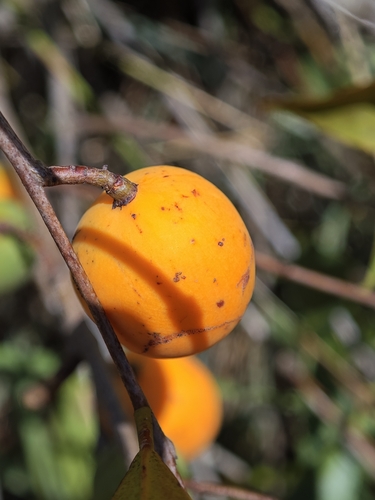
iNaturalist· cc-by-nc
(c) Heather and Andrew Hodgson, some rights reserved (CC BY-NC), uploaded by Heather and Andrew Hodgson
Summary
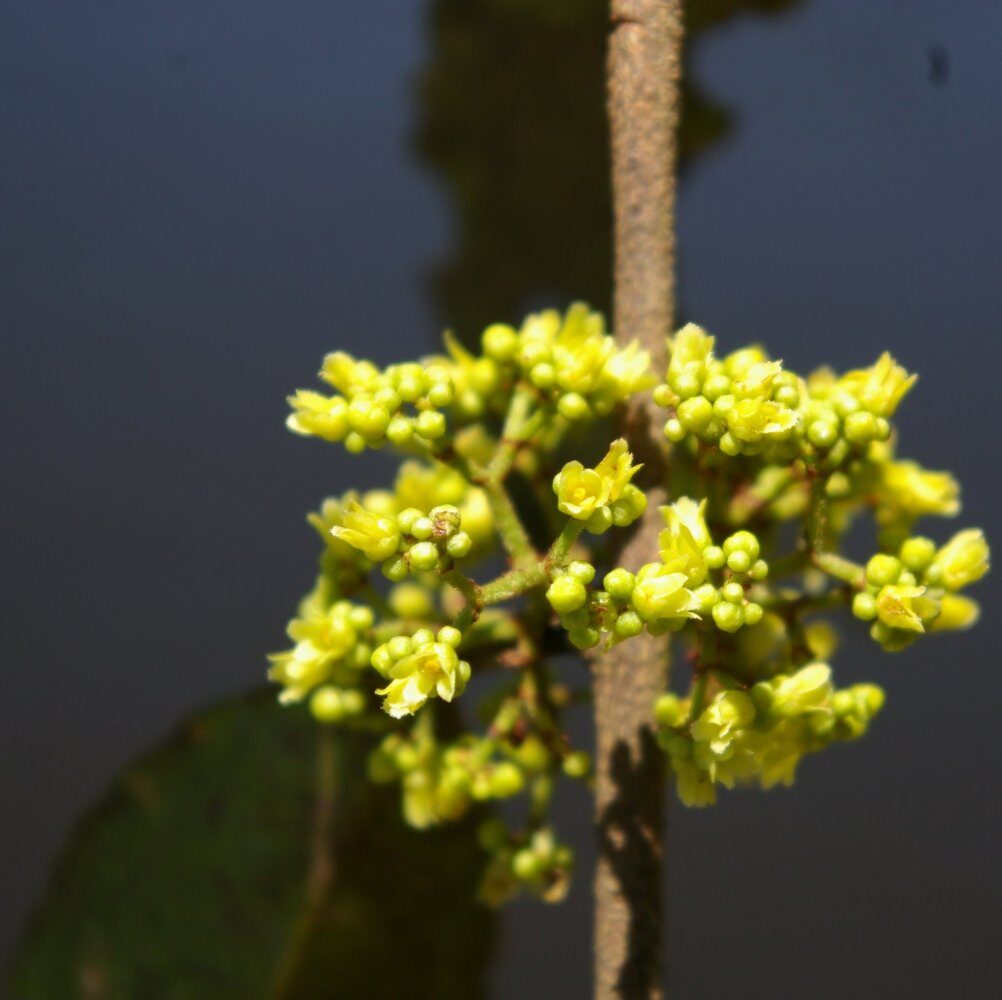
Source: WikipediaCassine peragua, also known as Cape saffron, bastard saffron and forest spoonwood, is a medium-sized tree with fragrant flowers, decorative fruits and a saffron-coloured trunk. It is indigenous to the Afro-montane forests of South Africa.
Description
A small tree. It grows 2-5 m tall. It can be taller. The leaves are tough, round and leathery. They are usually dark green. The flowers are in small bunches. They have a strong scent. The fruit are berries that are green and darken to black or purple.
Edible Uses
The fruit are eaten as a snack.
Traditional Uses
The fruit are eaten as a snack.
This uses section is brief — help expand it
Distribution
It is a subtropical plant.
Where It Grows
Africa, Eswatini, South Africa, Southern Africa, Swaziland,
Notes
There are 80 Cassine species. Most are in Africa.
Nutrition
| Part | Moisture | kJ | kcal | Protein | Vit A | Vit C | Iron | Zinc |
|---|---|---|---|---|---|---|---|---|
| Fruit | 85.7 | 205 | 49 | 1.1 | — | — | 1 | 0.2 |
Synonyms
Also Known As
Umbhukhuze, Umboyi
References (6)
- De Vynk, J. C., et al, 2016, Indigenous edible plant use by contemporary Khoe-San descendants of South Africa's Cape South Coast. South African Journal of Botany. 102 (2016) 60-69
- INFOODS:FAO/INFOODS Databases
- Long, C., 2005, Swaziland's Flora - siSwati names and Uses http://www.sntc.org.sz/flora/
- Ruiters-Welcome, A. K., 2019, Food plants of southern Africa. Ph.D. thesis. Univ. of Johannesburg p 42
- Wehmeyer, A. S, 1986, Edible Wild Plants of Southern Africa. Data on the Nutrient Contents of over 300 species
Show all 6 references Hide references
- Welcome, A. K. & Van Wyk, B.-E., 2019, An inventory and analysis of the food plants of southern Africa. South African Journal of Botany 122 (2019) 136–179