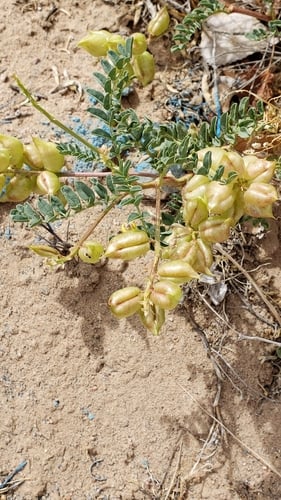
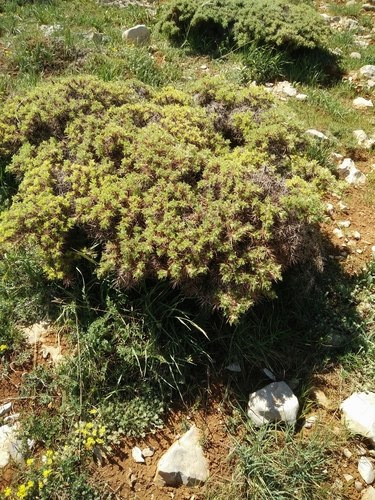
Vigna friesiorum
Verdc.
gbif· cc-by
Meise Botanic Garden
gbif· cc-by
Meise Botanic Garden
gbif· cc-by-nc-sa
MBG
Description
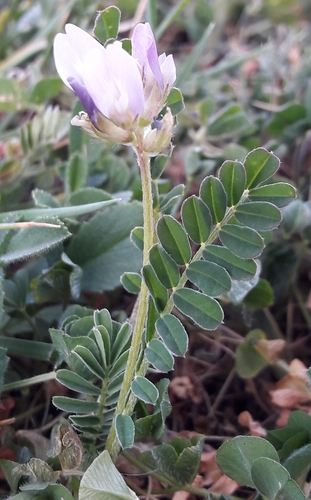
A small erect herb. It has many branches. It grows 20-30 cm high. It grows from a narrow tuber. The tuber is 15-25 cm long by 2 cm wide. It is reddish brown on the surface. The stems are weak. The leaves have long narrow leaflets. The leaves have long leaf stalks. The leaflets are slightly hairy and do not have lobes.
Edible Uses
The root tuber is peeled and chewed for its sweet sap. The tuber, root, fruit, and pods are edible.
Traditional Uses
The root tuber is peeled and chewed for its sweet sap.
This uses section is brief — help expand it
Medicinal Uses
The root tuber is chewed for its sweet sap.
Distribution
It is a tropical plant. In Kenya it grows between 400-1,700 m altitude. It is in grassland usually on red clay.
Where It Grows
Africa, East Africa, Ethiopia, Kenya, Tanzania, Uganda,
Cultivation
Plants are grown from seeds.
Synonyms
Also Known As
Camee hoolaa, Olgisoyiai
References (3)
- Gemedo-Dalle, T., et al, 2005, Plant Biodiversity and Ethnobotany of Borana Pastoralists in Southern Oromia, Ethiopia. Economic Botany 59(1) pp. 43-65 (As Vigna friesiorum)
- Maundu, P. et al, 1999, Traditional Food Plants of Kenya. National Museum of Kenya. 288p
- Mutie, F. M., et al, 2023, Important Medicinal and Food Taxa (Orders and Families) in Kenya, Based on Three Quantitative Approaches. Plants 2023, 12, 1145