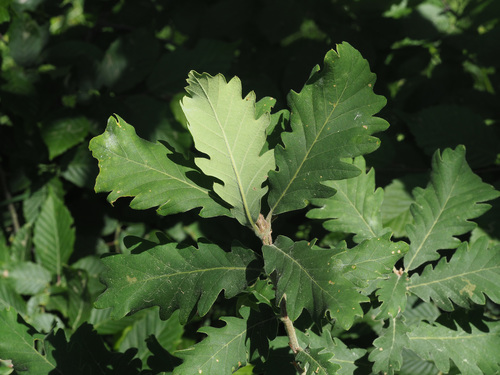
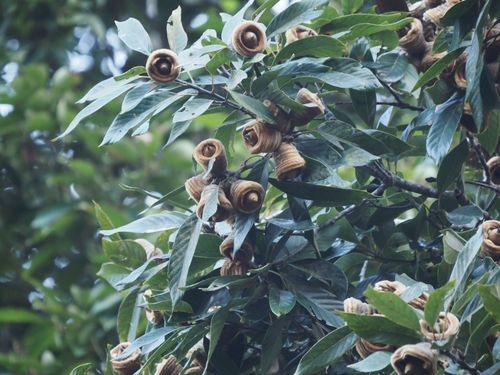
Quercus infectoria subsp. boissieri
Olivier, (Reuter) O. Schwarz.
gbif· cc-by-nc
Shlomi Levi
gbif· cc-by-nc
Shlomi Levi
gbif· cc-by-nc
Shlomi Levi
Summary
Source: WikipediaQuercus infectoria or the Aleppo oak is a species of oak well known for producing galls (called manjakani in Malaysia, majuphal in India) that have been traditionally used for centuries in Asia medicinally while also used in softening leather and in making black dye and ink.
Description
A tree.
This description is brief — help expand it
Edible Uses
Nowadays, gallnut extracts are also widely used in pharmaceuticals, food and feed additives, dyes, inks, and metallurgy.
Traditional Uses
The fruit or nuts are roasted and eaten.
This uses section is brief — help expand it
Medicinal Uses
The galls of Quercus infectoria have also been pharmacologically documented to possess astringent, antidiabetic, antitremorine, local anaesthetic, antiviral, antibacterial, antifungal, larvicidal and anti-inflammatory activities. The main constituents found in the galls of Quercus infectoria are tannin (50-70%) and small amount of free gallic acid and ellagic acid. The wide range of pharmacological activities of this plant might support the efficacy of extract preparation of Quercus infectoria that are widely used in Malaysia for treating many kinds of health problems since many decades ago. The nutgalls have been pharmacologically documented on their antiamoebic, anticariogenic and anti-inflammatory activities, to treat skin infections and gastrointestinal disorders. Quercus infectoria can be used as a thickener in stews or mixed with cereals for making bread. Also known as Majuphal in Indian traditional medicine, manjakani has been used as dental powder and in the treatment of toothache and gingivitis. The so-called "Aleppo tannin" is Tannic acid gained from Aleppo oak galls, which displays unique chemical properties essential in the preparation of gold sols (colloids) used as markers in Immunocytochemistry.
Distribution
It is a temperate plant.
Where It Grows
Turkey, Türkiye,
Also Known As
Mese
References (2)
- Dogan, A. & Tuzlaci, E., 2015, Wild Edible Plants of Pertek (Tunceli-Turkey). Marmara Pharmaceutical Journal 19: 126-135
- Ertug, F., 2000, An Ethnobotanical Study in Central Anatolia (Turkey). Economic Botany Vol. 54. No. 2. pp. 155-182