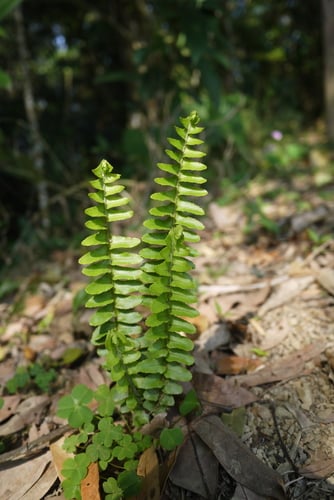
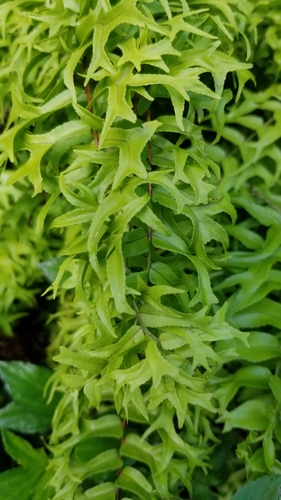
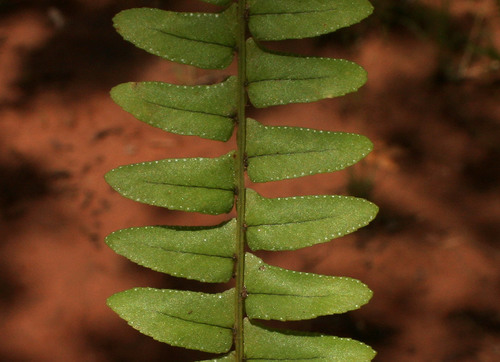
Nephrolepis acutifolia
(Desv.) H. Christ
Sword fern, Fishtail fern
iNaturalist· cc-by-nc
(c) jgerbracht, some rights reserved (CC BY-NC)
iNaturalist· cc-by
(c) Татьяна Максимова, some rights reserved (CC BY)
iNaturalist· cc-by-sa
(c) Steve Fitzgerald, some rights reserved (CC BY-SA)
Description
A tropical fern in the Nephrolepidaceae family, characterized by fronds and leaves. It grows in colonies under coconut palms in coastal regions and shady locations.
Edible Uses
The fronds and leaves are edible.
Distribution
It is a tropical plant. It grows in colonies under coconuts. It grows in coastal regions and shady locations.
Where It Grows
Asia, Guam, Indochina, Malaysia, Marquesas, Marshall Islands, Micronesia, Pacific, Palau, SE Asia, Tuvalu, Vietnam,
Notes
Also put in the family Davalliaceae.
Nutrition
| Part | Moisture | kJ | kcal | Protein | Vit A | Vit C | Iron | Zinc |
|---|---|---|---|---|---|---|---|---|
| Leaves | 92.4 | 117 | 28 | 1.5 | — | 0.6 | 3 | 0.6 |
Synonyms
Also Known As
Ammokadede, Baidik, Iri, Paku kubok, Paku kubuk, Rang Thanlan la-nhon, Sulufe
References (5)
- Chai, T., et al, 2015, Cytotoxicity and Antiglucosidase Potential of Six Selected Edible and Medicinal ferns. Acta Poloniae Pharmaceutica ñ Drug Research, Vol. 72 No. 2 pp. 297- 401.
- Hoe, V. B. & Siong, K. H., 1999, The nutritional value of indigenous fruit and vegetables in Sarawak. Asia Pacific J. Clin. Nutr. 8(1):24-31
- Thaman, R. R, 2016, The flora of Tuvalu. Atoll Research Bulletin No. 611. Smithsonian Institute p 31
- Ting, H., Tan, S. & Nastassia, J. A., 2017, Consumption intention toward ethnic food: determinants of Dayak food choice by Malaysians. Journal of Ethnic Foods (2017) 1-7
- Vander Velde, N, 2003, The Vascular Plants of Majuro Atoll, Republic of the Marshall Islands. Atoll research Bulletin. No. 503. Smithsonian Institute.