Begonia longifolia
Blume
Long-leaf begonia
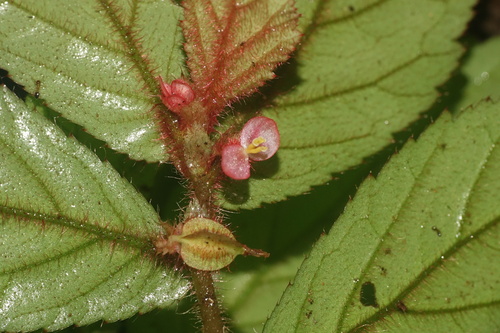
iNaturalist· cc-by-nc
(c) 羅忠良, some rights reserved (CC BY-NC), uploaded by 羅忠良
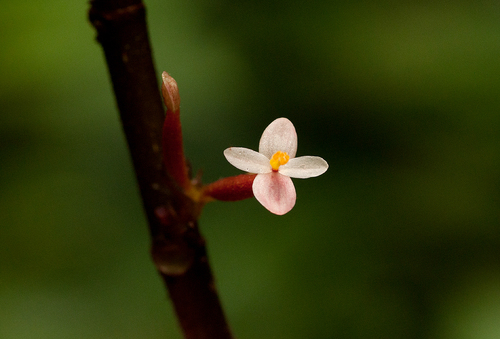
iNaturalist· cc-by-nc
(c) Lijin Huang (紫楝), some rights reserved (CC BY-NC), uploaded by Lijin Huang (紫楝)
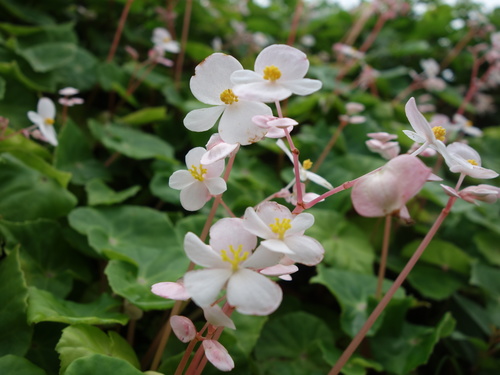
iNaturalist· cc-by-nc-sa
(c) 潘立傑 LiChieh Pan, some rights reserved (CC BY-NC-SA)
Summary
Source: WikipediaBegonia longifolia is a species of flowering plant in the family Begoniaceae. It is native to the eastern Himalayas, southern China, Hainan, Taiwan, mainland Southeast Asia, and some of the islands of Indonesia. An erect perennial herb reaching 1.5 m (5 ft), it is typically found in shady, moist forests at elevations from 200 to 2,200 m (700 to 7,200 ft). It is the most widespread species of Begonia in Asia, and probably in the world.
Description
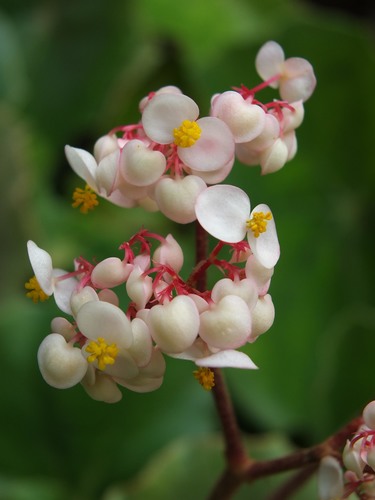
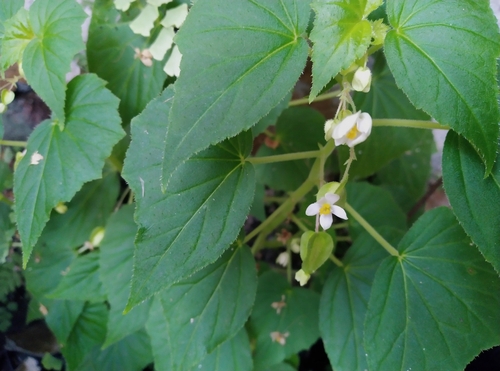
A herb. It grows 2 m tall. It has short stout rhizomes. The stems are erect and branched. They are reddish-green. The leaves are sword shaped and oblique. They are 11-22 cm long by 2-11 cm wide. They taper to a long tip. The base is heart shaped. There are shallow teeth along the edge. They are shiny green above and more pale underneath. The leaf stalks are 15 cm long. The flowers are in groups of about 10 and are white to pale pink. The fruit is a flattened round capsule 1.5 cm across that hangs down.
Edible Uses
The shoots and leaves are used to make pickles and jam. The acidic flowers are eaten raw.
Traditional Uses
The shoots and leaves are used to make pickles and jam. The flowers are acidic and eaten raw.
This uses section is brief — help expand it
Medicinal Uses
Traditional uses in primary forests suggest medicinal properties, though specific applications are not detailed.
Distribution
It is a tropical plant. It grows in primary forests up to 2,200 m above sea level.
Where It Grows
Asia, India, Indonesia*, Malaysia, Nepal, Northeastern India, SE Asia,
Cultivation
Plants can be grown from seeds or by leaf or stem cuttings.
Synonyms
Also Known As
A ei dan, Begonia daun panjang, Magarkachey, Pa gan song, Sekhupthur, Yao me che ge
References (6)
- Cao, Y., et al, 2020, Ethnobotanical study on wild edible plants used by three trans-boundary ethnic groups in Jiangcheng County, Pu’er, Southwest China. Journal of Ethnobiology and Ethnomedicine (2020) 16:66
- Dangol, D. R. et al, 2017, Wild Edible Plants in Nepal. Proceedings of 2nd National Workshop on CUAOGR, 2017.
- Gautam, R. S., et al, 2022, Ethnobotanical Review of Wild Edible Plants of Nepal. Journal of Natural History Museum Volume 32, 2021-22 p 108
- Ghimeray, A. K., Lamsal, K., et al, 2010, Wild edible angiospermic plants of the Illam Hills (Eastern Nepal) and their mode of use by local community. Korean J. Pl. Taxon. 40(1) (As Begonia inflata)
- Shrestha, S., 2021, Wild Edible Plants of Dhankuta, Eastern Nepal. Rupantaran : A Multidisciplinary Journal Vol. V : pp 100-109, September, 2021 p 102
Show all 6 references Hide references
- Sukarya, D. G., (Ed.) 2013, 3,500 Plant Species of the Botanic Gardens of Indonesia. LIPI p 1076