Galeopsis tetrahit
L.
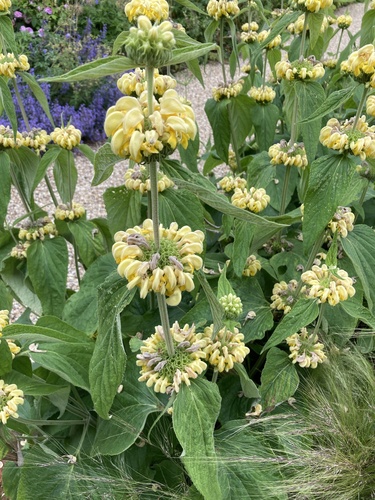
iNaturalist· cc-by-nc
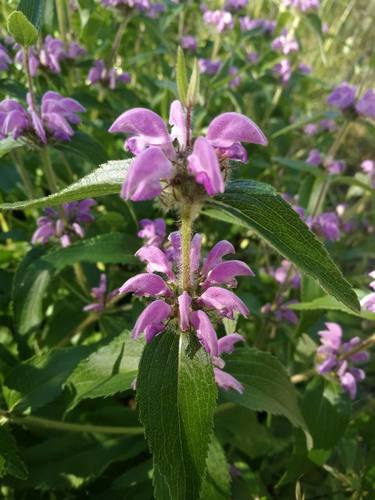
(c) Antoine Lantin, some rights reserved (CC BY-NC), uploaded by Antoine Lantin
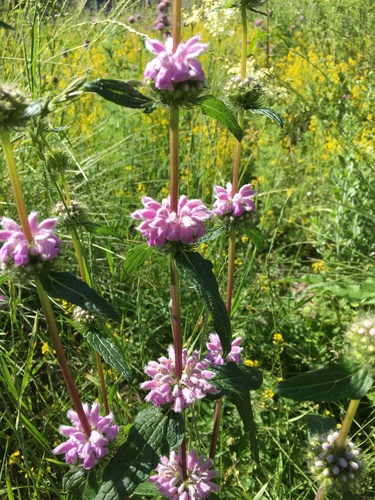
iNaturalist· cc-by-nc
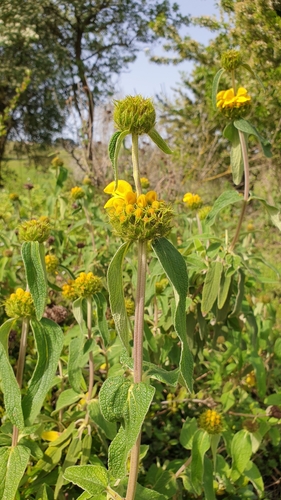
(c) D. Marullo-Masson, some rights reserved (CC BY-NC), uploaded by D. Marullo-Masson
iNaturalist· cc-by-nc
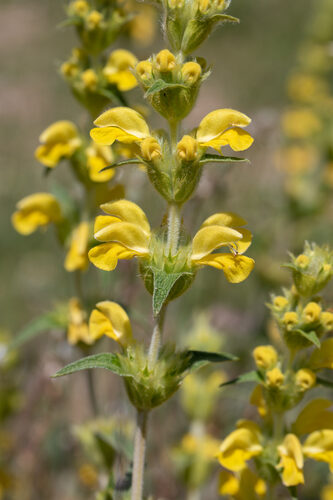
(c) Svetlana Nesterova, some rights reserved (CC BY-NC), uploaded by Svetlana Nesterova
Summary
Source: WikipediaGaleopsis tetrahit, the common hemp-nettle or brittlestem hempnettle, is a flowering plant in the family Lamiaceae, native to Europe and northwestern Asia. It is a herbaceous annual plant growing to 1 m tall; it is a pioneer species and thrives on disturbed sites or roadsides. The plant looks like mint but is taller. The stems have reflexed hairs and swollen nodes. In cross section, the stem is square. The leaves are rhombic to elliptic, with coarsely to bluntly serrate edges. The flowers are multicoloured, with purple, pink, or white areas; diminutive, bilateral and snapdragon-like, and are mostly visited by bumblebees. The species is considered by some authorities to have arisen as a natural hybrid between Galeopsis pubescens and Galeopsis speciosa.
Description
Galeopsis tetrahit is a frost-hardy self-fertile annual reaching 1 m tall. Flowers bloom from July to September with seeds maturing August to October. The plant has both male and female organs and grows in light sandy, medium loamy, and heavy clay soils at mildly acidic to mildly alkaline pH. It tolerates semi-shade or full sun and prefers moist soil.
Edible Uses
No edible uses are known for this plant, despite the seed yielding an oil.
Medicinal Uses
The plant is antispasmodic, detergent, expectorant, and resolvent. It is used in the treatment of tissue-wasting complaints. An infusion of the plant is used to treat pulmonary complaints.
Known Hazards
The plant is poisonous, causing paralysis.
Distribution
It is a temperate plant.
Where It Grows
Asia, Estonia, Europe, Luxembourg, Myanmar, SE Asia,
Cultivation
Grows in most soils, disliking heavy shade. This plant is sometimes grown in the wild garden. An aggregate species. It is a natural hybrid, G. speciosa x G. pubescens.
Propagation
Sow seed in spring directly in situ. Germination usually takes place within a month.
Other Uses
A drying oil obtained from the seed is used as a leather polish. A fibre extracted from the stems can be used for making cord.
Also Known As
Mesililled, Imikad
References (1)
- Kalle, R. & Soukand, R., 2012, Historical ethnobotanical review of wild edible plants of Estonia (1770s-1960s) Acta Societatis Botanicorum Poloniae 81(4):271-281