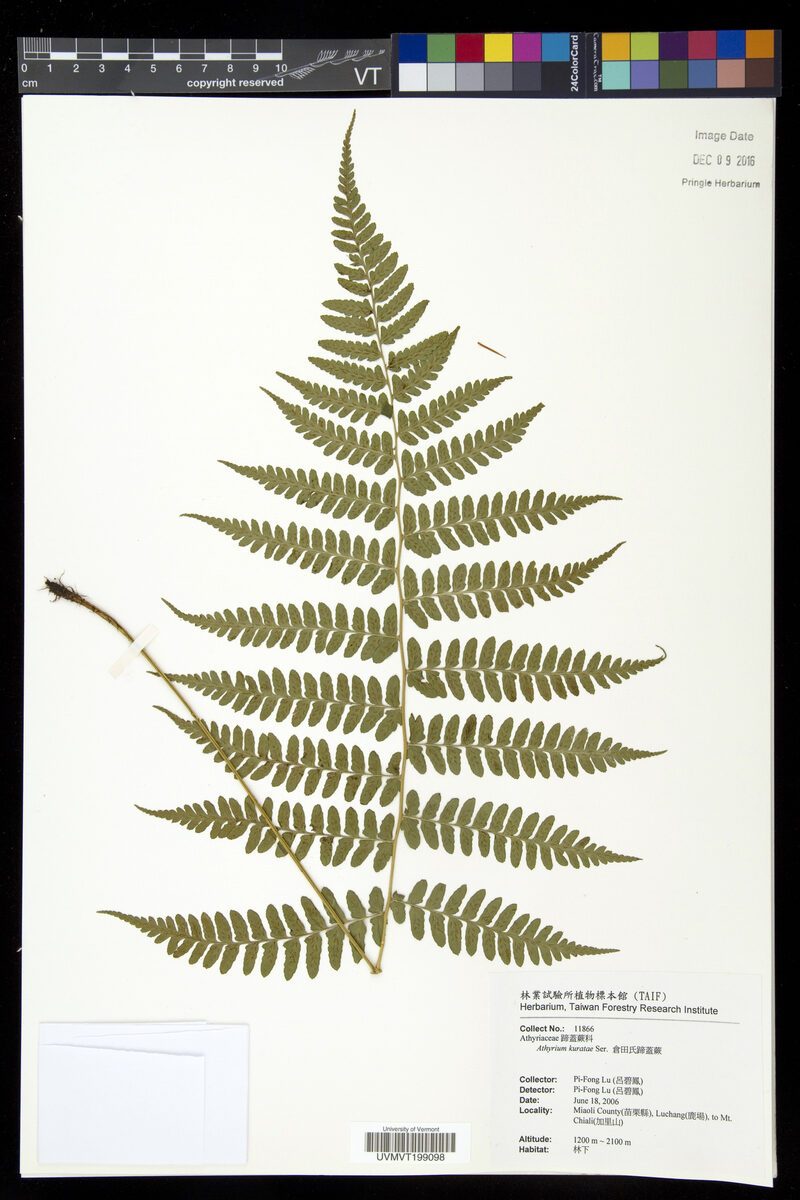
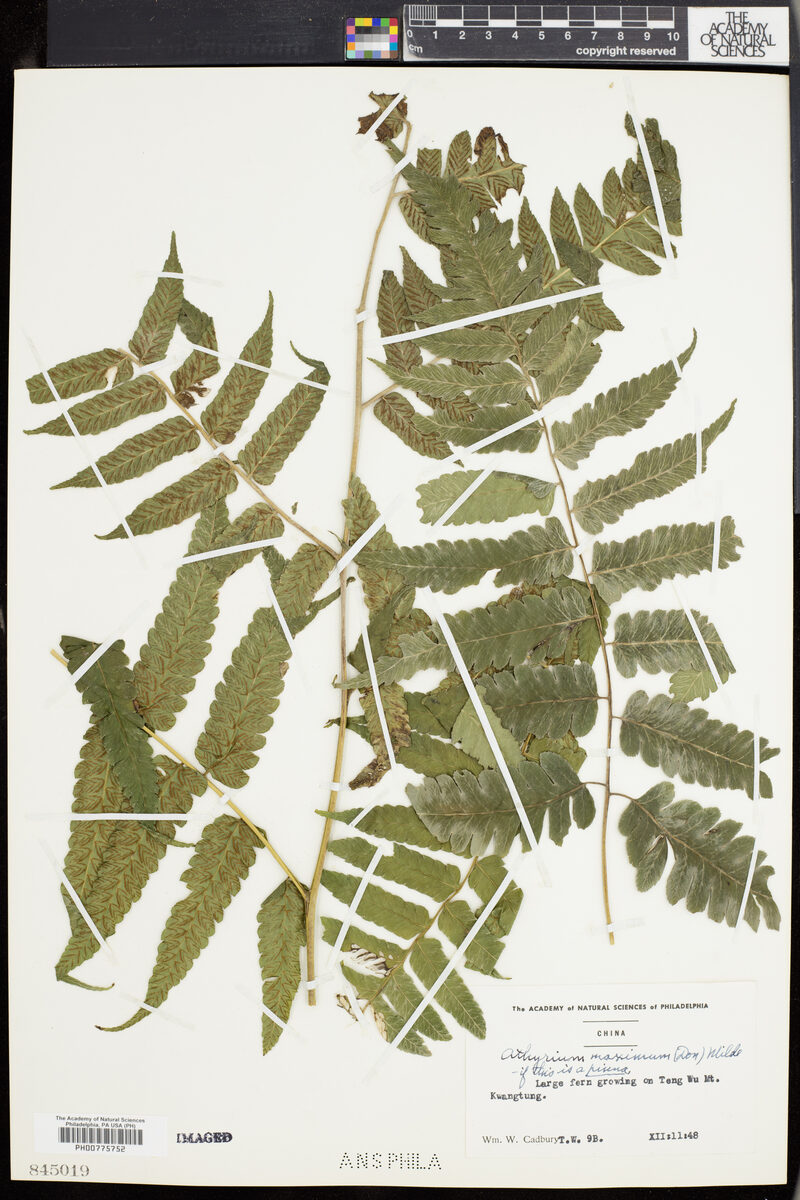
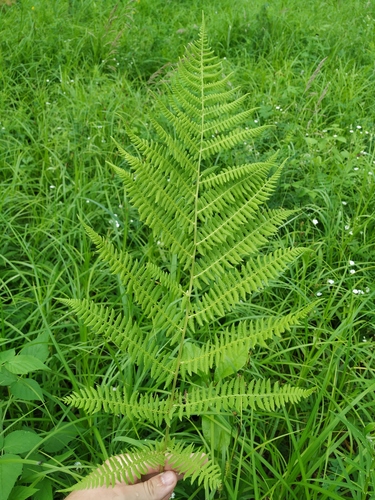
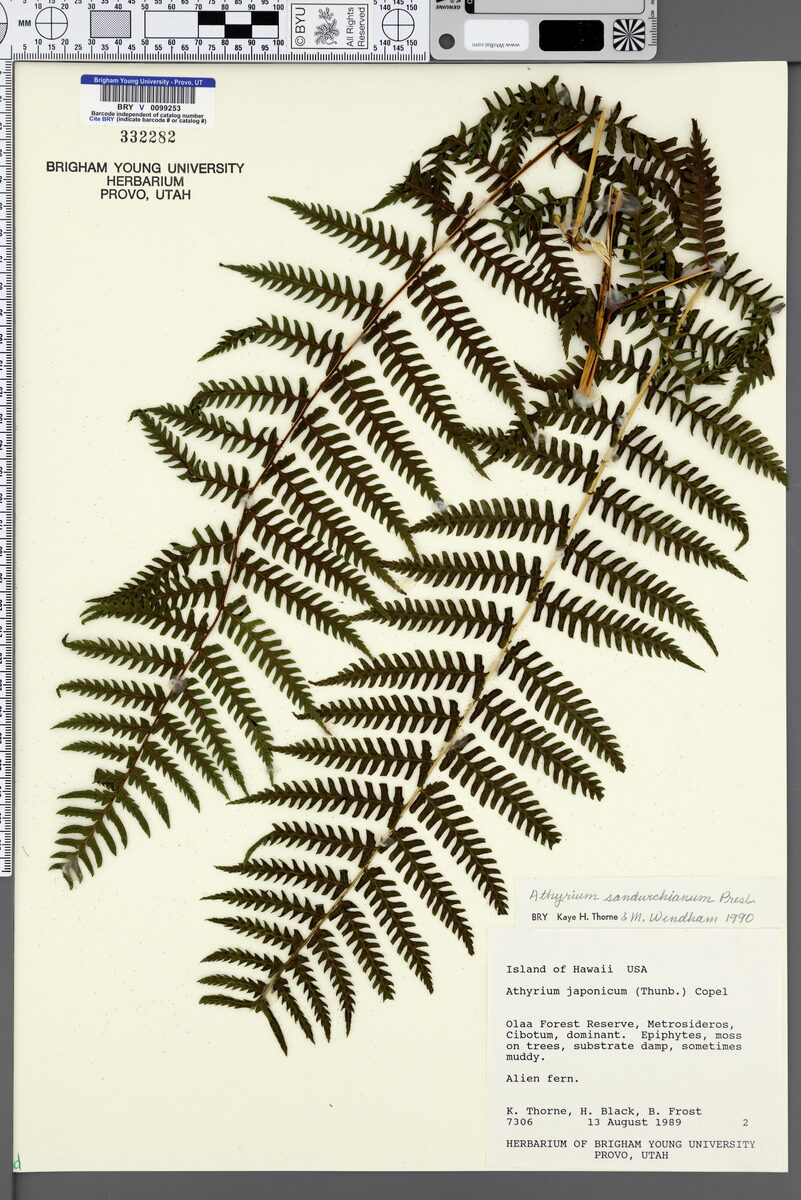
Athyrium brevifrons
Nakai ex Kitag.
Glandular ladyfern
iNaturalist· cc-by-sa
(c) harum.koh, some rights reserved (CC BY-SA), uploaded by harum.koh
iNaturalist· cc-by-nc
(c) Сергей, some rights reserved (CC BY-NC)
iNaturalist· cc-by-nc
(c) Сергей, some rights reserved (CC BY-NC)
Description
A temperate fern in the Athyriaceae family (also classified in Woodsiaceae).
This description is brief — help expand it
Edible Uses
The rhizomes are processed for their starch content and used in cakes and noodles. Young fronds are fried or eaten in soup.
Traditional Uses
The starch in the rhizomes is used for cakes and noodles. The young fronds are eaten. They are fried or eaten in soup.
This uses section is brief — help expand it
Distribution
It is a temperate plant.
Where It Grows
Asia, China, Japan, Korea, Mongolia, Russia,
Notes
Also put in the family Woodsiaceae.
Synonyms
Also Known As
Juecai, Lao ying bang zi, Shan hue cai, Togus in segul
References (5)
- Fan, L., et al, The Use of Edible Wild Plants and Fungi in Korean-Chinese Villages. Journal of Environmental Information Science 44-5 p 71-79
- https://en.wikipedia.org/wiki/List of wild edible plants in Mongolian cuisine
- Lim, T. K., 2015, Edible Medicinal and Non Medicinal Plants. Volume 9, Modified Stems, Roots, Bulbs. Springer p 14
- Liu, Y., et al, 2012, Food uses of ferns in China: a review. Acta Societatis Botanicorum Poloniae 84(4): 263-270
- Sachula, et al, 2020, Wild edible plants collected and consumed by the locals in Daqinggou, Inner Mongolia, China. Journal of Ethnobiology and Ethnomedicine (2020) 16:60