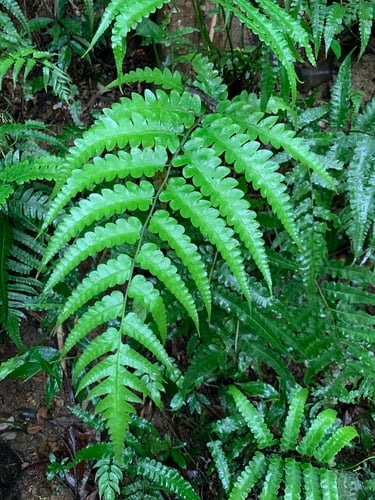
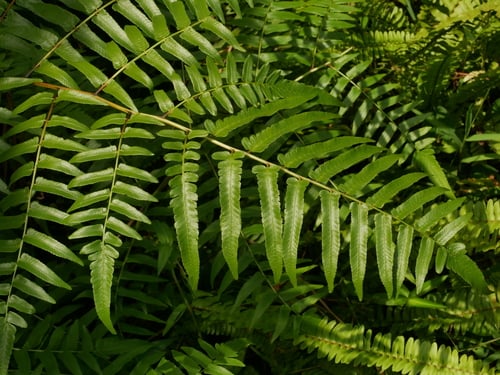
Allantodia spectabilis
(Wall. & Mett.) Ching
Athyriaceae Edible: Leaves, Fronds
gbif· cc-by
Meise Botanic Garden
Description
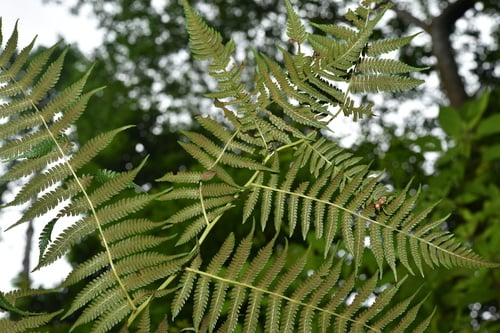
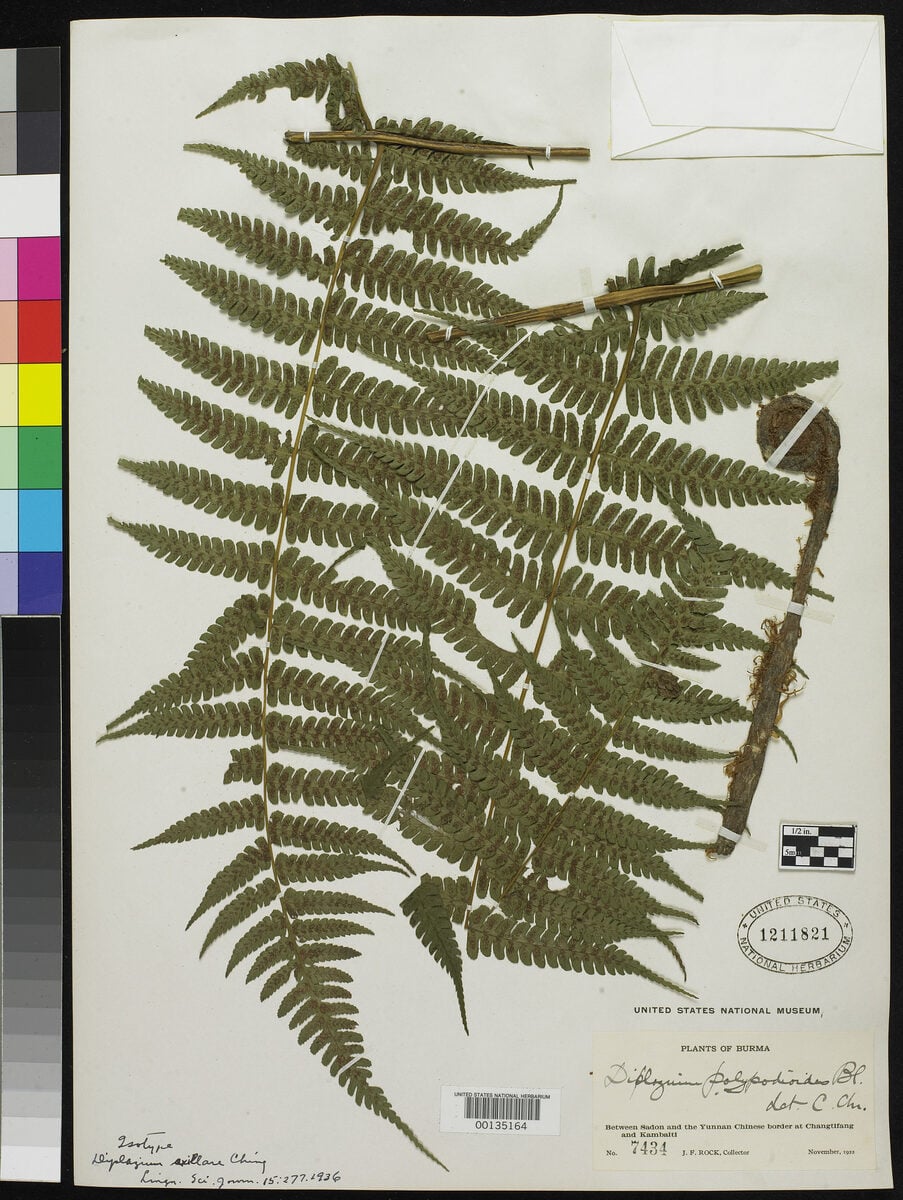
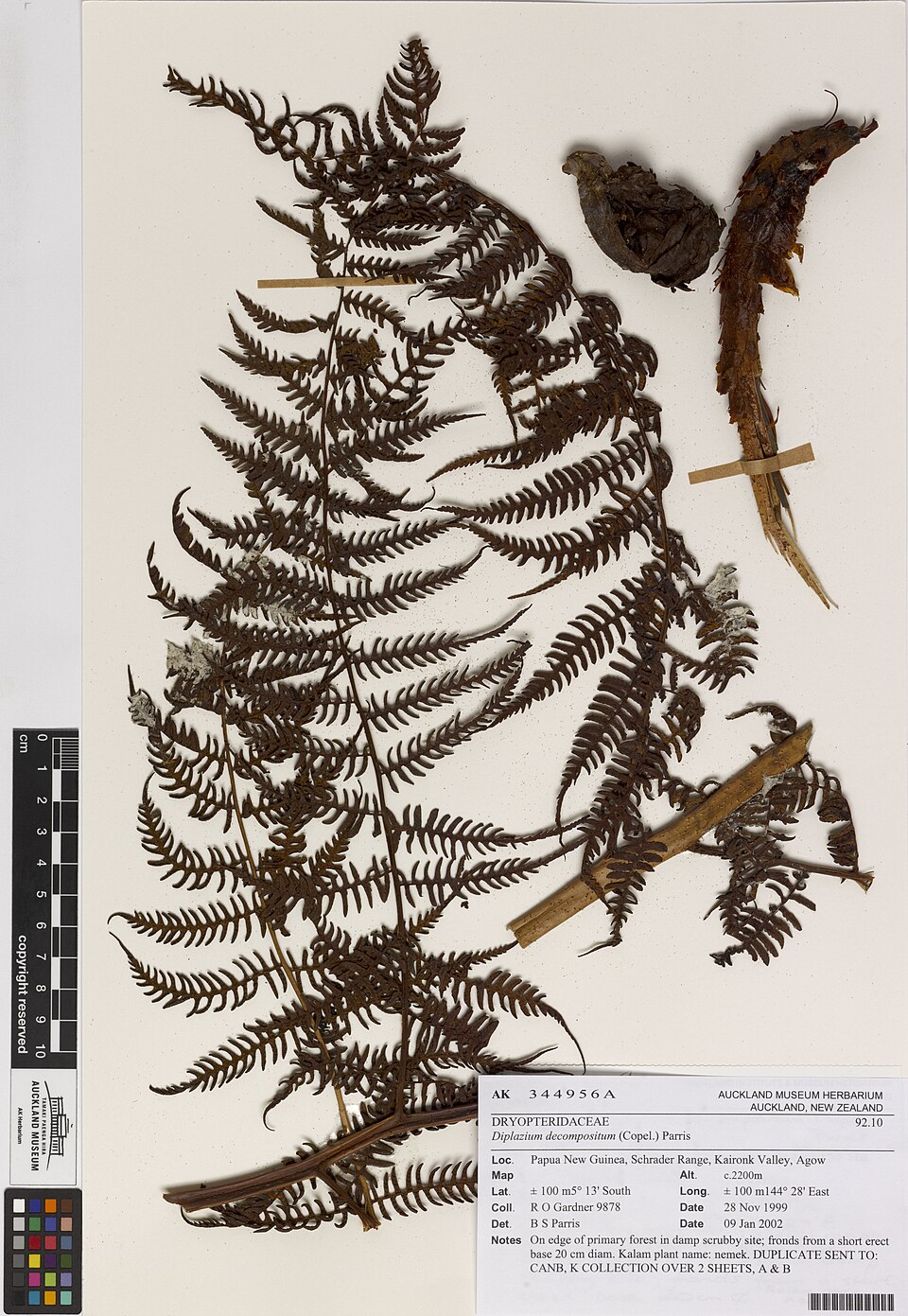
A fern. It has black creeping rhizomes. These are 1 mm thick. The fertile fronds are 1.2 m long and 60 cm across at the base.
This description is brief — help expand it
Edible Uses
Young leaves and fronds are cooked in stir-fries or soups.
Traditional Uses
The young leaves or fronds are cooked in stir-fries or soup.
This uses section is brief — help expand it
Distribution
It is a tropical plant. In Nepal it occurs at 2,100 m above sea level.
Where It Grows
Asia, China, Himalayas, Indonesia, Nepal, SE Asia, West Papua,
Other Information
Fronds are sold in local markets.
Notes
Also put in the family Woodsiaceae.
Nutrition
| Part | Moisture | kJ | kcal | Protein | Vit A | Vit C | Iron | Zinc |
|---|---|---|---|---|---|---|---|---|
| Leaves | 88.6 | — | — | 3.6 | — | — | 10.4 | 0.2 |
Synonyms
Allantodia multicaudata (Wall. ex C. B. Clarke) W. M. ChuAsplenium multicaudatum Wall. ex C. B. ClarkeAsplenium spectabile Wall. ex Mett.Athyrium spectabile (Wall. ex Mett.) C. Presl.Diplazium griffithii Bedd.Diplazium spectabile (Wall. ex Mett.) Bir
and others
Also Known As
Neuro
References (5)
- Chettri, S., et al, 2018, Nutrient and Elemental Composition of Wild Edible Ferns of the Himalaya. American Fern Journal 108(3):95–106 (As Diplazium spectabile)
- Joshi, N., et al, 2007, Traditional neglected vegetables of Nepal: Their sustainable utilization for meeting human needs. Tropentag 2007. Conference on International Agricultural Research for Development. (As Diplazium spectabile)
- Liu, Y., et al, 2012, Food uses of ferns in China: a review. Acta Societatis Botanicorum Poloniae 84(4): 263-270
- Milliken, W., Ethnobotany of the Yali of West Papua. Royal Botanical Garden, Edinburgh. p 10 (As Diplazium spectabilis) (near Baliem)
- Ojha, R. & Devkota, H. P., 2021, Edible and Medicinal Pteridophytes of Nepal: A Review. Ethnobotany Research & Applications 22:16 (As Diplazium spectabile)