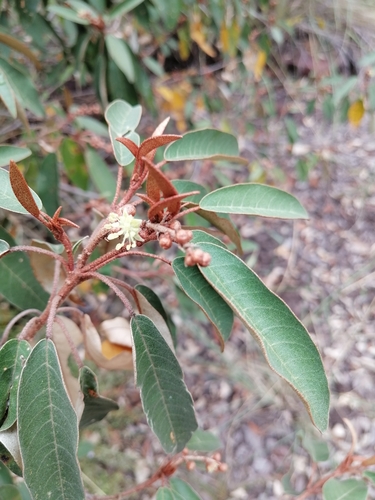
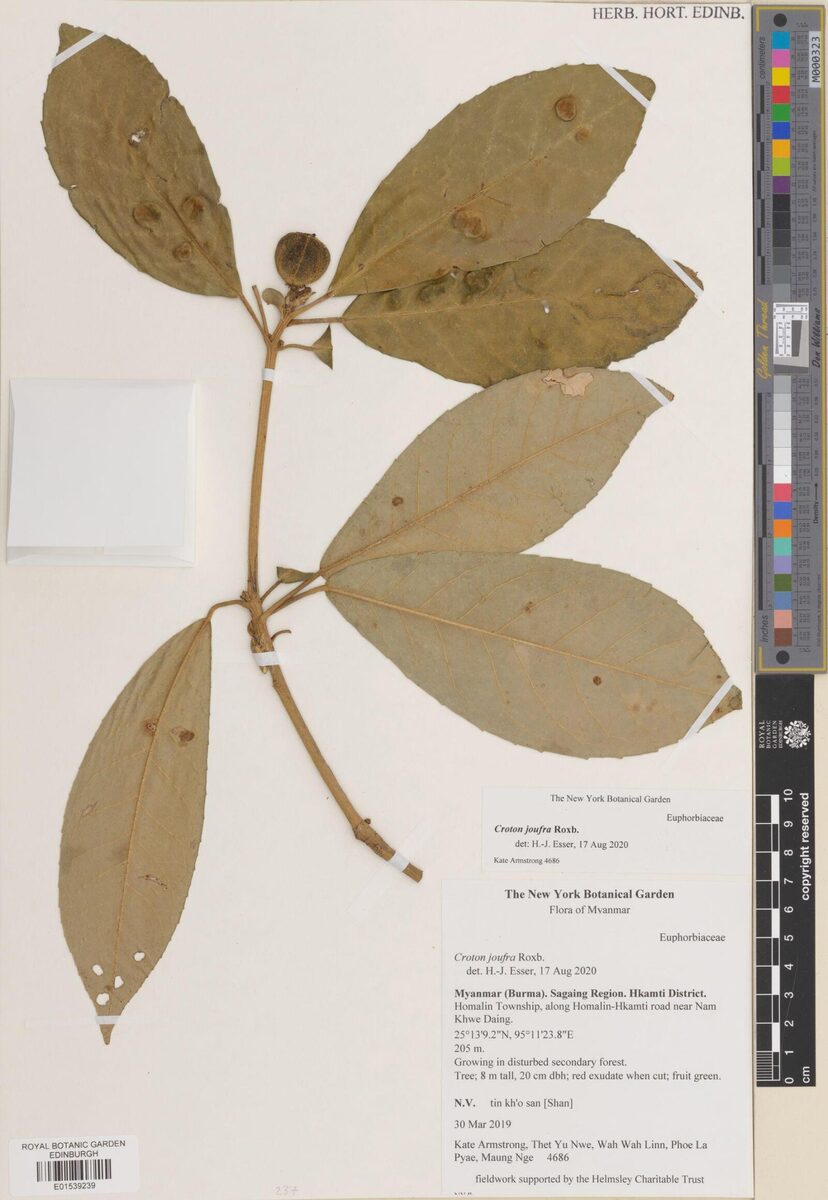
Cheilosa montana
Blume
iNaturalist· cc-by-nc-sa
(c) Smithsonian Institution, National Museum of Natural History, Department of Botany, some rights reserved (CC BY-NC-SA)
wikimedia· cc0
Wikimedia Commons - Heinrich Gustav Adolf Engler (25 March 1844 – 10 October 1930)
wikimedia· cc-by
Wikimedia Commons - gailhampshire from Cradley, Malvern, U.K
Description
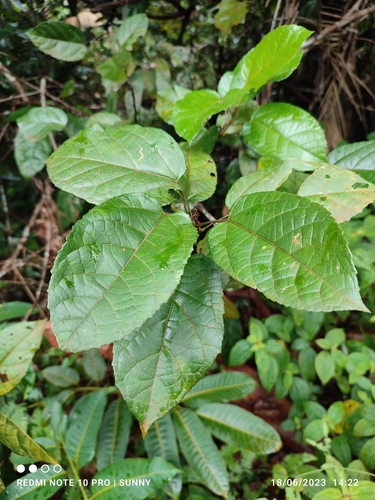
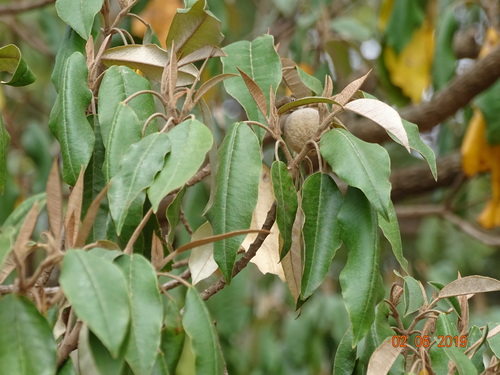
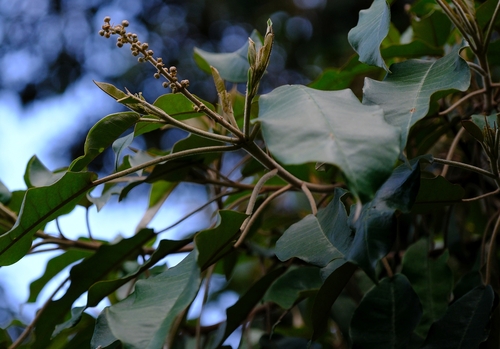
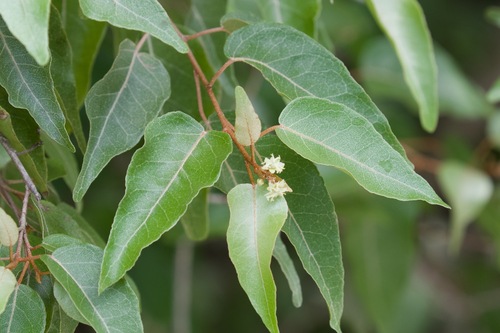
A tree. It grows up to 25 m tall. The leaves are alternate and simple. The leaves are narrowly oblong. They are 25 cm long by 10 cm wide. The flowers are in spike like groups. These are slender and 8 cm long. They can occur singly or in groups on branches. The fruit is a narrowly oval capsule. It is 5 cm long and splits open. They are pale green to yellow. The flesh is white. The fruit have a thick woody covering.
Edible Uses
Fruit - raw. They are also used to prepare an alcoholic drink. The pale green to yellow, ellipsoid fruit is up to 5cm long, it has a thick, woody pericarp enclosing the white flesh.
Traditional Uses
The fruit are eaten. They are also used to make an alcoholic drink. Caution: Alcohol is a cause of cancer.
This uses section is brief — help expand it
Known Hazards
Alcohol is a cause of cancer.
Distribution
A tropical plant. It grows in forests up to 500 m altitude above sea level. It can be up to 1,200 m above sea level. It grows on rocky, sandy and clay soils.
Where It Grows
Asia, Brunei, Indonesia, Malaysia, Philippines, SE Asia, Singapore,
Cultivation
The plant is found in a range of soils in the wild, from yellow clays to red sands. A dioecious species, both male and female forms need to be grown if fruit and seed are required.
Other Uses
The wood is white to yellow. It is durable, but liable to split and is used for posts.
Synonyms
Also Known As
Bua tampoi, Gurak gatuk, Kapajang hutan, Ketapi danau, Tampoi, Tampul, Tempuni
References (7)
- Milow, P., et al, 2013, Malaysian species of plants with edible fruits or seeds and their evaluation. International Journal of Fruit Science. 14:1, 1-27 (As Cheilosa malayana)
- PROSEA handbook Volume 9 Plants yielding non-seed carbohydrates. p 187 (As malayana)
- Saw, L.G., LaFrankie, J. V. Kochummen, K. M., Yap S. K., 1991, Fruit Trees in a Malaysian Rain Forest. Economic Botany, Vol. 45, No. 1, pp. 120-136 (As malayana)
- Slik, F., www.asianplant.net
- Suwardi, A. B., et al, 2020, Wild edible fruits generate substantial income for local people of the Gunung Leuser National Park, Aceh Tamiang Region. Ethnobotany Research & Applications 20:11
Show all 7 references Hide references
- Verheij, E. W. M. and Coronel, R.E., (Eds.), 1991, Plant Resources of South-East Asia. PROSEA No 2. Edible fruits and nuts. Pudoc Wageningen. p 324 (As malayana)
- World Checklist of Useful Plant Species 2020. Royal Botanic Gardens, Kew