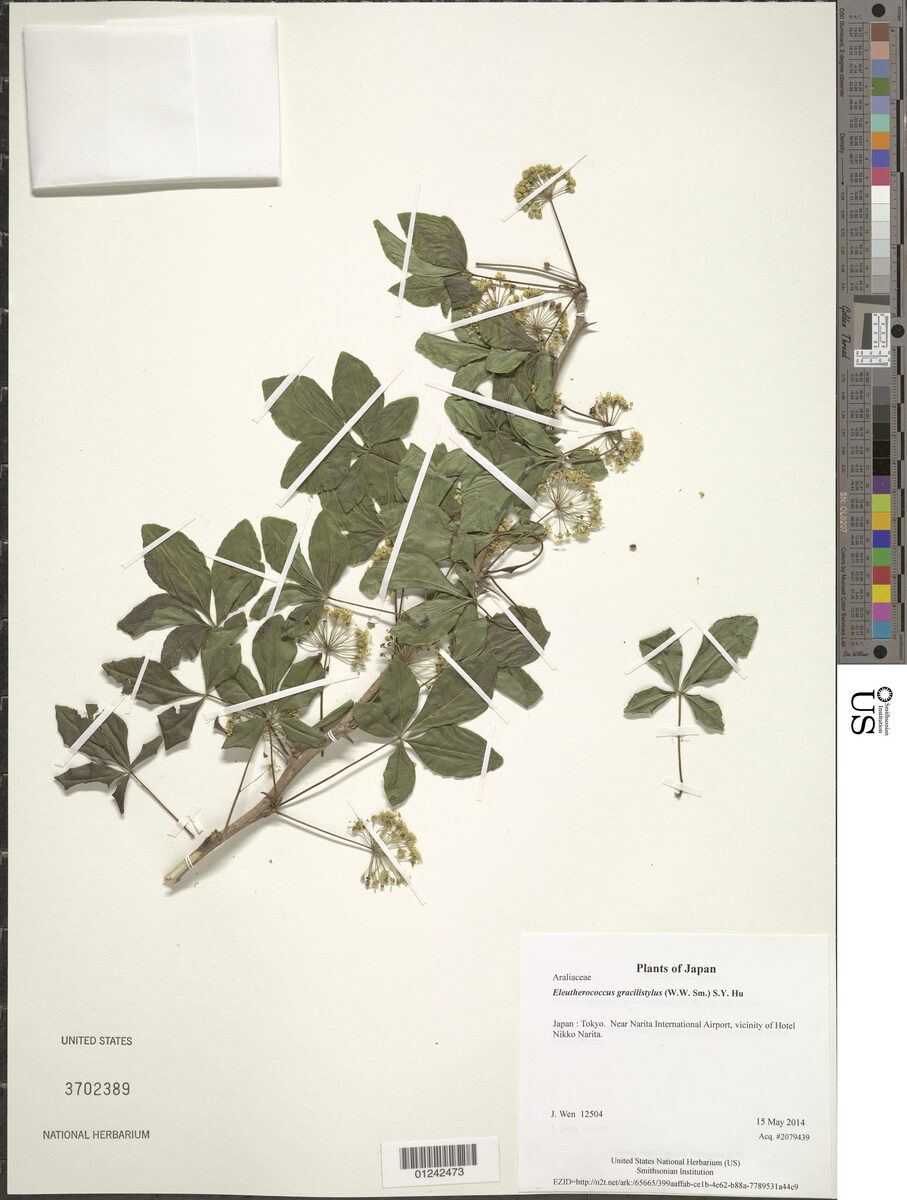
Panax japonicus var. major
(T. Nees) C. A. Meyer, (Burkill) C. Y. Wu & K. M. Feng
gbif· cc-by-nc-sa
MBG
gbif· cc-by-nc-sa
MBG
gbif· cc-by-nc
University of Cincinnati, Margaret H. Fulford Herbarium - Vascular Plants (CINC)
Summary
Source: WikipediaPanax japonicus is a species of ginseng known for its bamboo-shaped, uneven-sized roots. It is found throughout Japan and Korea, and is also said to be endangered in China. Panax japonicus sees some use in Japanese Kampo medicine and traditional Chinese medicine. Like other ginsengs, it contains a number of ginsenosides. There is no English-language literature on its cultivation, though Baeg et al. (2013) lists it among cultivated ginseng species. There is, however, a considerable volume of Chinese literature on its cultivation under the name Zhújiéshēn.
Description
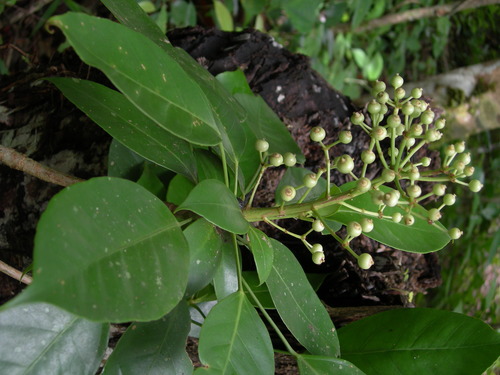
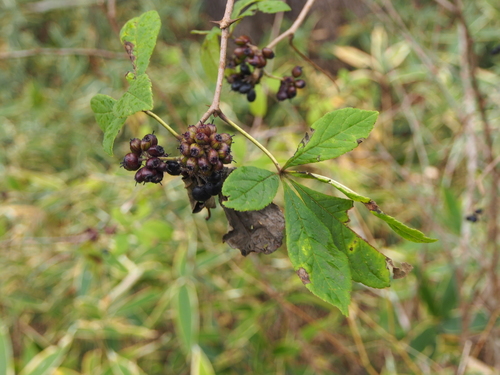
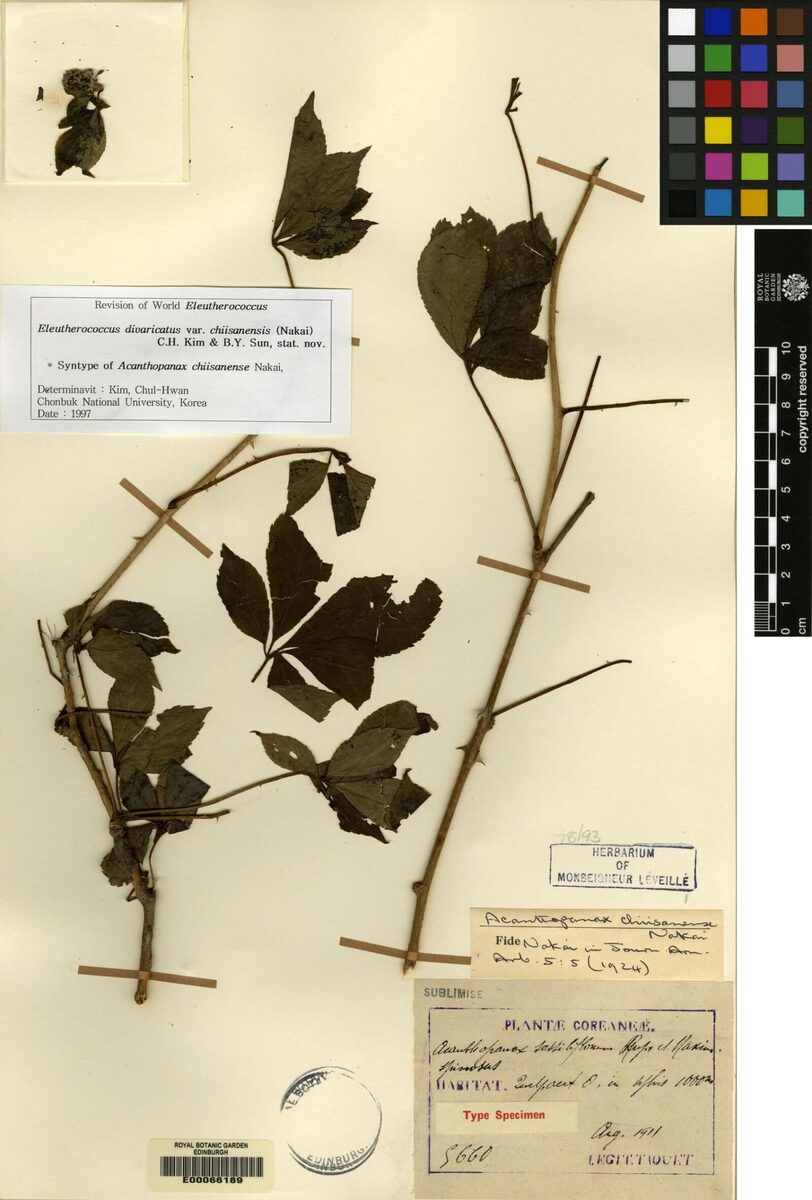
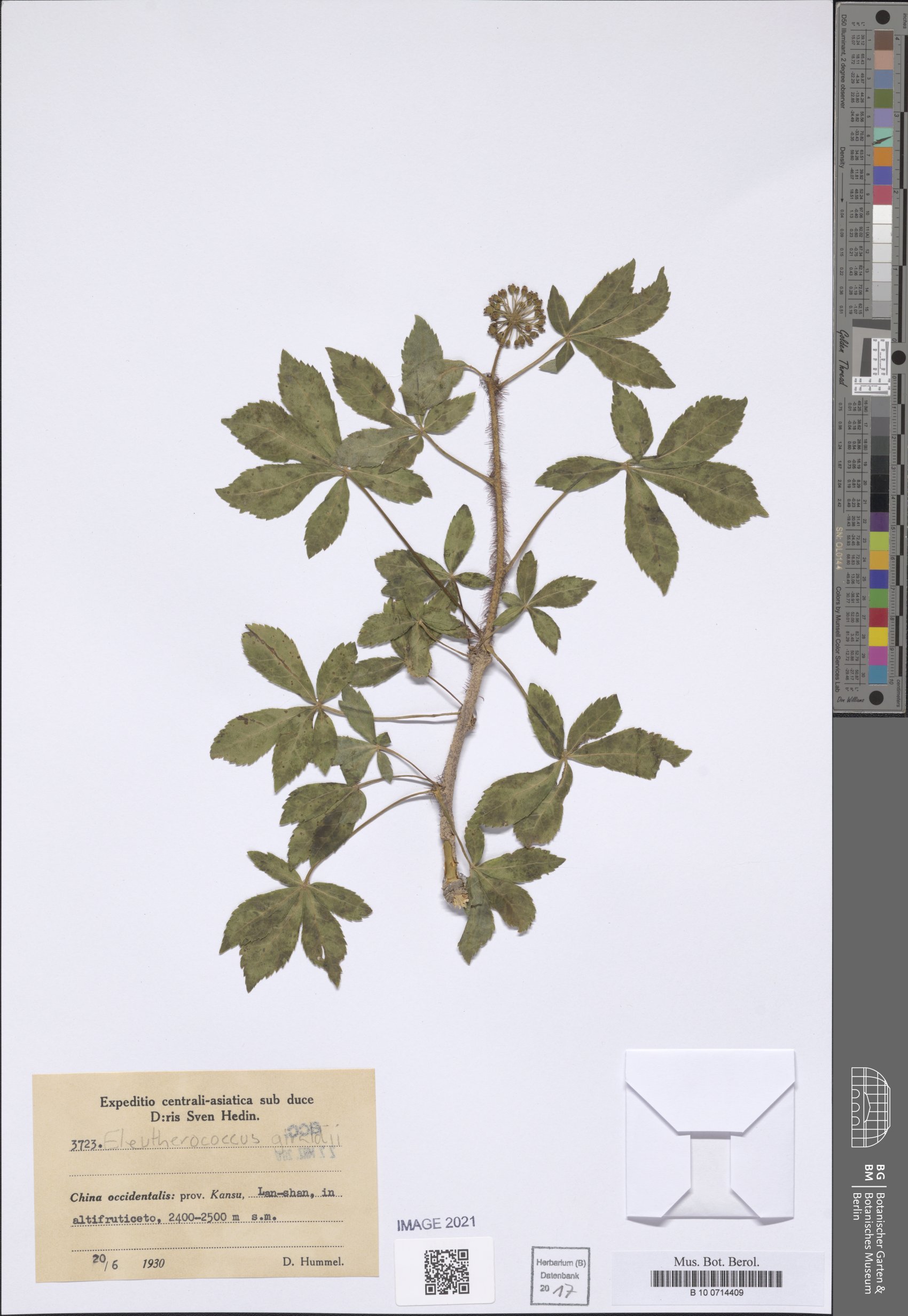
A herb. The rootstocks are narrow. The leaflets are not divided. Probably now Panax bipinnatifidus.
This description is brief — help expand it
Edible Uses
The rhizomes are cooked with meat and eaten as a tonic, while young stems and leaves are eaten fresh or cooked in stir-fries.
Traditional Uses
The rhizomes are cooked with meat and eaten as a tonic. The young stems and leaves are eaten fresh or cooked in stir fries.
This uses section is brief — help expand it
Medicinal Uses
The rhizomes are traditionally used as a tonic when cooked with meat.
Distribution
It is a subtropical plant. It grows in forests between 1,700-3,600 m above sea level. It grows in Yunnan in China.
Where It Grows
Asia, China, Himalayas, Myanmar, Nepal, SE Asia, Tibet, Vietnam,
Production
In Yunnan leaves are available in May and June and rhizomes in July and August.
Also Known As
Gedeqi
References (2)
- Cheng, Z., et al, 2022, Ethnobotanical study on wild edible plants used by Dulong people in northwestern Yunnan, China. Journal of Ethnobiology and Ethnomedicine (2022) 18:3
- Ju, Y., et al, 2013, Eating from the wild: diversity of wild edible plants used by Tibetans in Shangri-la region, Yunnan, China, Journal of Ethnobiology and Ethno medicine 9:28