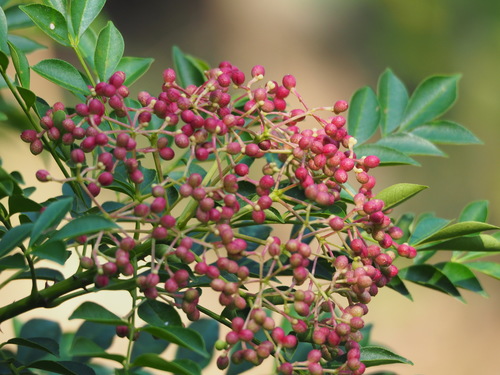
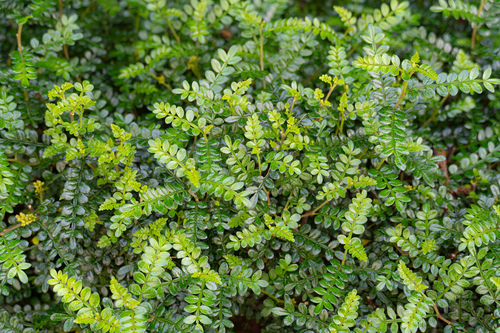
Citrus sinensis
(L.) Osbeck
Orange
iNaturalist· cc-by
(c) Brandon Corder, some rights reserved (CC BY)
iNaturalist· cc-by-nc
(c) Audrey Lux, some rights reserved (CC BY-NC)
iNaturalist· cc-by-nc
(c) Audrey Lux, some rights reserved (CC BY-NC)
Summary
Evergreen tree reaching 9m tall, growing at a medium rate. Hardy to UK zone 9 but frost tender. Self-fertile with hermaphroditic flowers pollinated by insects and apomictic reproduction. Year-round foliage attracts wildlife. Requires full sun and well-drained soil; tolerates mildly acid to mildly alkaline conditions and can grow in very acid or very alkaline soils. Prefers moist soil and grows in loamy or clay soils.
Description
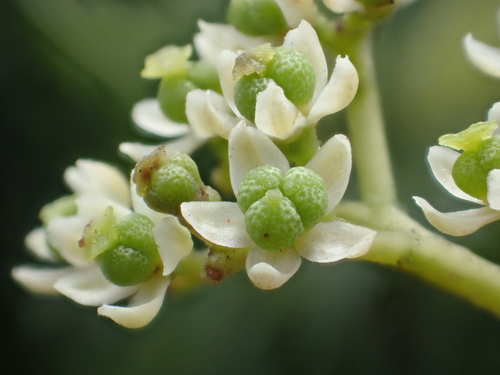
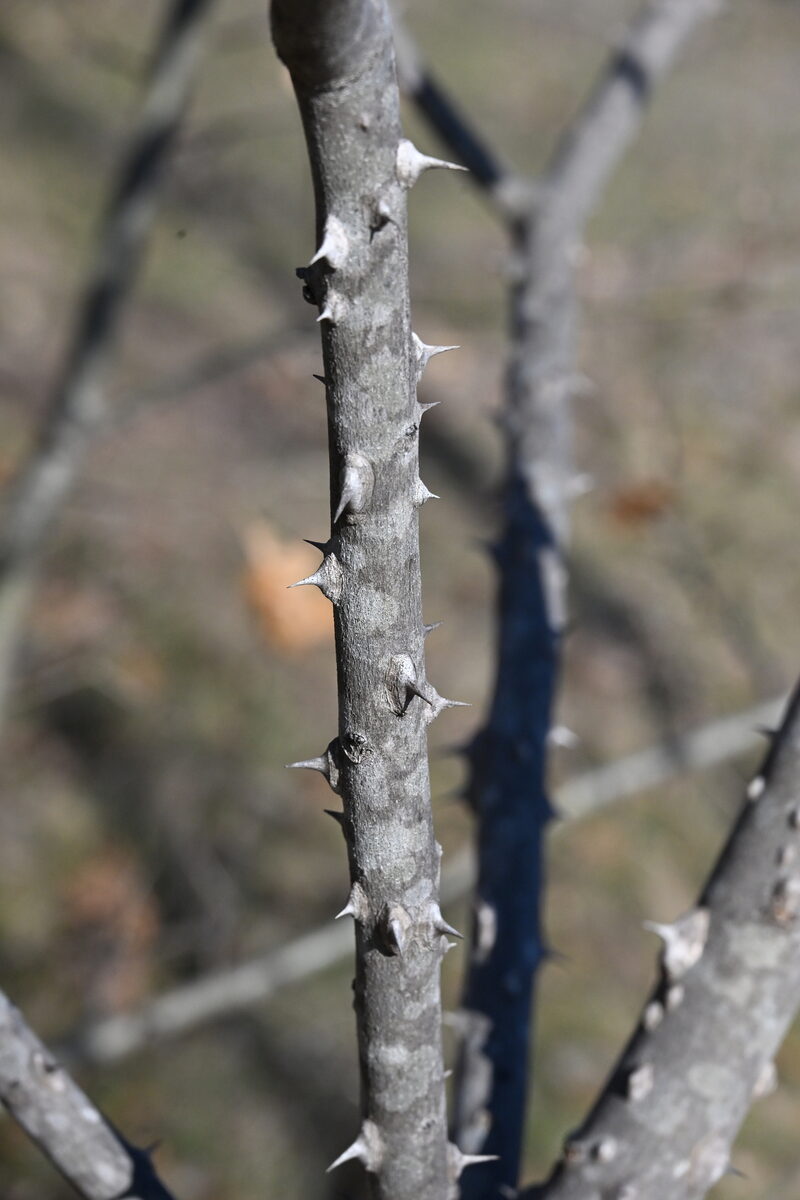
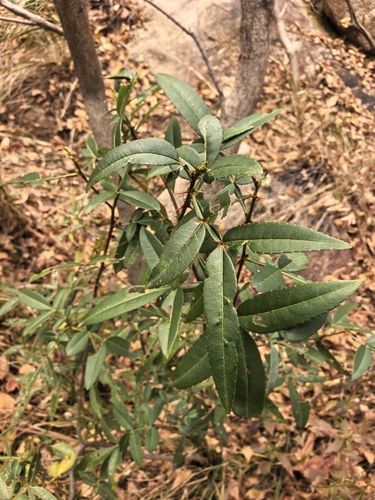
An evergreen tree up to 8-10 m high. It spreads to 4 m across. The stem is short, stout and spiny. It has a dense, rounded crown. The leaves are dark green, sword shaped and tapering towards the tip. They are 5-15 cm long. The leaves have a sweet smell when crushed. The leaf stalks have narrow wings and the stalk is jointed to the blade. The flowers are white and have a scent. The flowers have 5 petals and occur either singly or in clusters. The fruit often remain green colour and don't turn orange when ripened below 600 m altitude in the tropics. The fruit are about 9 cm across. They have 10-14 segments.
Edible Uses
The fruit is eaten raw — sweet and delicious. The juice is widely extracted for use as a refreshing drink or in jellies and ice cream. The rind is used as a flavouring in cakes and similar baked goods, or made into marmalade. The flowers can be cooked as a vegetable or brewed into a tea.
Traditional Uses
The fruit is eaten fresh, and the juice used in drinks. They are also added to salads and made into wine. The juice is canned, bottled, and used in ice cream and jellies. The peel is candied and used for flavouring. It is made into marmalade. The flower petals are eaten as a vegetable. The roots are used to flavour soup.
Medicinal Uses
Citrus species contain a wide range of active compounds, and research into their applications is ongoing. They are rich in vitamin C, flavonoids, acids, and volatile oils, and also contain coumarins such as bergapten, which sensitizes the skin to sunlight. Bergapten is sometimes added to tanning preparations to promote skin pigmentation, though it can cause dermatitis or allergic reactions in some people. Recent applications include use as sources of antioxidants and chemical exfoliants in specialized cosmetics. The fruit acts as an appetizer and blood purifier, allays thirst in people with fevers, and treats catarrh. The fruit juice is useful in treating bilious affections and bilious diarrhoea. The rind is carminative and tonic; the fresh rind can be rubbed on the face as a treatment for acne, while the dried peel is used for anorexia, colds, and coughs.
Distribution
A subtropical plant. Not suited to very wet areas. Not suited to high altitudes. In PNG it grows between sea levels and 1,800 m above sea level. Seeds won't grow below 13 °C. They need a well drained, fertile, sandy soil. They are drought and frost tender. Trees need temperatures above 3-5°C to grow. In Brisbane Botanical Gardens. It suits hardiness zones 9-11.
Where It Grows
Africa, Algeria, Andes, Angola, Argentina, Asia, Australia, Bangladesh, Barbados, Benin, Bhutan, Bougainville, Brazil, Cambodia, Cameroon, Caucasus, Central Africa, Central African Republic, CAR, Central America, Central Asia, China*, Colombia, Congo DR, Cook Islands, Costa Rica, Cuba, Dominican Republic, East Africa, East Timor, Ecuador, Egypt, Ethiopia, Europe, Fiji, French Guiana, Georgia, Ghana, Grenada, Guam, Guianas, Guinea-Bissau, Guyana, Haiti, Hawaii, Himalayas, Europe, India, Indochina, Indonesia, Italy, Jamaica, Japan, Kenya, Kiribati, Korea, Laos, Madagascar, Malawi, Malaysia, Malta, Marquesas, Mauritania, Mediterranean, Mexico, Micronesia, Middle East, Morocco, Mozambique, Myanmar, Nauru, Nepal, Nicaragua, Niger, Nigeria, North Africa, North America, Northeastern India, Pacific, Pakistan, Palau, Panama, Papua New Guinea, PNG, Peru, Philippines, Portugal, Rotuma, Sahel, Samoa, Sao Tome and Principe, Saudi Arabia, SE Asia, Senegal, Sierra Leone, Solomon Islands, South Africa, Southern Africa, South America, Spain, Sri Lanka, Suriname, Taiwan, Tajikistan, Tanzania, Thailand, Timor-Leste, Tonga, Turkey, Türkiye, Uganda, United Arab Emirates, Uruguay, UAE, USA, Vanuatu, Vietnam, West Africa, West Indies, Zambia, Zimbabwe,
Cultivation
Trees are often grown from seeds but these do not breed true. Seeds grow most easily between 27°C and 32°C. It is better to use budded plants. Plants can also be grafted. Green fruit can be treated with ethylene to give an orange colour, if people think an "orange" fruit is not supposed to have green colour!
Propagation
Sow seed in a greenhouse as soon as it is ripe, after rinsing thoroughly. Stored seed should be sown in March in a greenhouse. Germination typically occurs within 2–3 weeks at 13°C. Seedlings are prone to damping off and must be watered carefully and kept well ventilated. The seed is usually polyembryonic — two or more seedlings arise from each seed, genetically identical to the parent and generally free of any virus present in the parent plant. Once large enough to handle, prick seedlings out into individual pots and grow on in the greenhouse for at least three growing seasons before attempting to move them outdoors. Plant out during summer and provide some frost protection during the first few winters outside. Propagation is also possible from cuttings of half-ripe wood taken in July or August in a frame, or by layering in October.
Other Uses
A semi-drying oil obtained from the seed is used in soap making. An essential oil from the peel is used as a food flavouring and in perfumery and medicines. The flowers are rich in nectar and pollen, making them highly attractive to bees and other pollinators. Fruits provide food for birds and mammals, and the dense foliage offers shelter for nesting and roosting birds. Leaf litter beneath the trees creates overwintering sites for invertebrates, and the rough bark of mature trees can shelter beneficial insects. The strong citrus scent of the leaves and fruit can also act as a natural pest deterrent, confusing or repelling certain insects.
Production
Grafted trees produce in 2-3 years. Seedling trees take 3-5 years to fruit. Fruit take 6-8 months to mature after fruit set. A good tree can produce 100 fruit in a year. Fruit can be left on trees for several weeks after ripening for storage.
Other Information
Trees are seen scattered in many lowland areas in Papua New Guinea. Few good quality fruit are produced in wet tropical countries. It is a cultivated food plant.
Notes
There are 20 Citrus species. Several hybrids have been formed.
Nutrition
| Part | Moisture | kJ | kcal | Protein | Vit A | Vit C | Iron | Zinc |
|---|---|---|---|---|---|---|---|---|
| Fruit | 86.8 | 197 | 47 | 0.94 | 21 | 53.2 | 0.1 | 0.1 |
Synonyms
Also Known As
Afontongnu, Akutongnu, Arancio, Battavinarinja, Blood orange, Buddasini, Cam, Chini, Choreng, Chula, Demumuda danira, Dodan, Emicungwa, Guang gan, Hkun-pa, Jeruk manis, Kahel, Kamala nembu, Kittle, Lala, Lawidwi, Leainmaw, Lemun zaki, Limau manis, Majungwa, Makhun, Mchungwa, Mitha nimbu, Moli'aina, Moli dawa, Moli taiti, Monamona, Mor Rotuma, Muchungwa, Musambi, Narangam, Narangi, Naranja dulce, Naranji, Navel orange, Orenji, Orombo didu, Orombo igun, Peni dodan, Portakal, Satghudi, Sathagudi, Sathgudi, Sha-lawi, Sinaasappel, Sini, Somkliang, Somtra, Sweet orange, Te aoranti, Te oranti, Thodam, Tian cheng, Tungchin-thi, Tun-mapa, Valencia orange
References (95)
- Abbiw, D.K., 1990, Useful Plants of Ghana. West African uses of wild and cultivated plants. Intermediate Technology Publications and the Royal Botanic Gardens, Kew. p 42
- Ambasta, S.P. (Ed.), 2000, The Useful Plants of India. CSIR India. p 129
- Anderson, E. F., 1993, Plants and people of the Golden Triangle. Dioscorides Press. p 206
- Balkrishna, A., et al, 2022, Indigenous Uses of Plants among Forest-dependent Communities of Seijosa, Arunachal Pradesh. International Journal of Economic Plants 2022, 9(1):064-080
- Barwick, M., 2004, Tropical and Subtropical Trees. A Worldwide Encyclopedic Guide. Thames and Hudson p 116
Show all 95 references Hide references
- Bekele-Tesemma A., Birnie, A., & Tengnas, B., 1993, Useful Trees and Shrubs for Ethiopia. Regional Soil Conservation Unit. Technical Handbook No 5. p 156
- Bernal, R., et al, (Eds), 2016, Catalogo de Plantas y Liquenes de Colombia, Volumen 2, Magnoliaceae a Zygophyllaceae. Universidad Nacional de Colombia. p 2558
- Bernholt, H. et al, 2009, Plant species richness and diversity in urban and peri-urban gardens of Niamey, Niger. Agroforestry Systems 77:159-179
- Bianchini, F., Corbetta, F., and Pistoia, M., 1975, Fruits of the Earth. Cassell. p 182
- Blamey, M and Grey-Wilson, C., 2005, Wild flowers of the Mediterranean. A & C Black London. p 123
- Blench, R., 2004, Fruits and Arboriculture in the Indo-Pacific Region. Indo-Pacific Prehistory Association Bulletin 24. (Taipei Papers Volume 2) p 36
- Bodkin, F., 1991, Encyclopedia Botanica. Cornstalk publishing, p 262
- Brickell, C. (Ed.), 1999, The Royal Horticultural Society A-Z Encyclopedia of Garden Plants. Convent Garden Books. p 272
- Burkill, I.H., 1966, A Dictionary of the Economic Products of the Malay Peninsula. Ministry of Agriculture and Cooperatives, Kuala Lumpur, Malaysia. Vol 1 (A-H) p 582
- Bussman, R. W., et al, 2016, A comparative ethnobotany of Khevsureti, Samtskhe-Javakheti, Tusheti, Svaneti, and Racha-Lechkhumi, Republic of Georgia (Sakartvelo), Caucasus. Journal of Ethnobiology and Ethnomedicine.
- Bussman, R. W. et al, 2017, Ethnobotany of Samtskhe-Javakheti, Sakartvelo (Republic of Georgia), Caucasus. Indian Journal of Traditional Knowledge Vol. 16(1) pp 7-24
- Bussman, R. W., et al, 2021, Unity in diversity—food plants and fungi of Sakartvelo (Republic of Georgia), Caucasus. Journal of Ethnobiology and Ethnomedicine (2021) 17:72 p 14
- Cameron, J.W. & Soost, R.K., 1979, Citrus, in Simmonds, N.W., (ed), Crop Plant Evolution. Longmans. London. p 261
- Cheifetz, A., (ed), 1999, 500 popular vegetables, herbs, fruits and nuts for Australian Gardeners. Random House p 183
- Chin, H.F., & Yong, H.S., 1996, Malaysian Fruits in Colour. Tropical press, Kuala Lumpur p 94
- Clarke, W.C. & Thaman, R.R., 1993, Agroforestry in the Pacific Islands: Systems for sustainability. United Nations University Press. New York. p 231
- Cobley, L.S. (rev. Steele, W.M.) 2nd Ed., 1976, An Introduction to the Botany of Tropical Crops. Longmans. p 164
- Coe, F. G. and Anderson, G. J., 1999, Ethnobotany of the Sumu (Ulwa) of Southeastern Nicaragua and Comparisons with Miskitu Plant Lore. Economic Botany Vol. 53. No. 4. pp. 363-386
- Coronel, R.E., 1982, Fruit Collections in the Philippines. IBPGR Newsletter p 6
- Cruz, I. M., et al, 2015, Edible fruits and seeds in the State of Mexico. Revista Mexicana de Ciencias Agricolas. Vol. 6. Num. 2 pp 331-346
- Cundall, P., (ed.), 2004, Gardening Australia: flora: the gardener's bible. ABC Books. p 383
- D'Ambrosio, U., & Puri, R. K., 2016, Foodways in transition: food plants, diet and local perceptions of change in a Costa Rican Ngäbe community. Journal of Ethnobiology and Ethnomedicine (2016) 12:3 p 27
- Ekman Herbarium records Haiti
- Elevitch, C.R.(ed.), 2006, Traditional Trees of the Pacific Islands: Their Culture, Environment and Use. Permanent Agriculture Resources, Holualoa, Hawaii. p 245
- Facciola, S., 1998, Cornucopia 2: a Source Book of Edible Plants. Kampong Publications, p 218
- French, B.R., 1986, Food Plants of Papua New Guinea, A Compendium. Asia Pacific Science Foundation p 231
- French, B.R., 2010, Food Plants of Solomon Islands. A Compendium. Food Plants International Inc. p 231
- Fu, Yongneng, et al, 2003, Relocating Plants from Swidden Fallows to Gardens in Southwestern China. Economic Botany, 57(3): 389-402
- Goode, P., 1989, Edible Plants of Uganda. FAO p 27
- Gurdal, B. & Kultur, S., 2014, The edible and miscellaneous useful plants in Marmaris (Southwest Turkey). İstanbul Ecz. Fak. Derg. / J. Fac. Pharm. Istanbul 44(1) 2014 pp.69-78
- Hearne, D.A., & Rance, S.J., 1975, Trees for Darwin and Northern Australia. AGPS, Canberra p 47
- Hu, Shiu-ying, 2005, Food Plants of China. The Chinese University Press. p 498
- Huxley, A. (Ed.), 1977, The Encyclopedia of the Plant Kingdom. Chartweil Books. p 57
- INFOODS:FAO/INFOODS Databases
- Jardin, C., 1970, List of Foods Used In Africa, FAO Nutrition Information Document Series No 2.p 129
- John, L., & Stevenson, V., 1979, The Complete Book of Fruit. Angus & Robertson p 206
- Katende, A.B., Birnie, A & Tengnas B., 1995, Useful Trees and Shrubs for Uganda. Identification, Propagation and Management for Agricultural and Pastoral Communities. Technical handbook No 10. Regional Soil Conservation Unit, Nairobi, Kenya. p 192
- Khan, D. & Shaukat, S.S., 2006, The Fruits of Pakistan: Diversity, Distribution, Trends of Production and Use. Int. J. Biol. Biotech., 3(3):463-499
- Kiple, K.F. & Ornelas, K.C., (eds), 2000, The Cambridge World History of Food. CUP p 433, 1826
- Latham, P., 2004, Useful Plants of Bas-Congo province. Salvation Army & DFID p 80
- Lazarides, M. & Hince, B., 1993, Handbook of Economic Plants of Australia, CSIRO. p 61
- Liefting, A., et al, Samoan plant names. http://en.wikipedia.org
- Lorenzi, H., Bacher, L., Lacerda, M. & Sartori, S., 2006, Brazilian Fruits & Cultivated Exotics. Sao Paulo, Instituto Plantarum de Estuados da Flora Ltda. p 564
- Lyle, S., 2006, Discovering fruit and nuts. Land Links. p 140
- Macmillan, H.F. (Revised Barlow, H.S., et al) 1991, Tropical Planting and Gardening. Sixth edition. Malayan Nature Society. Kuala Lumpur. p 279
- Manandhar, N.P., 2002, Plants and People of Nepal. Timber Press. Portland, Oregon. p 157
- Martin, M.A., 1971, Introduction L'Ethnobotanique du Cambodge. Centre National de la Recherche Scientifique. Paris.
- Mashile, S. P., et al, 2019, Indigenous fruit plants species of the Mapulana of Ehlanzeni district in Mpumalanga province, South Africa. South African Journal of Botany 122 (2019) 180–183
- Mbuya, L.P., Msanga, H.P., Ruffo, C.K., Birnie, A & Tengnas, B., 1994, Useful Trees and Shrubs for Tanzania. Regional Soil Conservation Unit. Technical Handbook No 6. p 186
- Medhi, P. & Borthakur, S. K., 2012, Phytoresources from North Cachur Hills of Assam -3: Edible plants sold at Hflong market. Indian Journal of Natural Products and Resources. 3(1) pp 84-109
- Miguel, E., et al, 1989, A checklist of the cultivated plants of Cuba. Kulturpflanze 37. 1989, 211-357
- Molla, A., Ethiopian Plant Names. http://www.ethiopic.com/aplants.htm
- Morton, J. F., 1987, Fruits of Warm Climates. Wipf & Stock Publishers p 134
- Mulherin, J., 1994, Spices and natural flavourings. Tiger Books, London. p 106
- Omawale, 1973, Guyana's edible plants. Guyana University, Georgetown p 49
- Phon, P., 2000, Plants used in Cambodia. © Pauline Dy Phon, Phnom Penh, Cambodia. p 160
- Plants for a Future database, The Field, Penpol, Lostwithiel, Cornwall, PL22 0NG, UK. http://www.scs.leeds.ac.uk/pfaf/
- Plants of Haiti Smithsonian Institute http://botany.si.edu/antilles/West Indies
- Priyadi, H., et al, Five hundred plant species in Gunung Halimun Salak National Park West Java. A checklist including Sundanese names, distribution and use. CIFOR, FFPRI, SLU p 64
- PROSEA (Plant Resources of South East Asia) handbook, Volume 2, 1991, Edible fruits and nuts.
- Purseglove, J.W., 1968, Tropical Crops Dicotyledons, Longmans. p 510
- Rajapaksha, U., 1998, Traditional Food Plants in Sri Lanka. HARTI, Sri Lanka. p 433
- Reise Ostindien 250. 1765
- Roa, J. A. G. & Boada, D. S. G., 2018, Fundación para el Fortalecimiento de la Fruticultura y Plantas Alimenticias no Convencionales en Colombia.
- Rosero-Toro, et al, 2018, Cultural significance of the flora of a tropical dry forest in the Doche vereda (Villavieja, Huila, Colombia). Journal of Ethnobiology and Ethnomedicine (2018) 14:22 p 12
- Ruiters-Welcome, A. K., 2019, Food plants of southern Africa. Ph.D. thesis. Univ. of Johannesburg p 98
- Sambou, A., et al, 2016, The contribution of trees and palms to a blanced diet in three rural villages of the Fatick Province, Senegal. FORESTS, TREES AND LIVELIHOODS, 2016 VOL. 25, NO. 3, 212–225
- Segnon, A. C. & Achigan-Dako, E. G., 2014, Comparative analysis of diversity and utilization of edible plants in arid and semi-arid areas in Benin. Journal of Ethnobiology and Ethnomedicine 2014, 10:80
- Segura, S., et al, 2018, The edible fruit species in Mexico. Genet Resour Crop Evol (2018) 65:1767–1793
- Seidemann J., 2005, World Spice Plants. Economic Usage, Botany, Taxonomy. Springer. p 109
- Small, E., 2009, Top 100 Food Plants. The world's most important culinary crops. NRC Research Press. p 390
- Staples, G.W. and Herbst, D.R., 2005, A tropical Garden Flora. Bishop Museum Press, Honolulu, Hawaii. p 506
- Tabuti, J. R. S., 2012, Important Woody Plant Species, their Management and Conservation Status in Balawoli Sub-country, Uganda. Ethnobotany Research & Applications 10:269-286
- Termote, C., et al, 2014, Assessing the potential of wild foods to reduce the cost of a nutritionally adequate diet: An example from eastern Baringo District, Kenya. Food and Nutrition Bulletin, vol. 35, no. 4
- Thaman, R.R., 1976, The Tongan Agricultural System, University of the South Pacific, Suva, Fiji. p 389
- Thaman, R. R., 1987, Plants of Kiribati: A listing and analysis of vernacular names. Atoll Research Bulletin No. 296
- Thaman, R. R., et al, 1994, The Flora of Nauru. Atoll Research Bulletin No. 392. Smithsonian Institute p 192
- Timyan, J., 1996, Bwa Yo: Important Trees of Haiti. SE Consortium for International Development. Washington. p 100
- Tugume, P. & Nyakoojo, C., 2020, Traditional use of wild edible plants in the communities adjacent to Mabira Central Forest Reserve, Uganda. Ethnobotany Research & Applications 20:15 (2020)
- USDA, ARS, National Genetic Resources Program. Germplasm Resources Information Network - (GRIN). [Online Database] National Germplasm Resources Laboratory, Beltsville, Maryland. Available: www.ars-grin.gov/cgi-bin/npgs/html/econ.pl (10 April 2000)
- Valder, P., 1999, The Garden Plants of China. Florilegium. p 248
- van Wyk, B., 2005, Food Plants of the World. An illustrated guide. Timber press. p 145
- Vasquez, R. and Gentry, A. H., 1989, Use and Misuse of Forest-harvested Fruits in the Iquitos Area. Conservation Biology 3(4): 350f
- Vickery, M.L. and Vickery, B., 1979, Plant Products of Tropical Africa, Macmillan. p 42
- Walter, A. & Lebot, V., 2007, Gardens of Oceania. ACIAR Monograph No. 122. p 135
- Welcome, A. K. & Van Wyk, B.-E., 2019, An inventory and analysis of the food plants of southern Africa. South African Journal of Botany 122 (2019) 136–179
- Wiersema, J. H. & Leon, B., 2013, World Economic Plants. A Standard Reference CRC Press. 2nd Ed. p 181
- www.worldagroforestrycentre.org/treedb/
- Zaldivar, M. E., et al, 2002, Species Diversity of Edible Plants Grown in Homegardens of Chibehan Amerindians from Costa Rica. Human Ecology, Vol. 30, No. 3, pp. 301-316
- Zeven, A. C. & de West, J. M. J., 1982, Dictionary of cultivated plants and their regions of diversity. Wageningen. p 63, 118