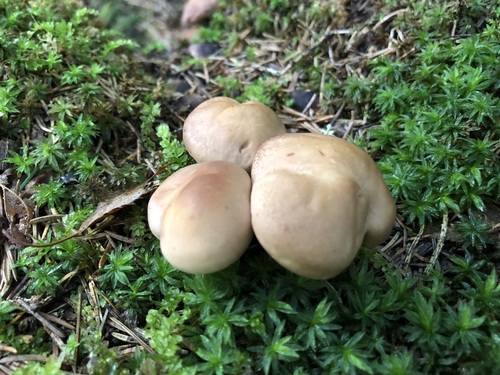
Entoloma argyropelle
(Alb. & Schwein.) P. Kumm.
gbif· cc-by
Royal Botanic Gardens, Kew
Description
A mushroom in the family Entolomataceae found in tropical regions.
This description is brief — help expand it
Edible Uses
Several Entoloma species are known to be poisonous, causing gastroenteric symptoms (vomiting, diarrhea, nausea, and abdominal pain). At least one poisonous species, E. rhodopolium, has been found to contain significant quantities of the mycotoxin muscarine. The English naturalist Worthington George Smith mistakenly ate Entoloma sinuatum and was "so continually and fearfully purged, and suffered so much from headache and swimming of the brain, that I really thought that every moment would be my last." Other species known to be poisonous include Entoloma mammosum, E. pascuum, E. strictius, and E. vernum. Additional species reported as poisonous include Entoloma abortivum (reported as edible, below), E. aprile, E. bahusiense, E. grande, E. luridum, E. omiense, and E. quadratum. Fruit bodies of a number of Entoloma species are reported as being locally consumed, including Entoloma abortivum (reported as toxic, above) and E. clypeatum in Mexico, E. rhodopolium (reported as toxic, above) and E. clypeatum in Ukraine, and E. argyropus in Tanzania. It seems probable that some of these Entoloma species were misidentified and "all should be regarded as potentially dangerous".
Distribution
It is a tropical plant.
Where It Grows
Africa, East Africa, Tanzania,
References (1)
- Boa, E. R., 2004, Wild edible fungi and their importance to people. FAO Non Wood Forest Products Booklet 17