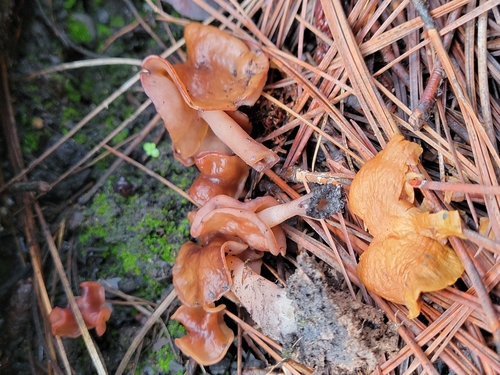
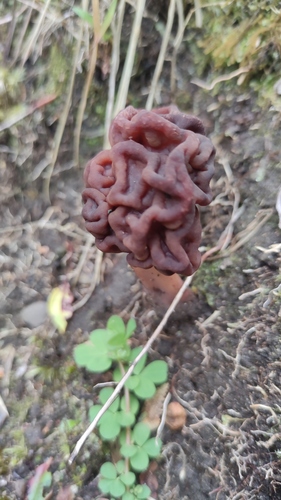
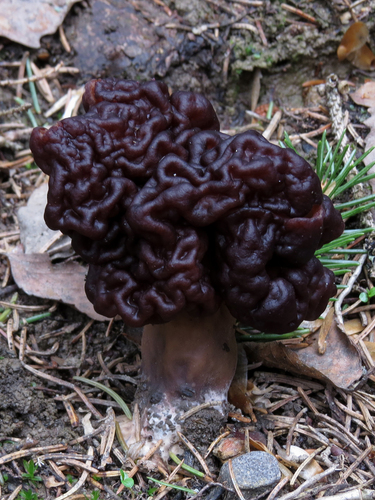
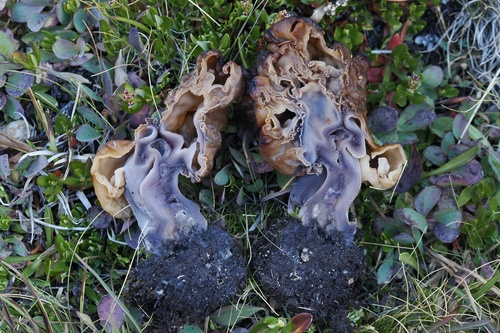
Gyromitra ussuriensis
Lj. N. Vassiljeva
iNaturalist· cc-by-nc
(c) 白山 弘子, some rights reserved (CC BY-NC)
iNaturalist· cc-by-nc
(c) 白山 弘子, some rights reserved (CC BY-NC)
iNaturalist· cc-by-nc
(c) 白山 弘子, some rights reserved (CC BY-NC)
Description
Gyromitra ussuriensis is a mushroom in the family Discinaceae found in temperate regions.
This description is brief — help expand it
Edible Uses
The mushroom fruiting body is edible.
Known Hazards
It contains small quantities of hydrazines; its content in gyromitrin was scientifically assessed by Viernstein et al. (1980) and resulted of about 1mg per kg of fresh mushroom (roughly 1,500-fold less compared to that of Gyromitra esculenta). Though no casualties have been ascribed to its consumption, parboiling is still highly recommended. Some guides have listed it as being edible if properly prepared. However, consumption is not recommended due to variability and similarity to other more toxic species of Gyromitra. This fungus has been banned for sale in France since 1991 due to potential toxicity, the effects of which would cause a fairly rare fatal neurodegenerative disease, amyotrophic lateral sclerosis (ALS).
Distribution
It is a temperate plant.
Where It Grows
Russia,
References (1)
- Boa, E. R., 2004, Wild edible fungi and their importance to people. FAO Non Wood Forest Products Booklet 17