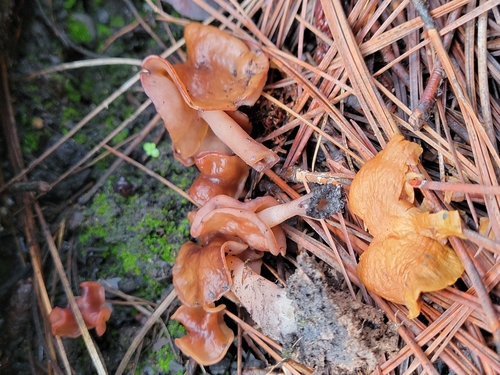
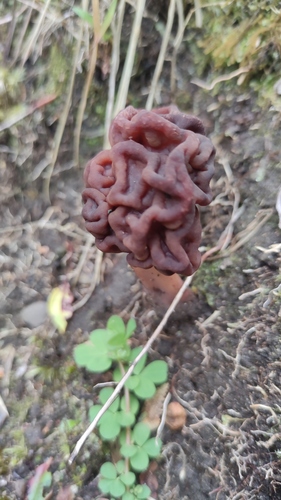
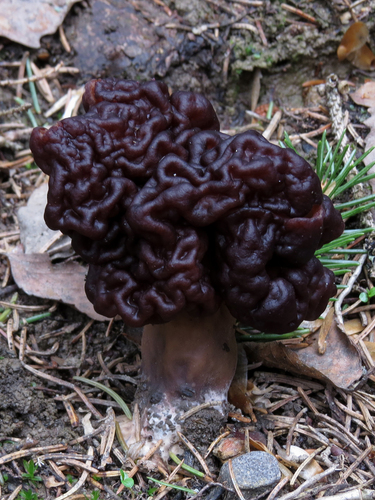
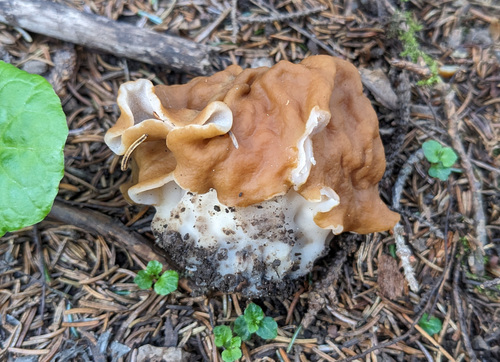
Gyromitra infula
(Schaeff.) Quel.
iNaturalist· cc-by-nc
(c) Taye Bright, some rights reserved (CC BY-NC)
iNaturalist· cc-by-nc
(c) Taye Bright, some rights reserved (CC BY-NC)
iNaturalist· cc-by-nc
(c) Taye Bright, some rights reserved (CC BY-NC)
Description
A subtropical mushroom in the family Discinaceae that is sold in local markets.
This description is brief — help expand it
Known Hazards
This fungus has been widely regarded as poisonous, as it was long believed to contain the toxic compound gyromitrin, present in some species of Gyromitra, which when digested is metabolized into monomethylhydrazine, a major component of rocket fuel. However, a 2023 study found no traces of gyromitrin in G. infula (now called Paragyromitra infula) using a new chromatography method.
Distribution
It is a subtropical plant.
Where It Grows
Asia, Mexico, Nepal, North America,
Other Information
It is sold in local markets.
Also Known As
Casquito, Silla de montar
References (6)
- Boa, E. R., 2004, Wild edible fungi and their importance to people. FAO Non Wood Forest Products Booklet 17
- Christensen, M., et al, 2008, Collection and Use of Wild Edible Fungi in Nepal. Economic Botany, 62(1), 2008, pp. 12–23
- Cortes, L.E.U., et al, 2018, Ethnomycology and mushroom selling in a market from Northwest Puebla, México. Scientia Fungorum vol. 47: 47-55
- Montoya, A., et al, 2014, Availability of Wild Edible Fungi in La Malinche National park, Mexico. Journal of Mycology. Article ID 241896, 15 pages
- Perez-Moreno, J. et al, 2008, Wild Mushroom Markets in Central Mexico and a Case Study at Ozumba. Economic Botany, 62(3), 2008, pp. 425–436
Show all 6 references Hide references
- Perez-Moreno, J., et al, 2009, Social and Biotechnological Studies of Wild Edible Mushrooms in Mexico. Acta Botanica Yunnanica Suppl. XV1: 55-61