Gyromitra esculenta
(Pers.) Fr.
False morel
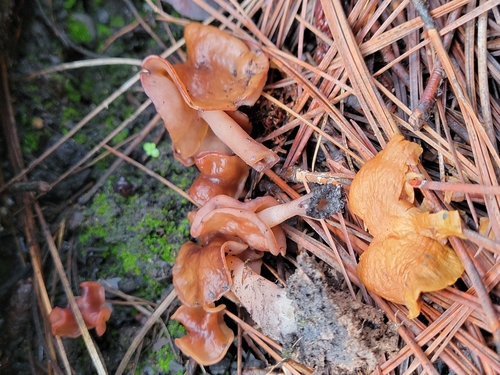
iNaturalist· cc-by-nc
(c) Kari Pihlaviita, some rights reserved (CC BY-NC)
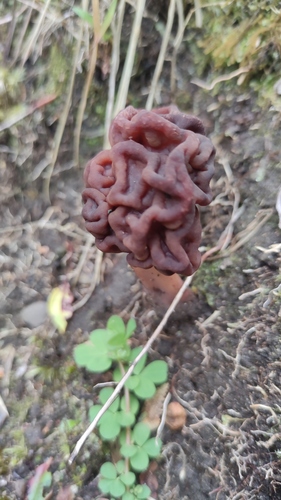
iNaturalist· cc-by-nc
(c) Drew Parker, some rights reserved (CC BY-NC), uploaded by Drew Parker
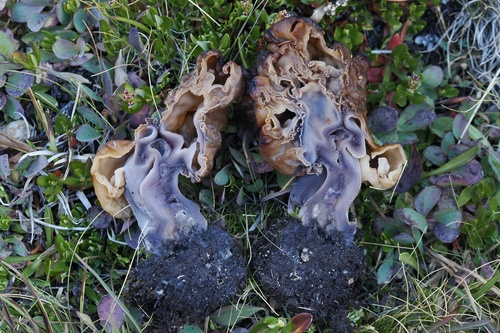
iNaturalist· cc-by-nc
(c) jay, some rights reserved (CC BY-NC), uploaded by jay
Summary
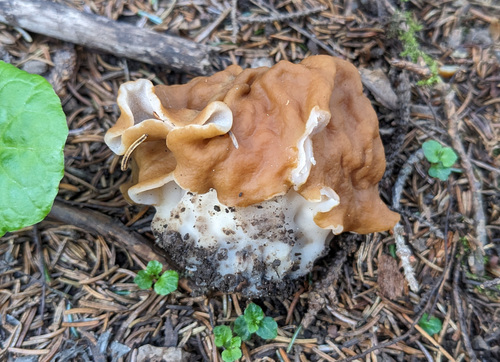
Source: WikipediaGyromitra esculenta is an ascomycete fungus from the genus Gyromitra. The fruiting body, or mushroom, is an irregular brain-shaped cap, dark brown in colour, that can reach 10 centimetres (4 inches) high and 15 cm (6 in) wide, perched on a stout white stipe up to 6 cm (2+1⁄2 in) high. It is widely distributed across Europe and North America, normally fruiting in sandy soils under coniferous trees in spring and early summer. Although potentially fatal if eaten raw, G. esculenta is sometimes parboiled for consumption, being a popular delicacy in Europe and the upper Great Lakes region of North America. However, evidence suggests that thorough cooking does not eliminate all toxins. When consumed, the principal active mycotoxin, gyromitrin, is hydrolyzed into the toxic compound monomethylhydrazine, which affects the liver, central nervous system, and sometimes the kidneys. Symptoms involve vomiting and diarrhea several hours after consumption, followed by dizziness, lethargy and headache. Severe cases may lead to delirium, coma, and death. Recent evidence suggests G. esculenta may be chronically toxic and linked to regional clusters of ALS.
Description
A mushroom.
This description is brief — help expand it
Edible Uses
Despite its recognized toxicity, G. esculenta is marketed and consumed in several countries or states in Europe and North America. It was previously consumed in Germany, with fungi picked in and exported from Poland; more recently, however, Germany and Switzerland discouraged consumption by prohibiting its sale. Similarly in Sweden, the Swedish National Food Administration warns that it is not fit for human consumption, and restricts purchase of fresh mushrooms to restaurants alone. The mushroom is still highly regarded and consumed in Bulgaria, being sold in markets and picked for export there. In some countries such as Spain, especially in the eastern Pyrenees, they are traditionally considered a delicacy, and many people report consuming them for many years with no ill effects. Despite this, the false morel is listed as hazardous in official mushroom lists published by the Catalan Government and sale to the public is prohibited throughout Spain. Outside of Europe, G. esculenta is consumed in the Great Lakes region and some western states in the United States. Selling and purchasing fresh false morels is legal in Finland, where it is highly regarded. However, the mushrooms are required by law to be accompanied with a warning that they are poisonous and legally prescribed preparation instructions. False morels are also sold prepared and canned, in which case they are ready to be used. Official figures from the Finnish Ministry of Agriculture and Forestry report a total amount of false morels sold in Finland of 21.9 tonnes in 2006 and 32.7 tonnes, noted as being above average, in 2007. In 2002, the Finnish Food Safety Authority estimated annual consumption of false morels to be hundreds of tonnes in plentiful years. In Finnish cuisine, false morels may be cooked in an omelette, or gently sautéed in butter in a saucepan, flour and milk added to make a béchamel sauce, or pie filling. Alternatively, more fluid can be added for a false morel soup. Typical condiments added for flavour include parsley, chives, dill and black pepper. While cooking the fungus removes (most of) the toxins, the cook can become poisoned by the hydrazine fumes given off by cooking.
Traditional Uses
CAUTION: It is poisonous unless cooked. Although eaten by some people it can be poisonous even deadly especially for children.
This uses section is brief — help expand it
Known Hazards
Toxic reactions have been known for at least a hundred years. Experts speculated the reaction was more of an allergic one specific to the consumer, or a misidentification, rather than innate toxicity of the fungus, due to the wide range in effects seen. Some would suffer severely or perish while others exhibited no symptoms after eating similar amounts of mushrooms from the same dish. Yet others would be not poisoned after eating G. esculenta for many years. However, the fungus is now widely recognized as potentially deadly. Gyromitra esculenta contains levels of the poison gyromitrin that vary locally among populations; although these mushrooms are only rarely involved in poisonings in either North America or western Europe, intoxications are seen frequently in eastern Europe and Scandinavia. A 1971 Polish study reported at the time that the species accounted for up to 23% of mushroom fatalities each year. Death rates have dropped since the mid-twentieth century; in Sweden poisoning is common, though life-threatening poisonings have not been detected and there was no fatality reported over the 50 years from 1952 to 2002. Gyromitra poisonings are rare in Spain, due to the widespread practice of drying the mushrooms before preparation and consumption, but has a mortality rate of about 25%. A lethal dose of gyromitrin has been estimated to be 10–30 mg/kg for children and 20–50 mg/kg in adults. These doses correspond to around 0.2–0.6 kg (7 oz – 1 lb 5 oz) and 0.4–1 kg (14 oz – 2 lb 3 oz) of fresh mushroom respectively. Evidence suggests that children are more severely affected; it is unclear whether this is due to a larger weight consumed per body mass ratio or to differences in enzyme and metabolic activity.
Distribution
It is a temperate plant.
Where It Grows
Andorra, Asia, Australia, Belarus, Chile, China, Europe, Finland, Kyrgyzstan, North America, Russia, Scandinavia, South America, Sweden,
Also Known As
Korvasieni, Luhuajun, Stenmurkla
References (9)
- Boa, E. R., Wild edible fungi and their importance to people. FAO Non Wood Forest Products Booklet 17
- Fuhrer, B., 2005, A field guide to Australian Fungi. Bloomings Books. p 318
- Hall, I. R., et al, 2003, Edible and Poisonous Mushrooms of the World. Timber Press. p 311
- Kaufmann, B. et al, 1999, The Great Encyclopedia of Mushrooms. Konemann. p 230
- Pelkonen, R., et al, 2008, Element Concentrations in Wild Edible Mushrooms in Finland. The Finnish Environment 25
Show all 9 references Hide references
- Schneider, E., 2001, Vegetables from Amaranth to Zucchini: The essential reference. HarperCollins. p 302
- Svanberg, I., & Lindh, H., 2019, Mushroom hunting and consumption in twenty-first century post-industrial Sweden. Journal of Ethnobiology and Ethnomedicine (2019) 15:42
- Stryamets, N., et al, 2015, From economic survival to recreation: contemporary uses of wild food and medicine in rural Sweden, Ukraine and NW Russia. Journal of Ethnobiology and Ethnomedicine 11:53
- www.plantnames.unimelb.edu.au