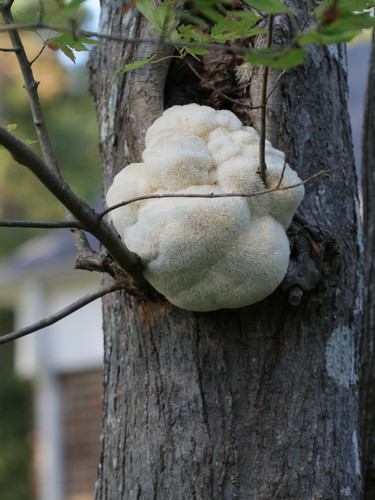
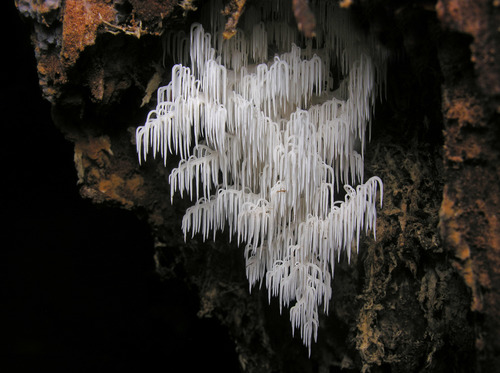
Hericium flagellum
(Scop.) Pers.
iNaturalist· cc-by-nc
(c) Tomasz Wilk, some rights reserved (CC BY-NC)
iNaturalist· cc-by-nc
(c) Boris Mittermeier, some rights reserved (CC BY-NC)
iNaturalist· cc-by-nc
(c) Tomasz Wilk, some rights reserved (CC BY-NC)
Summary
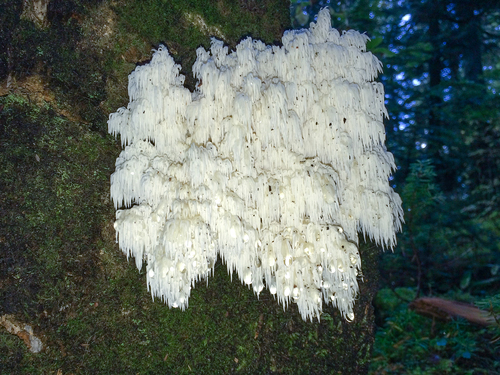
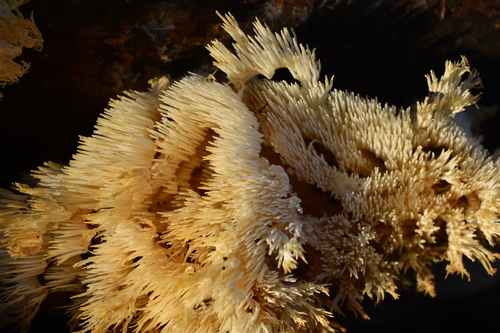
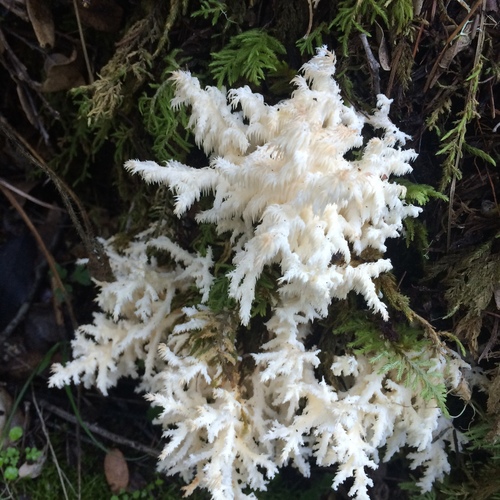
Source: WikipediaHericium flagellum is a species of fungus in the family Hericiaceae native to Europe, first described by Giovanni Antonio Scopoli, and placed into its current genus by Christiaan Hendrik Persoon in 1797. It was confirmed—using sexual incompatibility studies—to be a distinct species from H. coralloides in 1983. Found in montane areas, typically on newly fallen trunks and stumps of fir (Abies species), especially silver fir with one study finding over half of recorded specimens growing on silver fir deadwood in high conservation value areas. Spores are 5–6.5 by 4.5–5.5 μm.
Description
Hericium flagellum is a mushroom in the family Hydnaceae found in subtropical regions.
This description is brief — help expand it
Edible Uses
The mushroom fruiting body is edible.
Distribution
It is a subtropical plant.
Where It Grows
Asia, Himalayas, Nepal,
References (2)
- Adhikari, M. K., 2014, Addition and correction to the knowledge on edibility of wild mushrooms in Nepal: a discussion. Bul. Dept. Pl. Res. N. 36, Nepal p 5
- Boa, E. R., 2004, Wild edible fungi and their importance to people. FAO Non Wood Forest Products Booklet 17