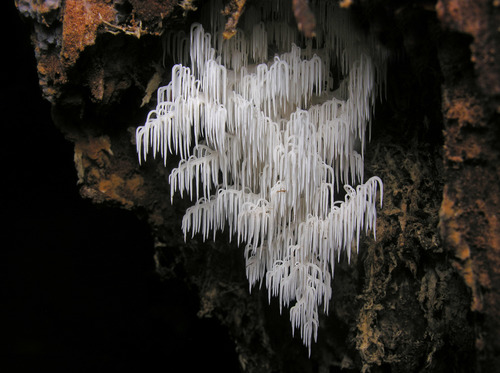
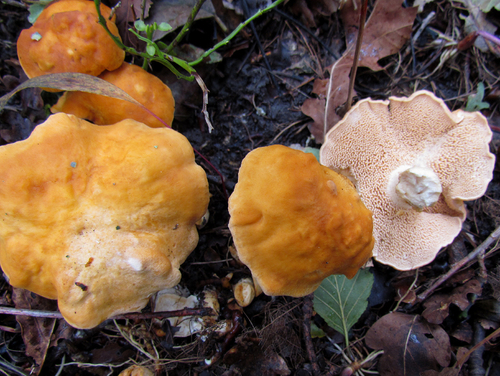
Hericium erinaceus
(Bull.) Persoon
Lion's mane mushroom, Bearded tooth mushroom
iNaturalist· cc-by-nc
(c) Patrick Coin, some rights reserved (CC BY-NC)
iNaturalist· cc-by-nc
(c) Patrick Coin, some rights reserved (CC BY-NC)
iNaturalist· cc-by-nc
(c) Patrick Coin, some rights reserved (CC BY-NC)
Summary
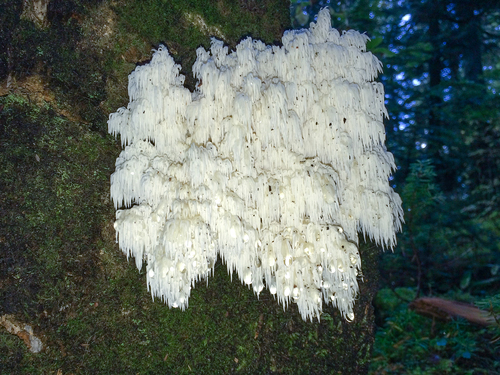
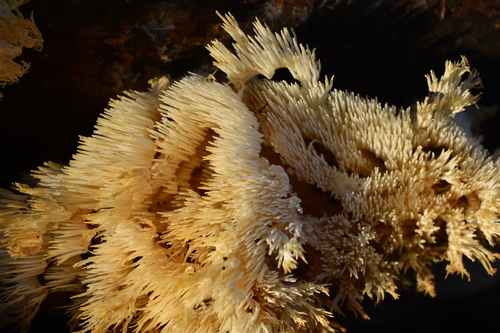
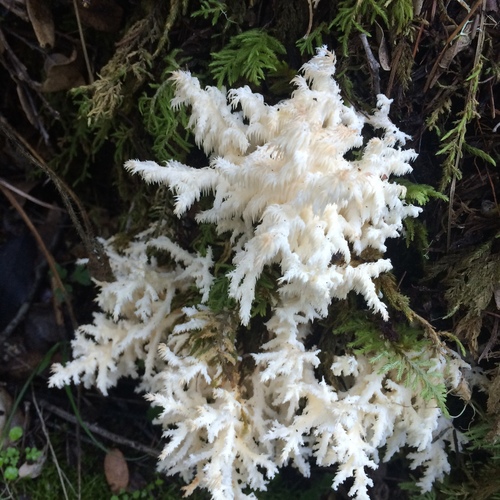
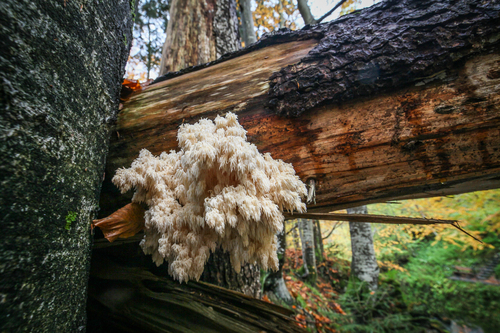
Source: WikipediaHericium erinaceus, commonly known as lion's mane, yamabushitake, bearded tooth fungus, or bearded hedgehog, is a species of tooth fungus. It tends to grow in a single clump with dangling spines longer than 1 centimetre (1⁄2 inch). It can be mistaken for other Hericium species that grow in the same areas. Native to North America and Eurasia, the mushrooms are common during late summer and autumn on hardwoods, particularly American beech and maple. It is typically considered saprophytic, as it mostly feeds on dead trees. It can also be found on living trees, usually in association with a wound. It is an edible mushroom and used in traditional Chinese medicine. It is generally safe to eat, but its medicinal effectiveness, safety in supplements, and active compounds are unproven.
Description
A mushroom. The crap can be 15 cm across.
This description is brief — help expand it
Edible Uses
The edible fruiting bodies are common in gourmet cooking, with young specimens considered the best. Alongside shiitake (Lentinus edodes) and oyster (Pleurotus ostreatus) mushrooms, H. erinaceus is used as a specialty mushroom in recipes. H. erinaceus fruiting bodies contain 57% carbohydrates (8% as dietary fiber), 4% fat, and 22% protein.
Distribution
It is a temperate plant. It grows on the top of trees.
Where It Grows
Asia, Caucasus, China, Europe, Georgia, Himalayas, India, Japan, Mexico, Nepal, North America,
Synonyms
Also Known As
Hedgehog mushroom, Houtou, Nyut o hmu, Thagar chyau, Thagar syamu, Thakre chyau, Thokre chyau, Yang mao jun
References (10)
- Ambasta, S.P. (Ed.), 2000, The Useful Plants of India. CSIR India. p 277 (As Hydnum erinaceus)
- Bussman, R. W., et al, 2016, A comparative ethnobotany of Khevsureti, Samtskhe-Javakheti, Tusheti, Svaneti, and Racha-Lechkhumi, Republic of Georgia (Sakartvelo), Caucasus. Journal of Ethnobiology and Ethnomedicine (2016) 12:4
- Christensen, M., et al, 2008, Collection and Use of Wild Edible Fungi in Nepal. Economic Botany, 62(1), 2008, pp. 12–23
- forests-366202-SI
- Hall, I. R., et al, 2003, Edible and Poisonous Mushrooms of the World. Timber Press. p 308
Show all 10 references Hide references
- Kharel, S. & Rajbhandary, S., Ethnomycological Knowledge of Some Wild Edible Mushrooms in Bhardeo, Lalitpur, Nepal.
- Liu, D., et al, 2018, An ethnobotanical survey of edible fungi in Chuxiong City, Yunnan, China. Journal of Ethnobiology and Ethnomedicine (2018) 14:42
- Quinonez-Martinez, M., et al, 2014, Knowledge and use of edible mushrooms in two municipalities of the Sierra Tarahumara, Chihuahua, Mexico. Journal of Ethnobiology and Ethnomedicine 2014, 10:67
- Semwal, K. C., et al, 2014, Edible mushrooms of the Northwestern Himalaya, India: a study of indigenous knowledge, distribution and diversity. Mycosphere 5(3): 440–461
- Wikipedia