Acronychia laevis
Forster & G. Forster
Hard aspen, Glossy acronychia
iNaturalist· cc-by-nc
(c) Mark C, some rights reserved (CC BY-NC), uploaded by Mark C
iNaturalist· cc-by-nc
(c) ryanthughes, some rights reserved (CC BY-NC)
iNaturalist· cc-by-nc
(c) Martin Bennett, some rights reserved (CC BY-NC), uploaded by Martin Bennett
Summary
Source: WikipediaAcronychia laevis, commonly known as hard aspen, glossy acronychia or northern white lilly pilly, is a species of shrub or small tree in the citrus family, and is endemic to eastern Australia. It has simple, elliptical to egg-shaped leaves, groups of creamy white flowers and fleshy, mitre-shaped to spherical fruit.
Description
A shrub or small tree. It grows 5 m tall. There are prickles along the stem. The leaves are twice divided and there are 8-18 pairs of pinnae. There are up to 50 pairs of pinnules on each pinnae. The flowers are yellow. They are in large clusters at the ends of branches. The pods are flattened.
Edible Uses
The fruit is edible.
Distribution
It is a tropical and subtropical plant. It grows in Northeast Queensland and New South Wales in Australia and in New Caledonia. It needs a well drained moist soil. It prefers a protected position. It will grow on most soils. Plants are mostly in rainforest. Melbourne Botanical gardens.
Where It Grows
Australia*, Lord Howe Island, New Caledonia, Pacific,
Cultivation
It can be grown from seed. The seed germinate poorly. They should be soaked for several days before planting. It can probably also be grown from cuttings.
Production
Fruit is ripe June to October.
Other Information
The fruit are not very attractive.
Notes
There are 42-50 Acronychia species.
References (11)
- Anon., 2003, Native Plants for the Fitzroy basin. Society for Growing Australian Plants Inc. (Rockhampton Branch)
- Char. Gen. 54 T. 27. 1775
- Cherikoff V. & Isaacs, J., The Bush Food Handbook. How to gather, grow, process and cook Australian Wild Foods. Ti Tree Press, Australia p 145
- Cooper, W. and Cooper, W., 2004, Fruits of the Australian Tropical Rainforest. Nokomis Editions, Victoria, Australia. p 457
- Cribb, A.B. & J.W., 1976, Wild Food in Australia, Fontana. p 21
Show all 11 references Hide references
- Elliot, W.R., & Jones, D.L., 1982, Encyclopedia of Australian Plants suitable for cultivation. Vol 2. Lothian. p 142
- Jackes, B.R., 2001, Plants of the Tropics. Rainforest to Heath. An Identification Guide. James Cook University. p 78
- Jones D, L, 1986, Ornamental Rainforest Plants in Australia, Reed Books, p 103, 340
- Melzer, R. & Plumb, J., 2011, Plants of Capricornia. Belgamba, Rockhampton. p 305
- Pearson, S. & A., 1992, Rainforest Plants of Eastern Australia. Kangaroo Press p 18
- Steenbeeke, Greg as part of the Plants Directory project. List of plant species from northern NSW that may be used as food plants p 2
More from Rutaceae
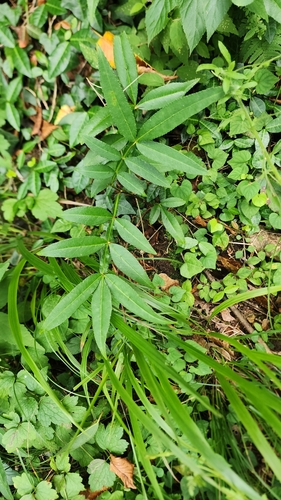
Zanthoxylum planispinum
Winged prickly ash, Chinese wingleaf pricklyash
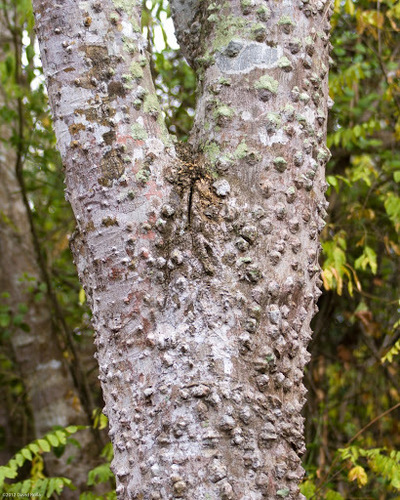
Zanthoxylum rhetsa
Indian prickly ash, Cape yellowwood
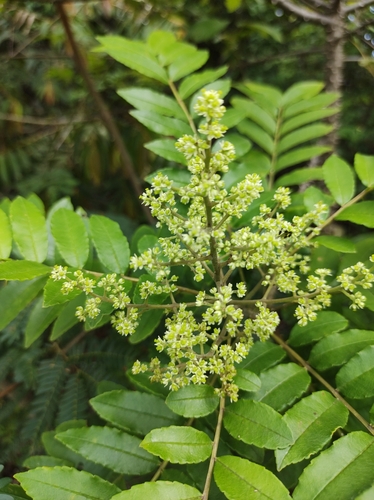
Zanthoxylum rhoifolium
Dark prickly ash
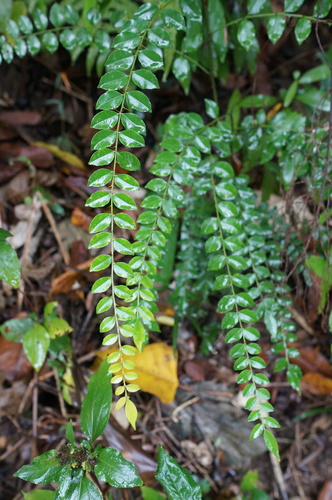
Zanthoxylum scandens
Zanthoxylum schinifolium
Green zanthoxylum, Aromatic zanthoxylum
Zanthoxylum simulans
Szechwan pepper, Sichuan peppercorn