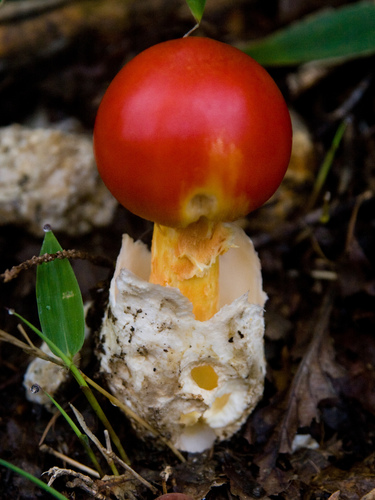
Amanita gemmata
(Fr.) Bertill.
Wikipedia· cc-by-sa
Wikimedia Commons - Amanita_gemmata_von_hms.jpg
iNaturalist· cc-by-nc
(c) toddfox, some rights reserved (CC BY-NC)
Summary
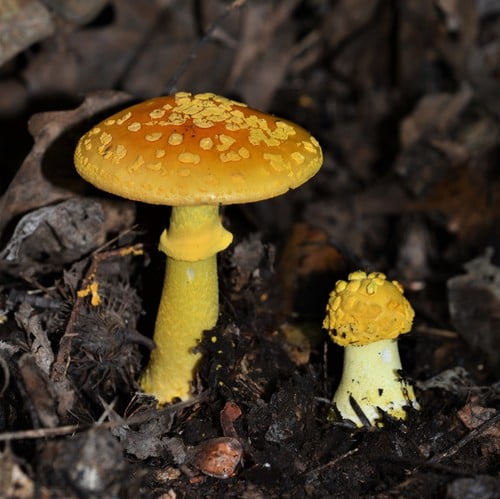
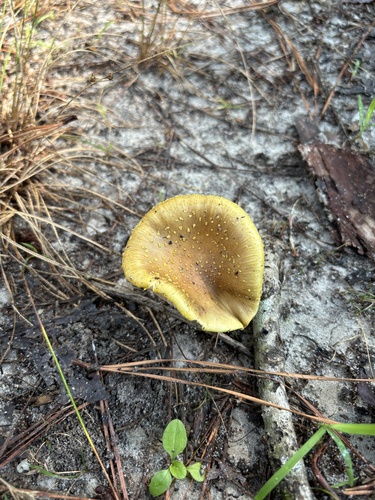
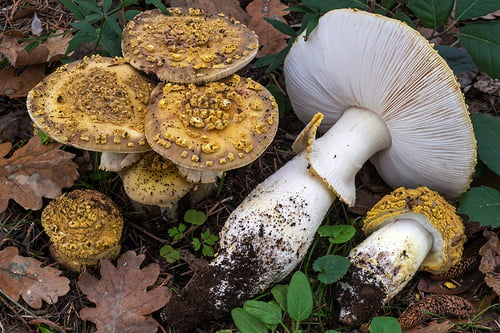
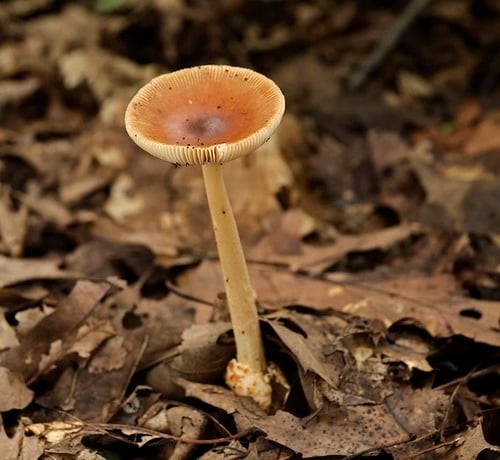
Source: WikipediaAmanita gemmata, commonly known as the gemmed amanita or the jonquil amanita, is an agaric mushroom of the family Amanitaceae and genus Amanita. The fruit body has a cap that is a dull to golden shade of yellow, and typically 2.5–12 centimetres (1–4+3⁄4 inches) in diameter. The cap surface is sticky when moist, and characterized by white warts, which are easily detached. It is initially convex, and flattens out when mature. The flesh is white and does not change colour when cut. The gills are white and closely spaced. The stem is pale yellow, and measures 4–12 cm (1+5⁄8–4+3⁄4 in) long by 0.5–1.9 cm (1⁄4–3⁄4 in) thick. The partial veil that covers the young fruit body turns into the ring on the stem at maturity. The spore print is white. It resembles numerous other species. This species is a mycorrhizal fungus, widespread in Europe. It can grow either singly, scattered, or in groups. It prefers habitats like coniferousand mixed forests and alongside paths, where it fruits in summer and fall. It is a toxic mushroom, containing ibotenic acid and muscimol.
Description
Amanita gemmata is a tropical mushroom in the family Amanitaceae.
This description is brief — help expand it
Known Hazards
Toxicity is suspected to be due to the presence of muscimol and ibotenic acid, which is also found in many species in section Amanita of the Amanita genus, including A. muscaria and A. pantherina. Generally, symptoms of poisoning appear within three hours of ingestion of the mushroom as visual hallucinations, nausea, vomiting, stomach pain, diarrhea, irregular and slow heart beat and agitation. Severe cases involving coma, convulsions, or death are extremely rare.
Distribution
It is a tropical plant.
Where It Grows
Central America, Costa Rica, Mexico, North America,
References (1)
- Boa, E. R., 2004, Wild edible fungi and their importance to people. FAO Non Wood Forest Products Booklet 17