Centranthus ruber
(L.) DC.
Red Spur Valerian
iNaturalist· cc-by
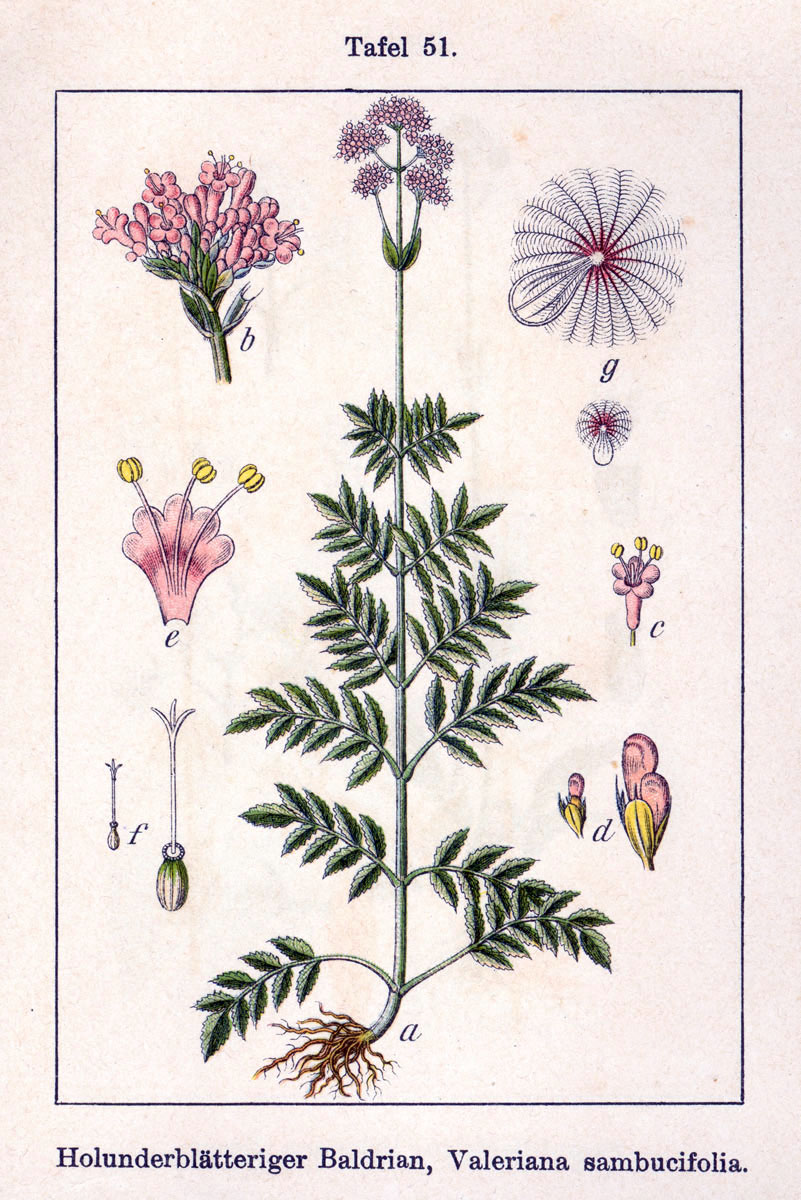
(c) Marie-Lan Nguyen, some rights reserved (CC BY)
iNaturalist· cc-by
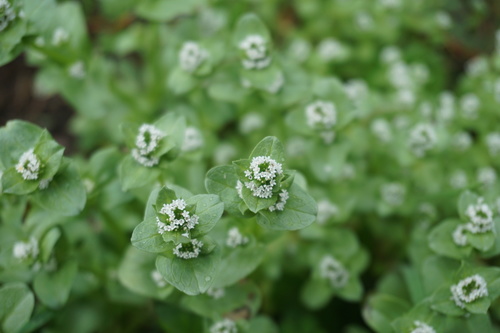
(c) Jacek Pietruszewski, some rights reserved (CC BY)
iNaturalist· cc-by
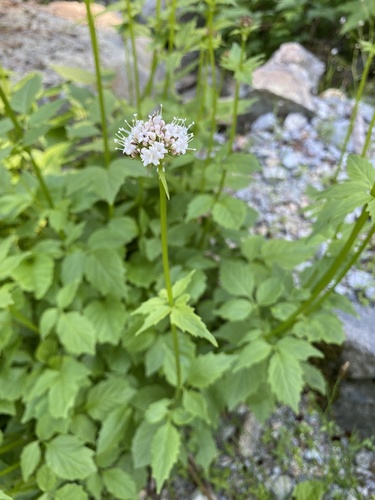
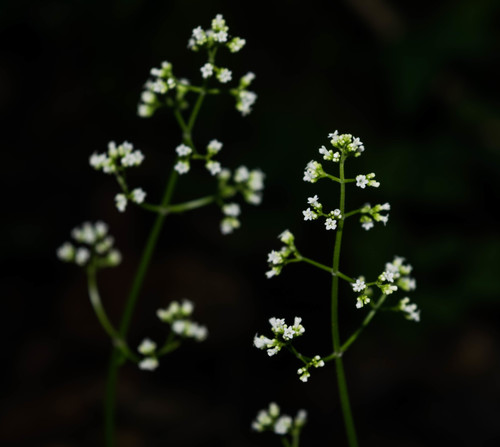
(c) Jacek Pietruszewski, some rights reserved (CC BY)
Summary
A hardy perennial reaching 0.9 m tall with a 0.6 m spread, growing at a medium rate. Hardy to UK zone 5 and not frost tender. Flowers June to August with seeds ripening July to September. Hermaphroditic, pollinated by bees and lepidopterans (moths and butterflies). Notable for attracting wildlife. Grows in light sandy, medium loamy, and heavy clay soils with good drainage, tolerating mildly acid to very alkaline pH. Requires full sun, adapting to dry or moist soil and tolerating drought and maritime exposure.
Description
A perennial plant. It has underground stems or rhizomes. It grows 60-90 cm high. The stems usually branch from the base. The stems are erect, smooth and hollow. The leaves are in a clump and fleshy. The lower leaves are sword shaped and 3-12 cm long by 1-5 cm wide. The upper leaves taper to the tip. The leaves have small teeth. The flowers are usually red or pink and in dense erect stems. These are 25 cm long. They are small and starry. There is only one stamen. The fruit is narrowly oval and 3-4 mm long. There is a rib on one side.
Edible Uses
Young leaves can be eaten raw or cooked as greens, whether in salads or as a vegetable. Opinions on their quality differ — some rate them as exceedingly good, while others find them rather bitter and less than desirable when added to salads. The root is cooked and used in soups.
Traditional Uses
Young leaves are eaten in raw salads and sandwiches. These are slightly bitter. They can be boiled and served with butter.
This uses section is brief — help expand it
Medicinal Uses
Red valerian is sometimes confused in herbals and folk tradition with true valerian (Valeriana officinalis). While true valerian has a very strong action on the nervous system, this species has no known medicinal properties. Reports describing it as a nervine likely reflect a confusion with Valeriana officinalis.
Distribution
It grows in temperate places. It is frost hardy. It grows in high rainfall areas. It can grow in poor soils and hot locations. It suits hardiness zones 6-10. Tasmania Herbarium.
Where It Grows
Africa, Argentina, Australia, Britain, Europe, France, Hawaii, Ireland, Italy, Luxembourg, Mediterranean, North Africa, Lord Howe island, San Marino, Sicily, Slovenia, South America, Tasmania, Turkey, Türkiye, USA,
Cultivation
Plants can be grown by seed.
Propagation
Sow seed February to May in situ, or as soon as it is ripe in situ, barely covering it. Germination is usually rapid. The plant can also be divided in spring, or propagated from summer cuttings taken in a cold frame.
Other Uses
The seeds were used in ancient embalming.
Notes
There are about 10-12 Centranthus species. It can become invasive. Also put in the family Valerianaceae.
Synonyms
Also Known As
Baddariana russa, Jupiter's beard, Kiss-me-quick, Navadna rdeča špajka, Red valerian
References (27)
- Blamey, M and Grey-Wilson, C., 2005, Wild flowers of the Mediterranean. A & C Black London. p 424
- Bodkin, F., 1991, Encyclopedia Botanica. Cornstalk publishing, p 237
- Brickell, C. (Ed.), 1999, The Royal Horticultural Society A-Z Encyclopedia of Garden Plants. Convent Garden Books. p 246
- Cundall, P., (ed.), 2004, Gardening Australia: flora: the gardener's bible. ABC Books. p 354
- Curtis, W.M., 1963, The Students Flora of Tasmania Vol 2 p 278
Show all 27 references Hide references
- Dashorst, G.R.M., and Jessop, J.P., 1998, Plants of the Adelaide Plains & Hills. Botanic Gardens of Adelaide and State Herbarium. p 132
- Geraci, A., et al, 2018, The wild taxa utilized as vegetables in Sicily (Italy): a traditional component of the Mediterranean diet. Journal of Ethnobiology and Ethnomedicine (2018) 14:14
- Facciola, S., 1998, Cornucopia 2: a Source Book of Edible Plants. Kampong Publications, p 243
- Flora of Australia Volume 49, Oceanic Islands 1, Australian Government Publishing Service, Canberra. (1994) p 361
- Hedrick, U.P., 1919, (Ed.), Sturtevant's edible plants of the world. p 179
- Hibbert, M., 2002, The Aussie Plant Finder 2002, Florilegium. p 63
- Hussey, B.M.J., Keighery, G.J., Cousens, R.D., Dodd, J., Lloyd, S.G., 1997, Western Weeds. A guide to the weeds of Western Australia. Plant Protection Society of Western Australia. p 228
- Huxley, A. (Ed.), 1977, The Encyclopedia of the Plant Kingdom. Chartweil Books. p 223
- Irving, M., 2009, The Forager Handbook, A Guide to the Edible Plants of Britain. Ebury Press p 297
- Jackes, D. A., Edible Forest Gardens
- Joyce, D., 1998, The Garden Plant Selector. Ryland, Peters and Small. p 215
- J. B. P. A. M. de Lamarck & A. P. de Candolle, Fl. franc;. ed. 3, 4(2):239. 1805
- Lamp, C & Collet F., 1989, Field Guide to Weeds in Australia. Inkata Press. p 64
- Lazarides, M. & Hince, B., 1993, Handbook of Economic Plants of Australia, CSIRO. p 54
- Lentini, F. and Venza, F., 2007, Wild food plants of popular use in Sicily. J Ethnobiol Ethnomedicine. 3: 15
- Marinelli, J. (Ed), 2004, Plant. DK. p 448
- Morley, B. & Everard, B., 1970, Wild Flowers of the World. Ebury press. Plate 17
- Paczkowska, G . & Chapman, A.R., 2000, The Western Australian Flora. A Descriptive Catalogue. Western Australian Herbarium. p 566
- Pasta, S., et al, 2020, An Updated Checklist of the Sicilian Native Edible Plants: Preserving the Traditional Ecological Knowledge of Century-Old Agro-Pastoral Landscapes. Frontiers in Plant Science. Volume 11|Article 388
- Plants for a Future database, The Field, Penpol, Lostwithiel, Cornwall, PL22 0NG, UK. http://www.scs.leeds.ac.uk/pfaf/
- Tasmanian Herbarium Vascular Plants list p 58
- Turner, N. J. et al, 2011, Edible and Tended Wild Plants, Traditional Ecological Knowledge and Agroecology. Critical Reviews in Plant Sciences, 30:198-225