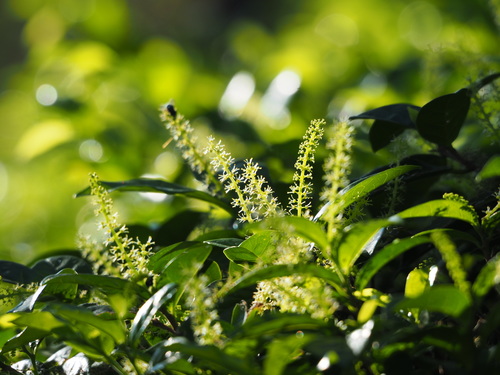
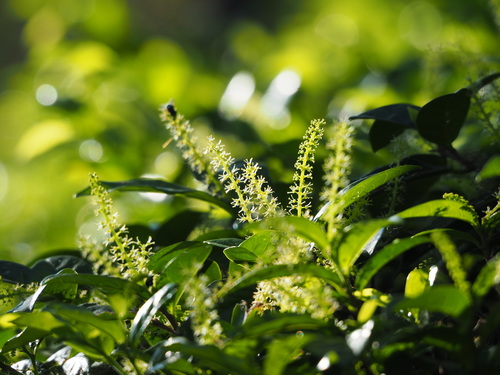
Baccaurea racemosa
(Reinw. ex Bl.) Muell. Arg.
Yellow menteng tree
iNaturalist· cc-by-nc-sa
(c) Reuben C. J. Lim, some rights reserved (CC BY-NC-SA)
iNaturalist· cc-by-nc-sa
(c) Reuben C. J. Lim, some rights reserved (CC BY-NC-SA)
Summary
Source: WikipediaBaccaurea racemosa (common names: kapundung or menteng) is a species of fruit tree in Southeast Asia. It belongs to the family Phyllanthaceae. The name of the elite suburb of Menteng in central Jakarta comes from this tree.
Description
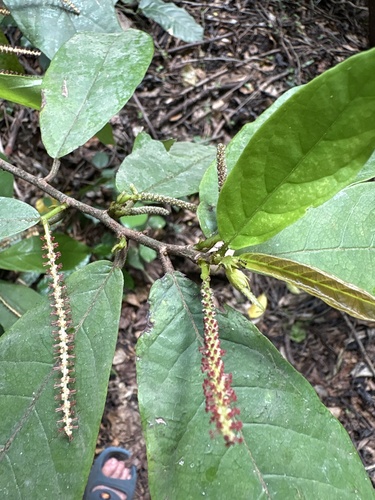
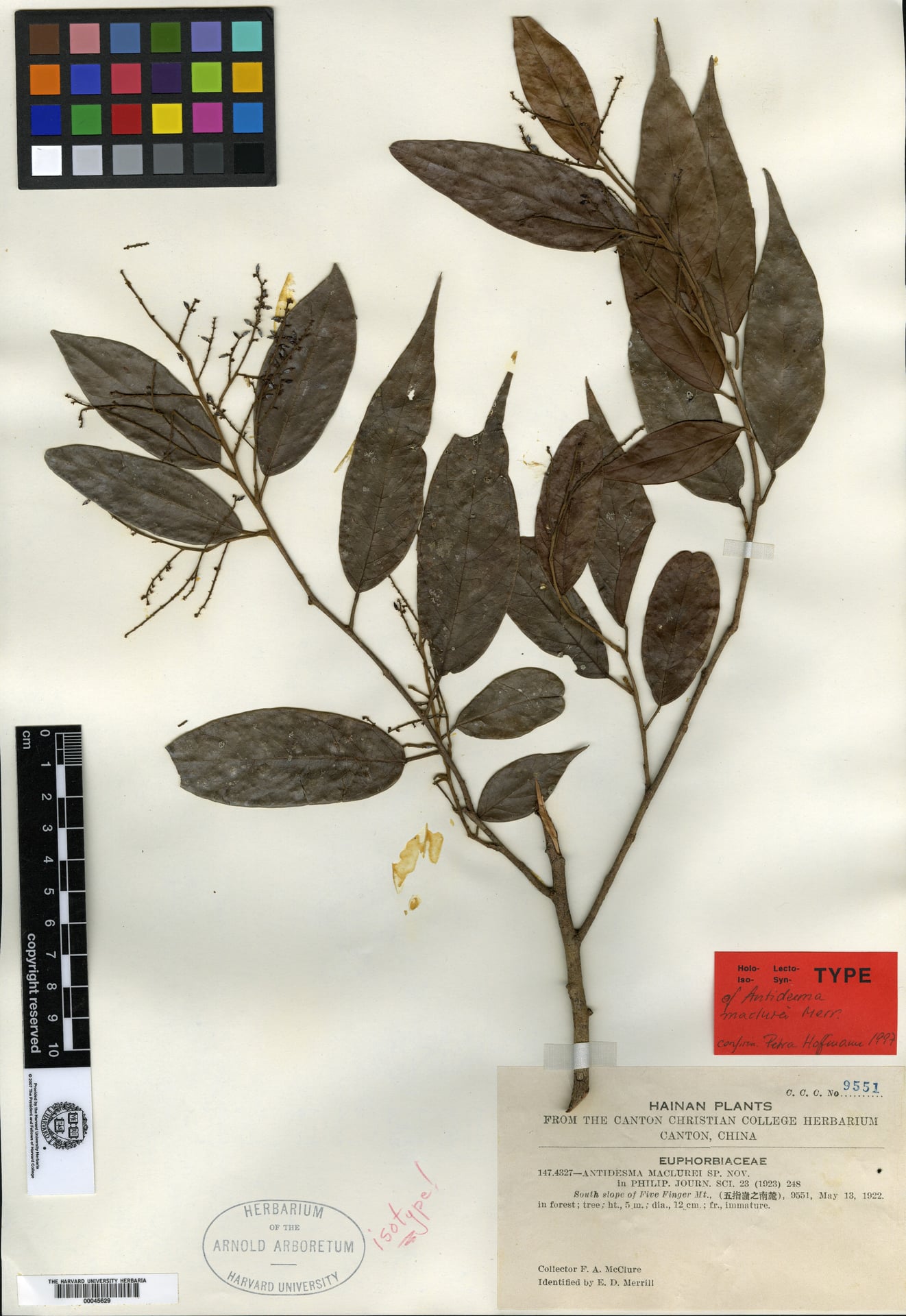
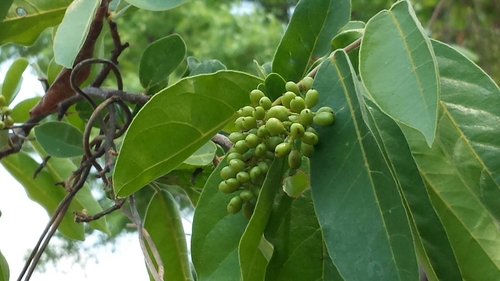
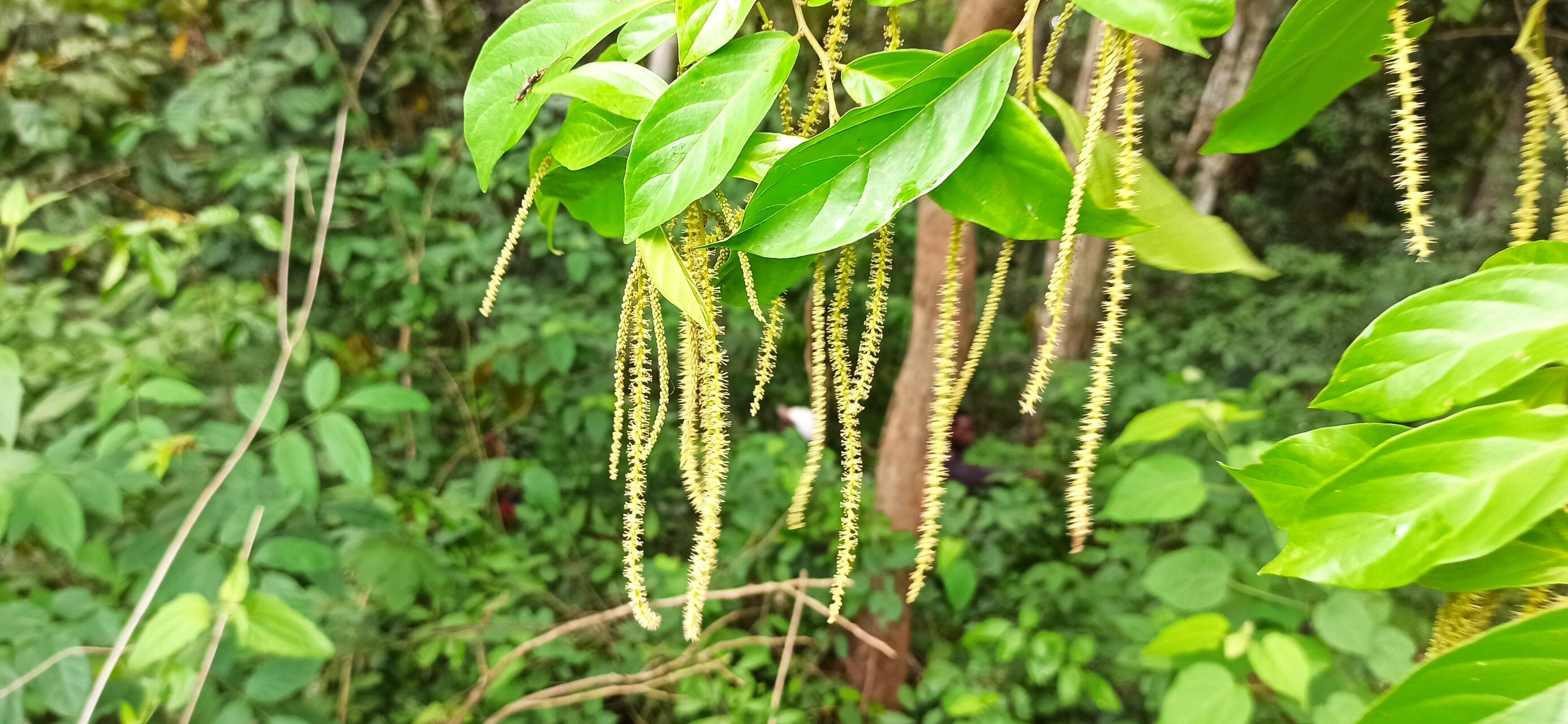
A tree. It grows 15-25 m tall. The trunk can be 25-70 cm across. The crown is irregular shaped and dense. The leaves are oval and 7-18 cm long by 3-7 cm wide. The leaves have glands. The leaf stalk is 0.5-4.5 cm long. The leafy growths at the base of the leaves (stipules) are triangle shaped. The flowering stalks are on the old branches or on the trunks. The male and female flowers are separate. The male flowering stalks are 5-13 cm long. The flowers are in clusters of 3. The female flowering stalks are 10-20 cm long. The fruit are white and about 3.5 cm across. When ripe they turn scarlet. They are covered with fine silvery hairs.
Edible Uses
Fruits eaten fresh, stewed, pickled or fermented. Much esteemed by local people. The fruit must be eaten sparingly, or vomiting may occur. The sub-acid, yellow-green or reddish fruits are 20 - 24mm in diameter with a pink pulp.
Traditional Uses
The fruit are eaten raw. They can be sweet or acidic. Caution: There are reports of vomiting from eating large amounts of fruit.
This uses section is brief — help expand it
Medicinal Uses
We have no specific information on this species, but the bark of several members of this genus is used to relieve eye inflammation.
Known Hazards
There are reports of vomiting from eating large amounts of the fruit.
Distribution
A tropical plant. It grows in rainforest and in fresh water swamps. It grows up to 1,100 m above sea level. In Cairns BG.
Where It Grows
Asia, Australia, Brunei, India, Indochina, Indonesia*, Malaysia, SE Asia, Singapore, Sri Lanka, Thailand,
Cultivation
Plants can be grown by seeds, air-layering and grafting,
Propagation
Seed - when sown fresh it usually germinates in a few days.
Other Uses
Dyes are made from the bark. A dye is obtained from the leaves. A fibre used for making paper is obtained from the plant. This could mean the pulped wood. The excellent timber is used for house and boat construction and furniture making. In common with other trees that produce their flowers and fruits on the trunk of the tree, members of this genus are generally considered to be good support trees for the climbing rattan palms, which are grown to provide material for basket making, weaving into furniture, making ropes etc.
Other Information
It is a cultivated fruit tree.
Notes
There are about 80 Baccaurea species.
Synonyms
Also Known As
Bencoy, Engkuni, Jintah merah, Jintek merah, Jintek-jintek, Kapunduang, Kapundung, Kau masam, Kepundung, Kononau, Kunau, Longkumo, Lulai paya, Mentali, Menteng, Moho liox, Motok hei, Pohon menteng emas, Rambai ayam, Setambun, Steambun betina, Tuku-takal, Tunding undang, Umbarian
References (25)
- Arora, R. K., 2014, Diversity in Underutilized Plant Species - An Asia-Pacific Perspective. Bioversity International. p 60
- Bircher, A. G. & Bircher, W. H., 2000, Encyclopedia of Fruit Trees and Edible Flowering Plants in Egypt and the Subtropics. AUC Press. p 51 (Also as Baccaurea wallichii)
- Blench, R., 2004, Fruits and Arboriculture in the Indo-Pacific Region. Indo-Pacific Prehistory Association Bulletin 24. (Taipei Papers Volume 2) p 35
- Burkill, I.H., 1966, A Dictionary of the Economic Products of the Malay Peninsula. Ministry of Agriculture and Cooperatives, Kuala Lumpur, Malaysia. Vol 1 (A-H) p 280, Also p 283 (As Baccaurea wallichii)
- A. L. P. P. de Candolle, Prodr. 15(2):461. 1866
Show all 25 references Hide references
- Giesen, W., 2013, Paludiculture: sustainable alternatives on degraded peat land in Indonesia (revised draft)
- Hanum, F. I., 1999, Plant Diversity and Conservation Value of Ayer Hitam Forest, Selangor, Peninsula Malaysia. Pertanika J. Trop. Agric. Sci. 22(2):73-83
- Lembaga Biologi Nasional, 1977, Buah-Buahan, Balai Pustaka, Jakarta. p 90
- Meitei, L. R., et al, 2022, An ethnobotanical study on the wild edible plants used by forest dwellers in Yangoupokpi Lokchao Wildlife Sanctuary, Manipur, India. Ethnobotany Research and Application 23:15
- Milow, P., et al, 2013, Malaysian species of plants with edible fruits or seeds and their evaluation. International Journal of Fruit Science. 14:1, 1-27
- Norfaizal, , M., et al, 2014, Flora Diversity of Sungai Teris, Karu Wildlife reserve, Pahang, Malaysia. Journal of Wildlife and Parks (2014) 28 : 81-91
- Pawera, L., et al, 2020, Wild Food Plants and Trends in Their Use: From Knowledge and Perceptions to Drivers of Change in West Sumatra, Indonesia, Foods. 2020, 9, 1240
- Priyadi, H., et al, 2010, Five hundred plant species in Gunung Halimun Salak National Park, West Java. A checklist including Sundanese names, distribution and use. CIFOR, FFPRI, SLU p 13
- PROSEA (Plant Resources of South East Asia) handbook, Volume 2, 1991, Edible fruits and nut. p 98
- PROSEA handbook Volume 9 Plants yielding non-seed carbohydrates. p 187
- Saw, L.G., LaFrankie, J. V. Kochummen, K. M., Yap S. K., 1991, Fruit Trees in a Malaysian Rain Forest. Economic Botany, Vol. 45, No. 1, pp. 120-136
- Slik, F., www.asianplant.net
- Sosef, M. S. M., Hong, L. T., & Prawirohatmodjo, S., (Eds.), 1998, Timber tree: Lesser-known timbers. Plant Resources of South-East Asia, 5(3), p 92
- Sukarya, D. G., (Ed.) 2013, 3,500 Plant Species of the Botanic Gardens of Indonesia. LIPI p 146
- Tankard, G., 1990, Tropical fruit. An Australian Guide to Growing and using exotic fruit. Viking p 126
- USDA, ARS, National Genetic Resources Program. Germplasm Resources Information Network - (GRIN). [Online Database] National Germplasm Resources Laboratory, Beltsville, Maryland. Available: www.ars-grin.gov/cgi-bin/npgs/html/econ.pl (10 April 2000)
- Wiersema, J. H. & Leon, B., 2013, World Economic Plants. A Standard Reference CRC Press. 2nd Ed. p 89
- World Checklist of Useful Plant Species 2020. Royal Botanic Gardens, Kew
- www.nationalherbarium.nl/thaueuph/ Flora of Thailand.
- Zeven, A. C. & de West, J. M. J., 1982, Dictionary of cultivated plants and their regions of diversity. Wageningen. p 52