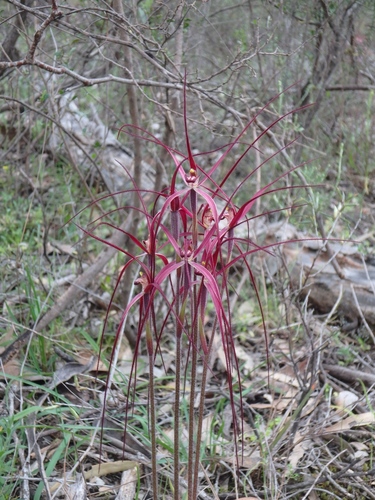
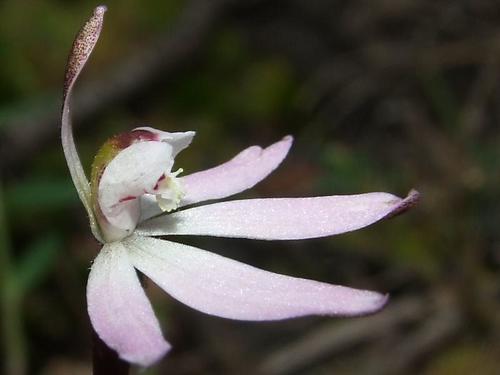
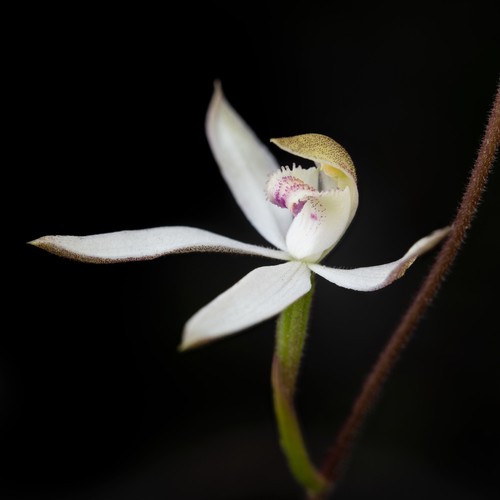
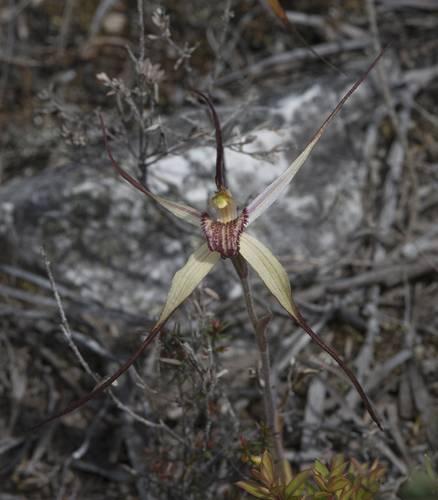
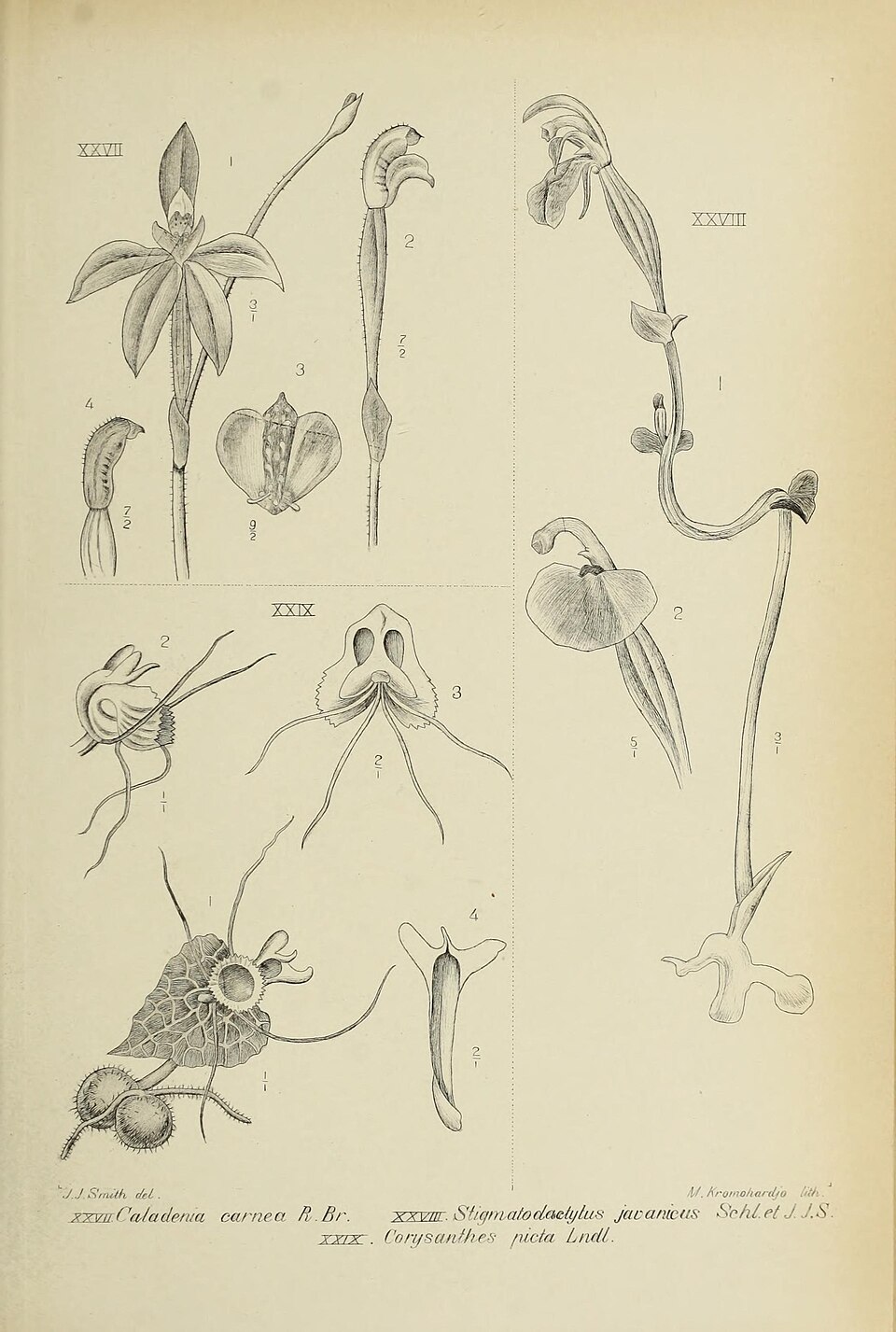
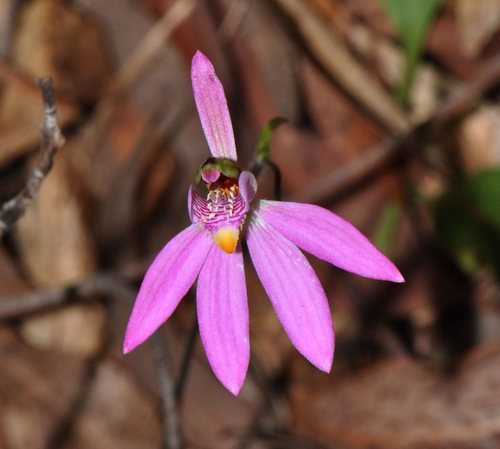
Caladenia dilatata
R. Br.
Fringed spider orchid
iNaturalist· cc-by-nc
(c) nick_clark, some rights reserved (CC BY-NC)
iNaturalist· cc-by-nc
(c) nick_clark, some rights reserved (CC BY-NC)
iNaturalist· cc-by-nc
(c) nick_clark, some rights reserved (CC BY-NC)
Summary
Source: WikipediaCaladenia dilatata, commonly known as the green-comb spider-orchid and as koolin by Aboriginal people of the Coranderrk area, is species of flowering plant in the family Orchidaceae and is endemic to south-eastern Australia. It has a single leaf and a single yellowish-green flower with reddish stripes and occurs in Victoria South Australia and Tasmania. It is similar to C. necrophylla which occurs in south-east South Australia and to C. concinna from southern New South Wales.
Description
An orchid. It keeps growing from year to year. It grows 45 cm high and spreads 30 cm wide. The stems are erect and slender. It has a flower at the top. The leaf occur singly and is sword shaped and hairy. They flowers are greenish-yellow and maroon. They are 10 cm across. They are in a group at the tip.
Edible Uses
The tubers and roots are eaten.
Traditional Uses
The tubers are eaten.
This uses section is brief — help expand it
Distribution
It is a temperate plant. It needs a light to medium well-drained soil. It needs a protected shaded position. It is damaged by drought or frost.
Where It Grows
Australia*, Tasmania,
Cultivation
Plants are grown by division.
Notes
There are about 80-160-200 Caladenia species. Many are in Australia.
Also Known As
Koolin
References (6)
- Bodkin, F., 1991, Encyclopedia Botanica. Cornstalk publishing, p 184
- De Angelis, D., 2005, Aboriginal Plant Use of the Greater Melbourne Area. La Trobe University Environment Collective
- Hastings Advance Community College, 2017, Uses for Native Plants of the Mornington Peninsula. 86pp. p 28
- Maiden, J. H., 1889, The Useful Native Plants of Australia (including Tasmania). The Technology Museum of NSW, Sydney. p 11
- Tasmanian Herbarium Vascular Plants list p 70
Show all 6 references Hide references
- Zola, N., & Gott, B., 1992, Koorie Plants Koorie People. Koorie Heritage Trust. p 46