Pavetta kimberleyana
S.T. Reynolds
wikimedia· pd
Public domainPublic domainfalsefalse This work has been released into the public domain by its author, Cygnis insignis. This applies worldwide.In some countries this may not be legally possible; if so:Cygnis insignis grants anyone the right to use this work for any purpose, without any conditions, unless such conditions are required by law. (via Wikimedia Commons)
wikimedia· cc-by-sa
Wikimedia Commons (via Wikimedia Commons)
wikimedia· cc-by
Melburnian (via Wikimedia Commons)
Summary
Source: WikipediaPavetta kimberleyana is a species of plant in the family Rubiaceae. It is native to northern Australia where it is largely restricted to the Kimberley region of north-western Western Australia.
Description
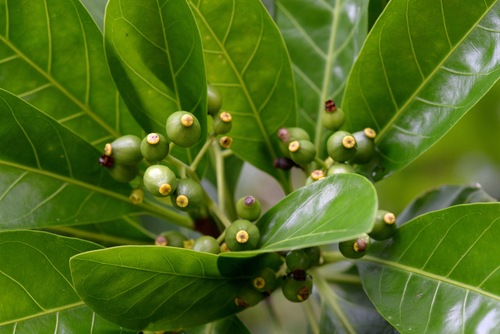
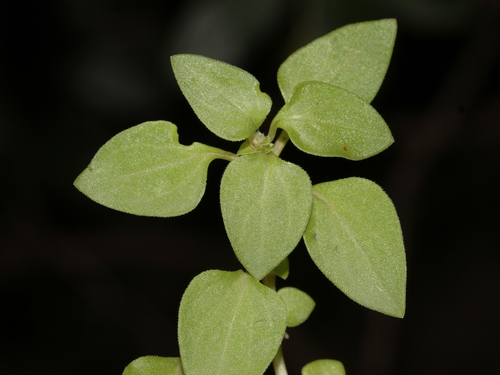
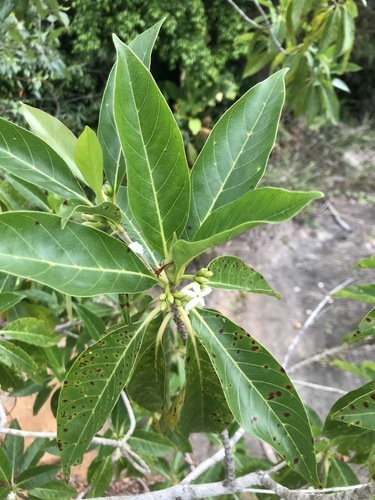
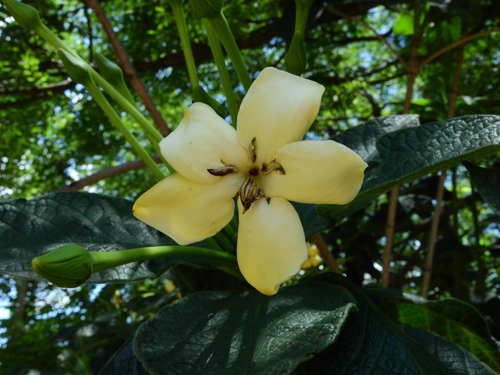
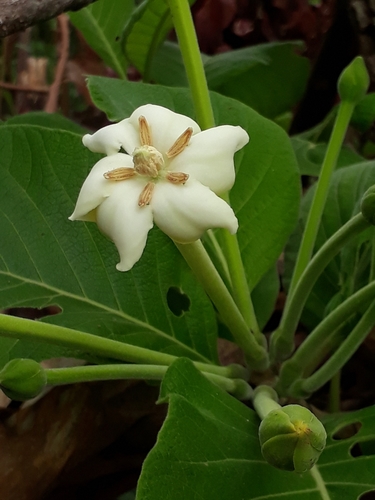
A tall shrub. It grows 3-8 m high and spreads 2-6 m wide. The young growth has long white hairs. The bark is stringy and silvery-grey. The branches are spreading or curve upwards. The leaves are 6-25 cm long by 2.5-8.5 cm wide. They are broadly sword shaped. The base tapers to a long stalk. The flower heads are 14.5 cm across. They occur at the ends of branches. The flowers are white to cream and have a sweet scent. The fleshy fruit is 0.7 cm long by 0.8 cm wide. It is black and can be hairy.
Edible Uses
The black fleshy fruit is eaten.
Distribution
It is a tropical plant. It lives in vine thickets in the coastal region. It needs very good drainage.
Where It Grows
Australia*,
Cultivation
Plants can be grown from seed. They can possibly also be grown from cuttings.
Notes
There are about 400 Pavetta species. They grow in the tropics.
Synonyms
References (4)
- Elliot, W.R., & Jones, D.L., 1997, Encyclopedia of Australian Plants suitable for cultivation. Vol 7. Lothian. p 187
- Kenneally, K.E., Edinger, D. C., and Willing T., 1996, Broome and Beyond, Plants and People of the Dampier Peninsula, Kimberley, Western Australia. Department of Conservation and Land Management. p 175
- Paczkowska, G . & Chapman, A.R., 2000, The Western Australian Flora. A Descriptive Calatogue. Western Australian Herbarium. p 515
- Vigilante, T., et al, 2013, Island country: Aboriginal connections, values and knowledge of the Western Kimberley islands in the context of an island biological survey. Records of the Western Australian Museum Supplement 81: 145-182