Coffea mufindiensis
Hutch. ex Bridson
iNaturalist· cc-by
(c) i_c_riddell, some rights reserved (CC BY), uploaded by i_c_riddell
wikimedia· cc-by-sa
Wikimedia Commons - Fiver, der Hellseher
Description
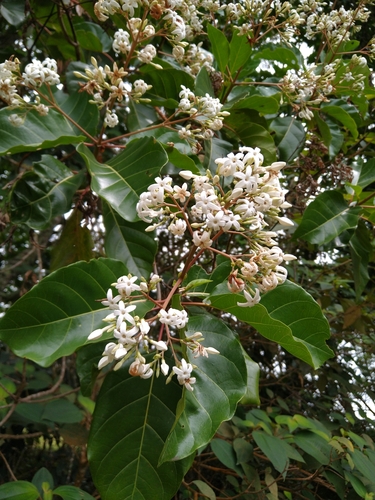
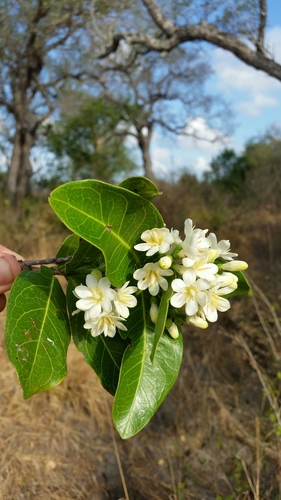
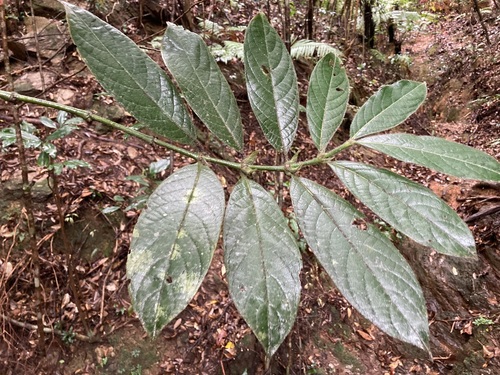
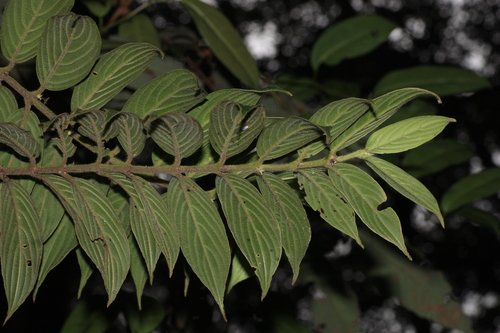
An evergreen shrub or small tree. It can grow to 5 m tall. The stems are hairy. The leaves are opposite and narrowly oval. They are 2-6 cm long. They are papery stiff and crowded together. The edges of the leaves are wavy. The flowers are white and tube shaped. They have short stalks and occur as one or 2 together in the axils of leaves. The fruit are orange red oval berries 1 cm long. They contain 2 pale brown seeds.
Edible Uses
The fruit are eaten fresh as a snack, particularly by children. The seeds are roasted and used to make coffee.
Traditional Uses
The fruit are eaten as a snack. The seeds are used for coffee.
This uses section is brief — help expand it
Medicinal Uses
No medicinal uses mentioned in the data.
Distribution
It is a tropical plant. It grows in moist forest in Tanzania between 1,600 to 2,100 m above sea level.
Where It Grows
Africa, East Africa, Tanzania,
Cultivation
Plants can be grown from seeds.
Other Uses
The wood is used for poles, pegs, withies and tool handles. The wood can be used for fuel. The plant can be grown as a hedge.
Production
In Tanzania the fruit are collected from April to June. The seeds can be dried and stored for more than one year.
Other Information
The fruit are especially eaten by children.
Also Known As
Kahawa-msitu, Kikwandie, Mkahawa-musitu, Mkahawa mwitu, Mpacha
References (2)
- Ruffo, C. K., Birnie, A. & Tengnas, B., 2002, Edible Wild Plants of Tanzania. RELMA p 212
- World Checklist of Useful Plant Species 2020. Royal Botanic Gardens, Kew