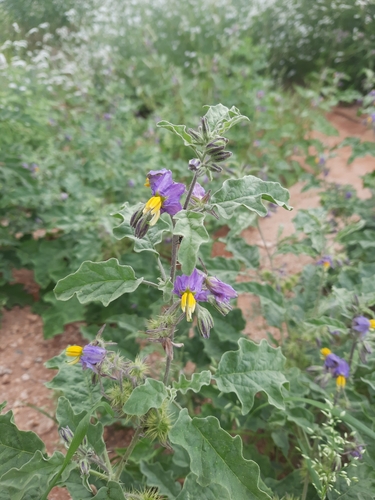
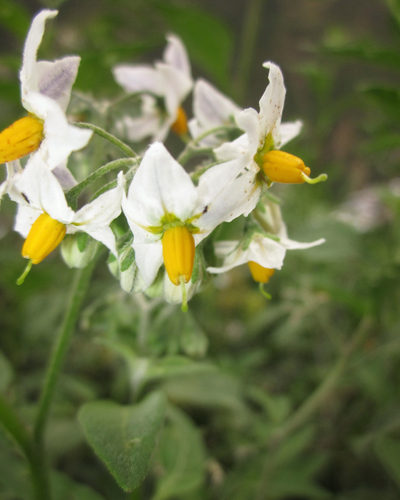
Lycium americanum
Jacq.
iNaturalist· cc-by-nc
(c) Martin Reith, some rights reserved (CC BY-NC), uploaded by Martin Reith
iNaturalist· cc-by
(c) aacocucci, some rights reserved (CC BY), uploaded by aacocucci
iNaturalist· cc-by-nc
(c) Luis Alberto, some rights reserved (CC BY-NC), uploaded by Luis Alberto
Description
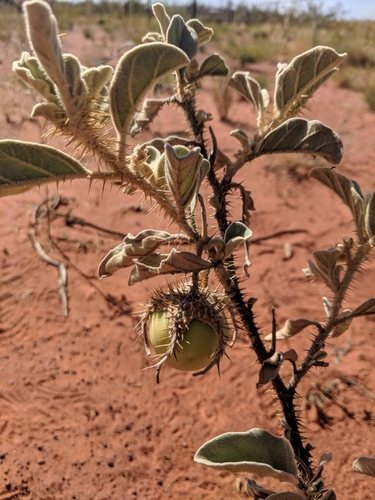
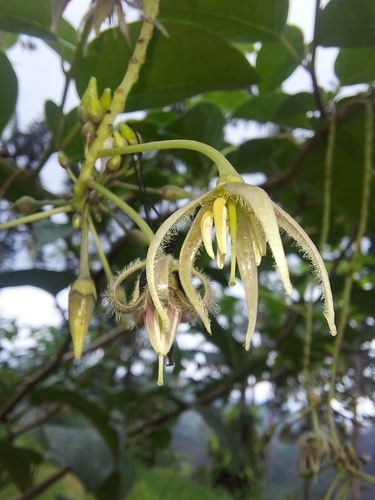
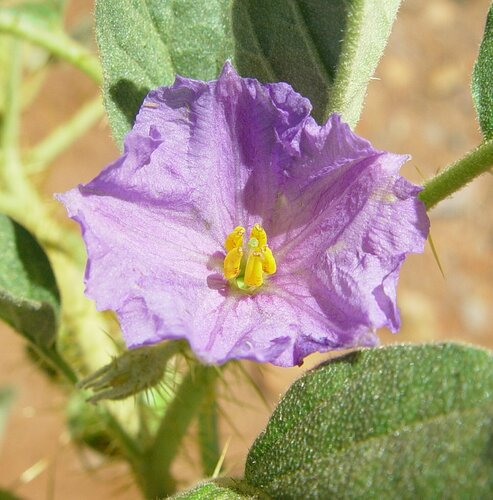
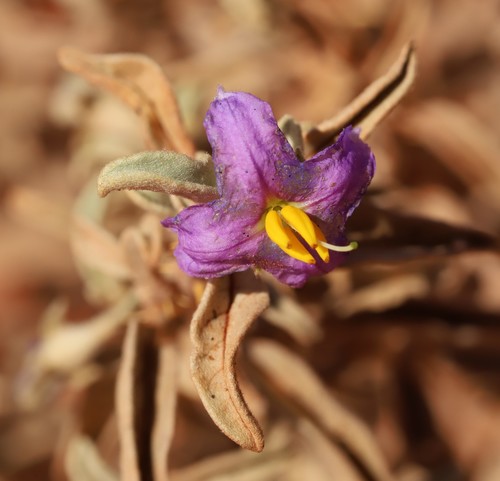
A shrub. It keeps growing from year to year. It grows 1-4 m tall. It can have spines 5 mm long. The leaves are spoon shaped and 1-6 cm long by 0.5-3 cm wide. The flowers occur singly and have 5 parts. The fruit is oval and 5-13 mm long by 4-10 mm wide. The seeds are kidney shaped and 1-2 mm long by 1-1.5 mm wide.
Edible Uses
The fruit are eaten fresh.
Traditional Uses
The fruit are eaten fresh.
This uses section is brief — help expand it
Distribution
It is a subtropical plant. In Argentina it grows from sea level to 1,000 m above sea level.
Where It Grows
Anguilla, Argentina, Paraguay, South America*,
Synonyms
Also Known As
Sojwatak, Sohowa
References (2)
- Arenas, P. and Scarpa, G. F., 2006, Edible wild plants of the Chorote Indians, Gran Chaco, Argentina. Botanical Journal of the Linnean Society. Vol. 153 (1): pp 73-85
- Scarpa, G. F., 2009, Wild food plants used by the indigenous peoples of South American Gran Chaco: A general synopsis and intercultural comparison. Journal of Applied Botany and Food Quality 83:90-101