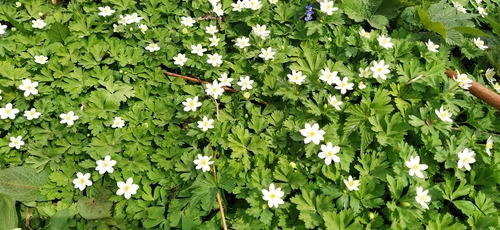
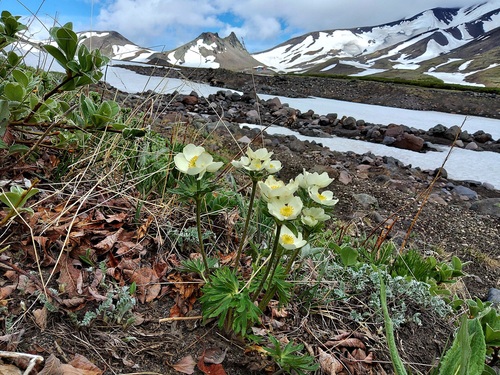
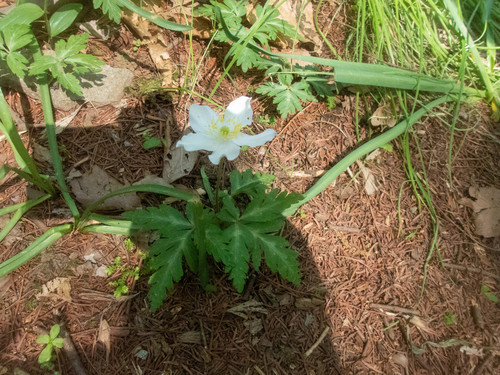
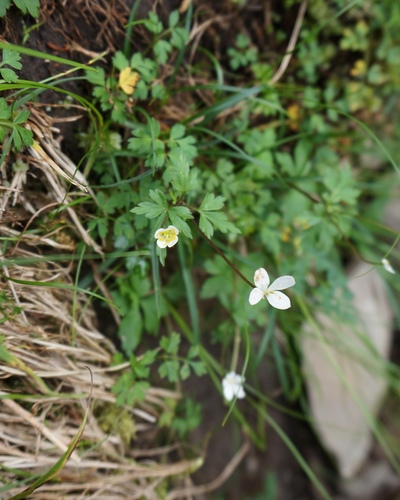
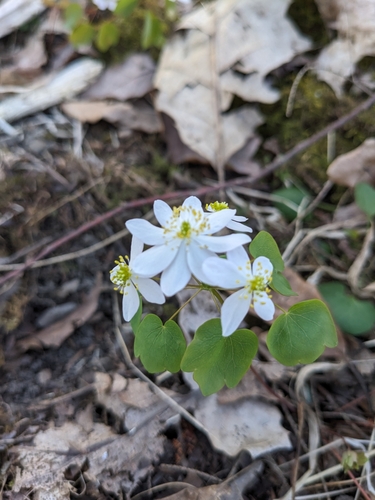
Aquilegia vulgaris
L.
Columbine
iNaturalist· cc-by-nc
(c) Lauren Glevanik, some rights reserved (CC BY-NC), uploaded by Lauren Glevanik
iNaturalist· cc-by-nc-sa
(c) Ahmed Mujčinović, some rights reserved (CC BY-NC-SA)
iNaturalist· cc-by-nc
(c) madbeck, some rights reserved (CC BY-NC), uploaded by madbeck
Summary
Source: WikipediaAquilegia vulgaris is a species of perennial flowering plant of the genus Aquilegia (columbine) in the family Ranunculaceae. Commonly called the common columbine, European crowfoot, and granny's bonnet, it presently possesses the most expansive range and greatest morphological variability in its genus. The current wild range of A. vulgaris includes its native range in Europe as well as introduced populations in Asia, Oceania, North America (where it has become naturalized), and South America. The wild form of A. vulgaris can grow flowering stems that 90 cm (35 in) tall from and often form a bushy clump at its base. In their native range, the species blooms from May to June. The flowers, with diameters measuring up to 60 mm (2.4 in) across, are typically blue or purple and possess petals with structures known as nectar spurs. Associated with fertility goddesses in ancient Greece and ancient Rome, archeological evidence suggests A. vulgaris was in cultivation by the 2nd century AD in Roman Britain. The species represented virtuous behaviour, the Holy Spirit, and the Trinity within Christian art; in other contexts, such as William Shakespeare's Hamlet, A. vulgaris was a malevolent symbol. While it has been treated as an herbal remedy since the Middle Ages, some chemicals within the plant are toxic to humans. The species was given its scientific binomial name by Carl Linnaeus in his 1753 Species Plantarum. Some horticultural varieties, known as cultivars, that were developed by the 16th century have remained popular with gardeners. Cultivars of A. vulgaris have continued to be developed, as have hybrids crossing it with other columbines. The resulted plants produce an array of colours and double-flowered examples.
Description
A herb. It is tall and branched and grows for a few years. It grows 70 cm tall and 30 cm wide. The flowers are blue.
This description is brief — help expand it
Edible Uses
Edible Parts: Flowers Edible Uses: Tea Flowers - raw. Rich in nectar, they are sweet and delightful, they make a very attractive addition to mixed salads and can also be used as a thirst-quenching munch in the garden. The flowers are also used as a tea substitute.
Traditional Uses
The flowers are sucked for their nectar. The flowers are also used in salads. The young leaves are used for flavour in salads and also lightly steamed.
Medicinal Uses
Antianxiety Astringent Depurative Diaphoretic Diuretic Homeopathy Parasiticide Parasiticide Columbine was formerly employed in herbal medicine mainly for its antiscorbutic effect, but it has fallen out of favour and is little used nowadays. The leaves root and seed are astringent, depurative, diaphoretic, diuretic, parasiticide. Because of its toxic properties, this plant should not be taken internally without expert advice, though the root is sometimes used externally in poultices to treat ulcers and the commoner skin diseases. The plant can be harvested at any time from June to October. Columbine has produced very unsatisfactory results and is not normally used medicinally. A homeopathic remedy is made from the plant. It is used in the treatment of affections of the nervous system.
Known Hazards
Toxic properties present; should not be taken internally without expert advice.
Distribution
It is a temperate or Mediterranean plant. In Argentina it grows from sea level to 1,000 m above sea level. It suits damp meadows.
Where It Grows
Africa, Albania, Argentina, Australia, Austria, Balkans, Belarus, Britain, Canary Is., Chile, Czech Republic, Denmark, Ecuador, Europe*, Finland, France, Greece, Hungary, Ireland, Italy, Luxembourg, Macedonia, Netherlands, New Zealand, North Africa, North America, Norway, Poland, Portugal, Romania, Russia, Sicily, Slovenia, South America, Spain, Sweden, Switzerland, Tasmania, Ukraine, USA, Uzbekistan, Yugoslavia,
Cultivation
Succeeds in ordinary garden soil, preferring a moist but not wet soil and a sunny position. Thrives in partial shade. Intolerant of heavy clay. Plants are hardy to at least -25°c. Whilst the blue-flowered forms of this species have no scent, white flowered forms have a soft clove scent in order to attract pollinating insects. Most species are short-lived, dying out after 2 - 3 years, though they usually produce seed prolifically. This species usually self-sows freely in the garden, it is very apt to hybridize with other members of the genus and usually becomes the dominant partner in any hybridization. Plants seem to be immune to the predations of rabbits. A greedy plant, inhibiting the growth of nearby plants, especially legumes. It also attracts red spider mites to the garden, these can then move on to other crops such as apples, pears and strawberries. It grows well with rhubarb. In garden design, as well as the above-ground architecture of a plant, root structure considerations help in choosing plants that work together for their optimal soil requirements including nutrients and water.
Propagation
Seed - best sown as soon as it is ripe in a cold frame. The seed can be slow to germinate. Stored seed can be sown in late winter in a cold frame. When large enough to handle, prick the seedlings out into individual pots and grow them on in a cold frame for their first winter. Plant out in late spring or early summer. Division in spring.
Other Uses
Parasiticide Parasiticide The seed is used as a parasiticide to rid the hair of lice. The dried and crushed seed is used to kill external body parasites. Special Uses Food Forest Scented Plants
Other Information
The nectar is sucked especially by children. It is cultivated.
Synonyms
Also Known As
Kufufraka, Navadna orlica, Vodosbor
References (5)
- Crawford, M., 2012, How to grow Perennial Vegetables. Green Books. p 93
- Kew Plants of the World Online
- Lukasz, L., et al, 2013, Wild edible plants of Belarus: from Rostafiński’s questionnaire of 1883 to the present. Journal of Ethnobiology and Ethnomedicine 2013, 9:21
- Menendez-Baceta, G., et al, 2012, Wild edible plants traditionally gathered in Gorbeialdea (Biscay, Basque Country) Genetic Resources and Crop Evolution 59:1329-1347
- Zeven, A. C. & de West, J. M. J., 1982, Dictionary of cultivated plants and their regions of diversity. Wageningen. p 117