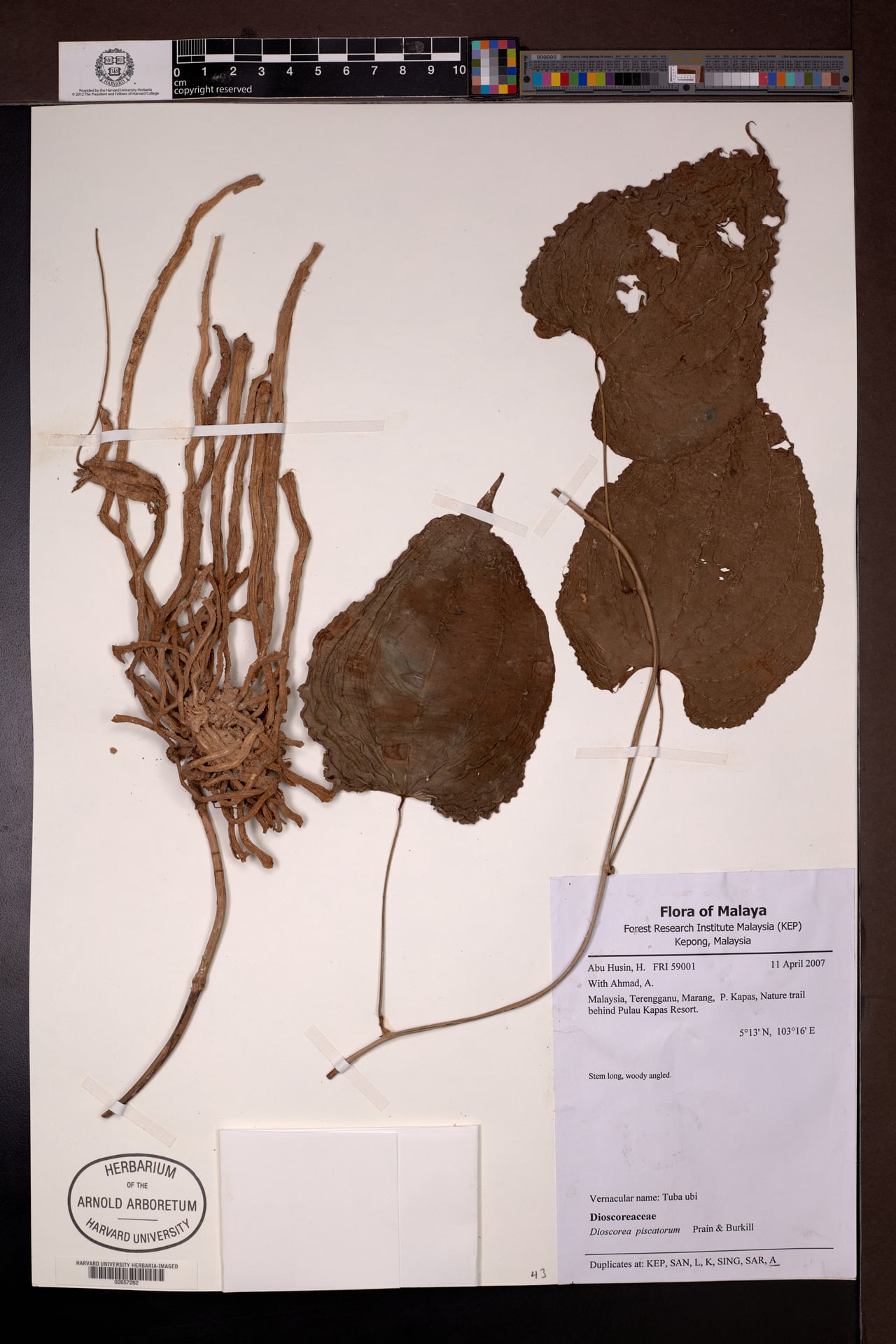
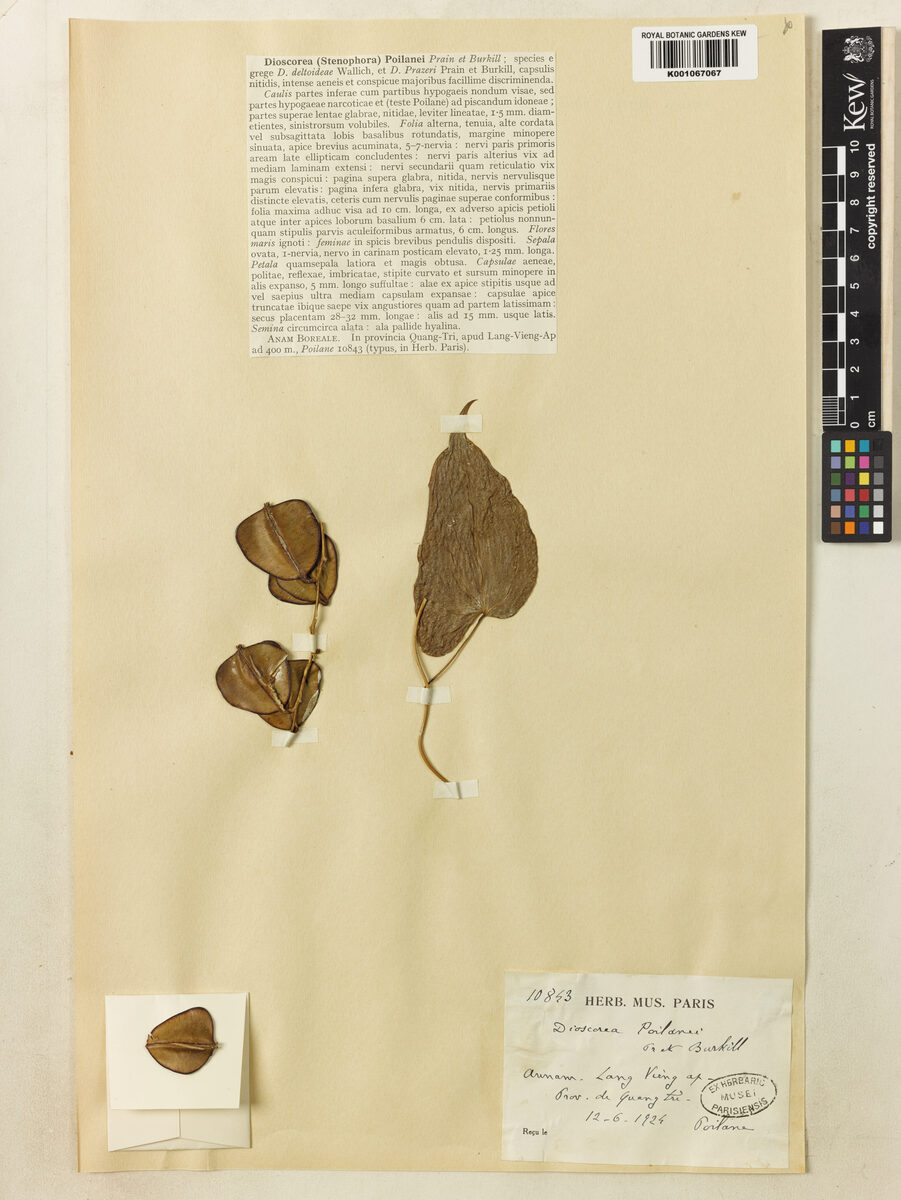
Dioscorea prazeri
Prain & Burkill
gbif· cc0
Royal Botanic Garden Edinburgh
gbif· cc-by
Royal Botanic Gardens, Kew
gbif· cc-by
Royal Botanic Gardens, Kew
Description
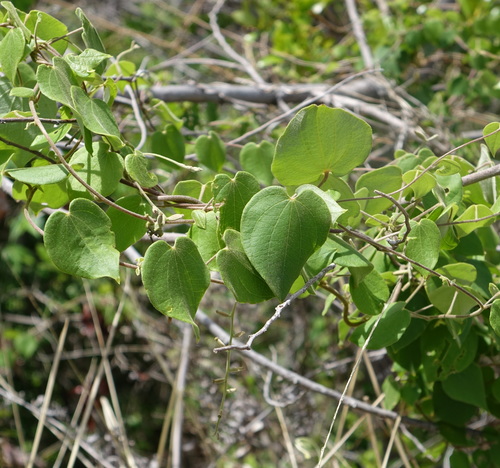
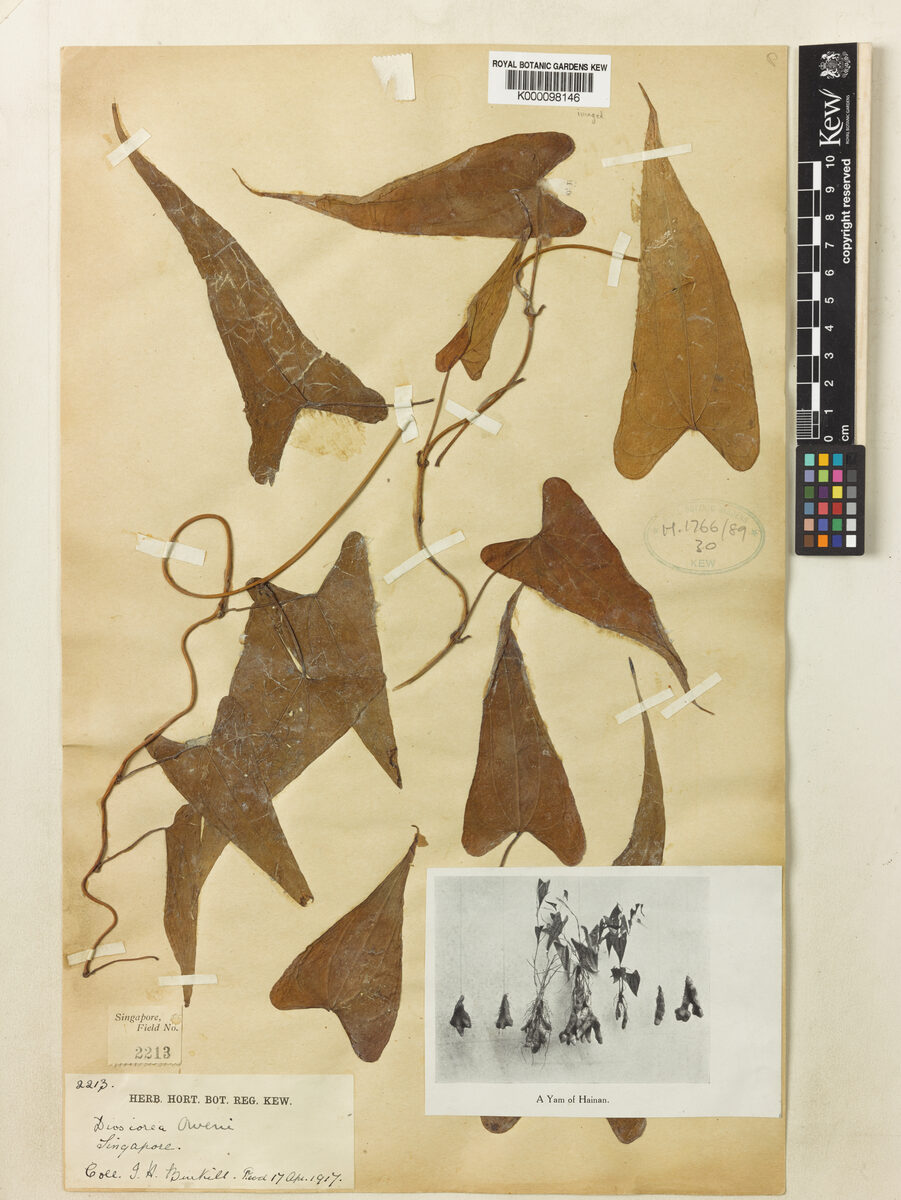
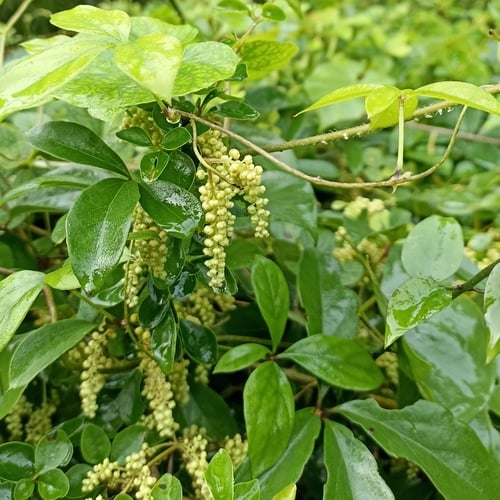
A yam. It is a climbing vine 5 m long. The rhizome is 1-15 cm long by 2-9 cm wide. It is branched and spreading. It is shallowly buried and has a hard skin. The stems are 1-3 mm across and twine to the left. These re-grown each year. The leaves are simple and alternate. The leaf blade is broadly oval and has 5-7 veins. The base is heart shaped and it tapers to the tip. Occasionally there are bulbils of the stem where it is near the ground. These can be 2-3 cm long. The flowering shoots hang down.
Edible Uses
The tuber and root are edible but used only occasionally as a famine food.
Distribution
It is a tropical plant. It grows in open areas in forests on limestone and occasionally on sandstone. It grows between 100-1,650 m above sea level.
Where It Grows
Asia, Bhutan, Himalayas, India, Indochina, Malaysia, Myanmar, Nepal, SE Asia, Thailand,
Other Information
It is a famine food. It is only occasionally used.
Synonyms
Also Known As
Sehod
References (4)
- Jha, P. K., et al, 1996, Plant genetic resources of Nepal: A guide for plant breeders of agricultural, horticultural and forestry crops. Euphytica 87:189-210
- Lim, T. K., 2015, Edible Medicinal and Non Medicinal Plants. Volume 9, Modified Stems, Roots, Bulbs. Springer p 37
- Mareenoon, K. et al, 2008, Ethnobotany of Dioscorea L. (Dioscoreaceae), a Major Food Plant of the Sakai Tribe at Banthad Range, Peninsular Thailand. Ethnobotany Reaearch & Applications 6:385-394
- Rijal, A., 2011, Surviving on Knowledge: Ethnobotany of Chepang community from mid-hills of Nepal. Ethnobotany Research & Applications 9:181-215