Dioscorea polyclados
Hook.f.
Kedut
iNaturalist· cc-by-nc
(c) HP Lim, some rights reserved (CC BY-NC)
iNaturalist· cc-by-nc
(c) HP Lim, some rights reserved (CC BY-NC)
iNaturalist· cc-by-nc
(c) HP Lim, some rights reserved (CC BY-NC)
Description
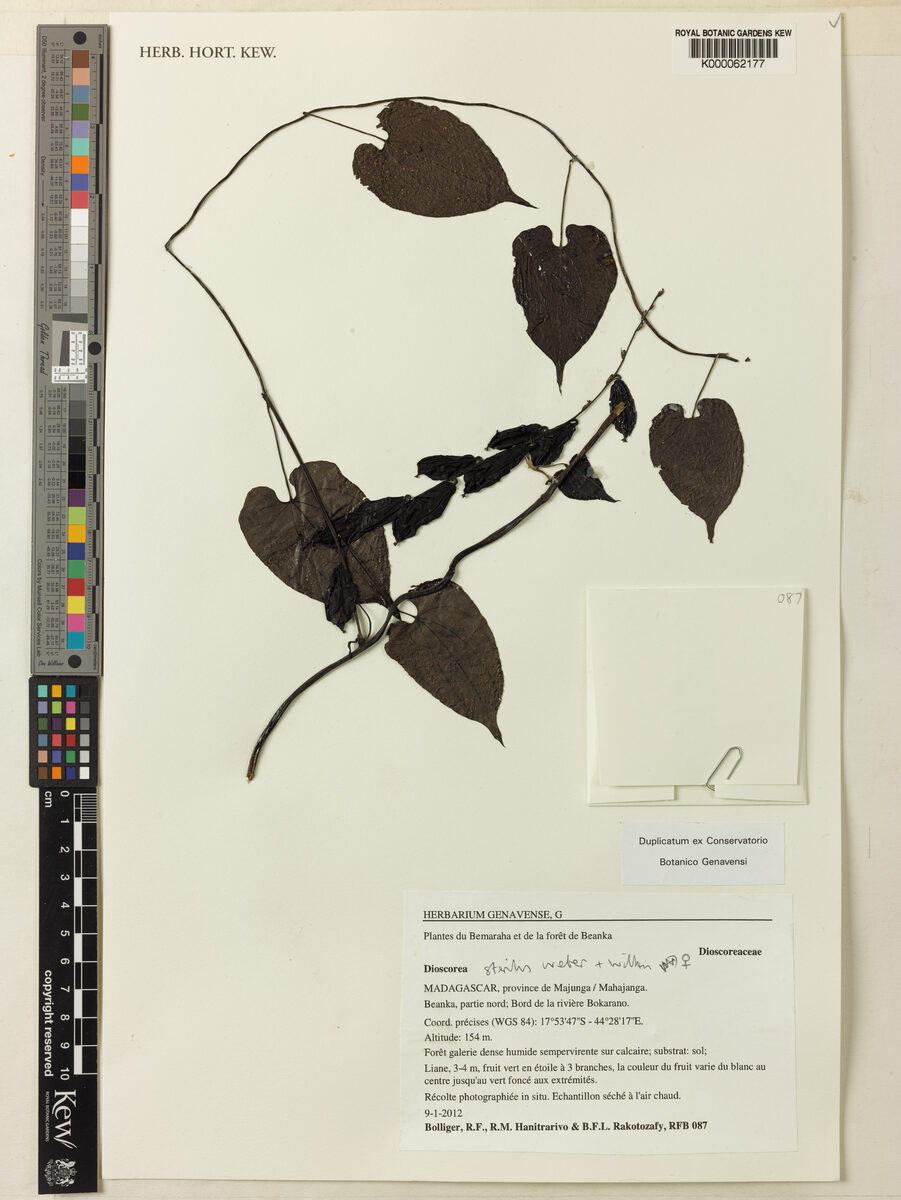
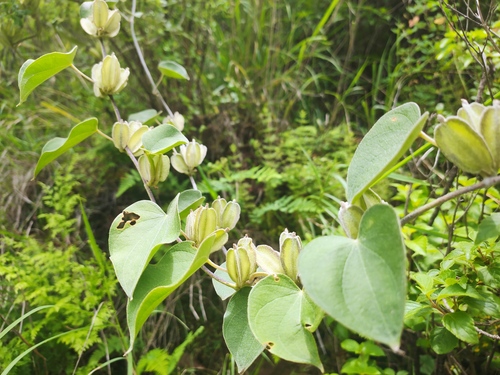
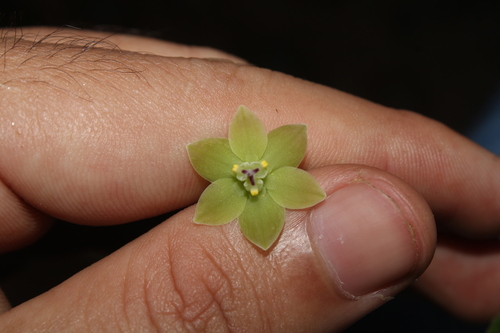
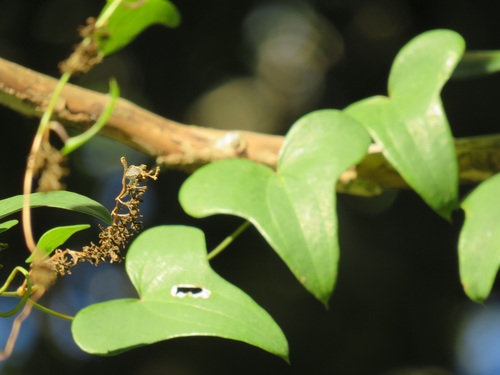
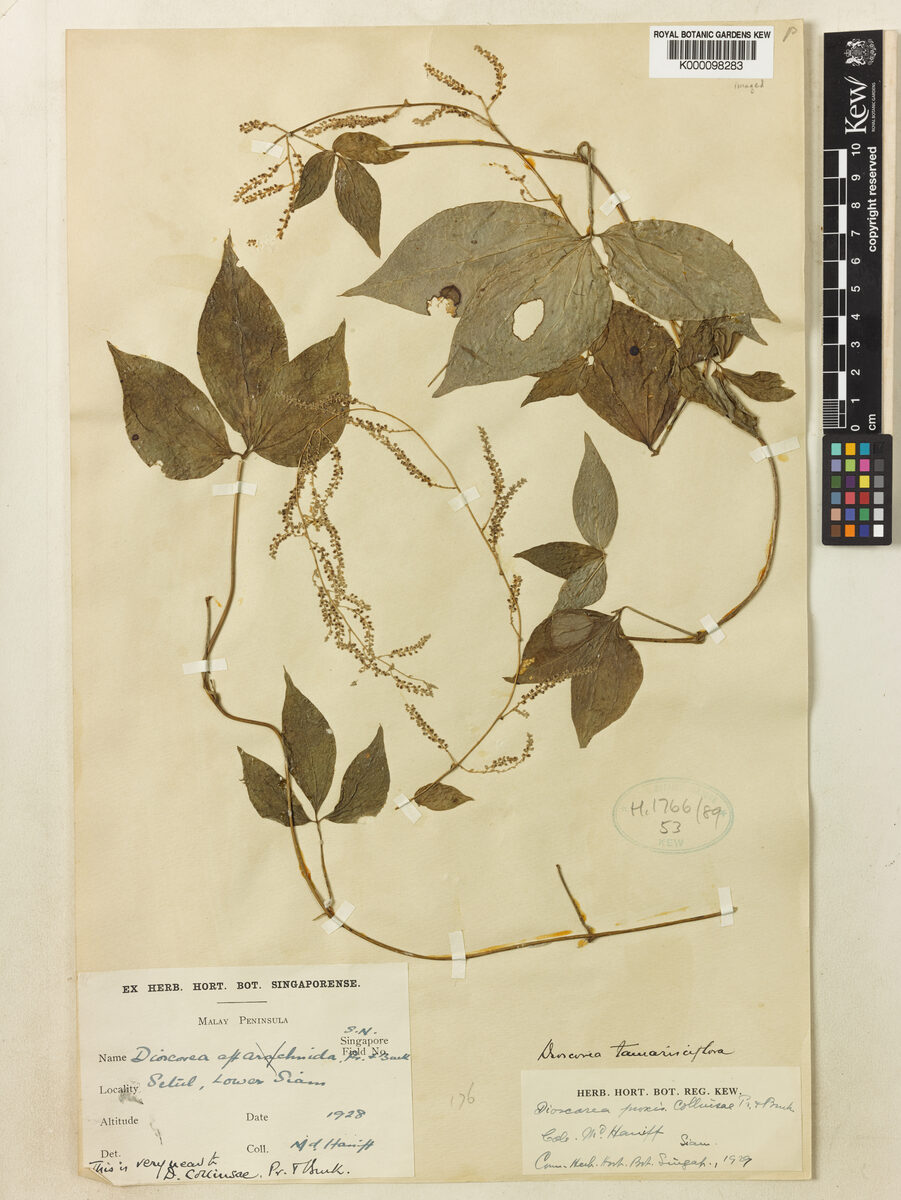
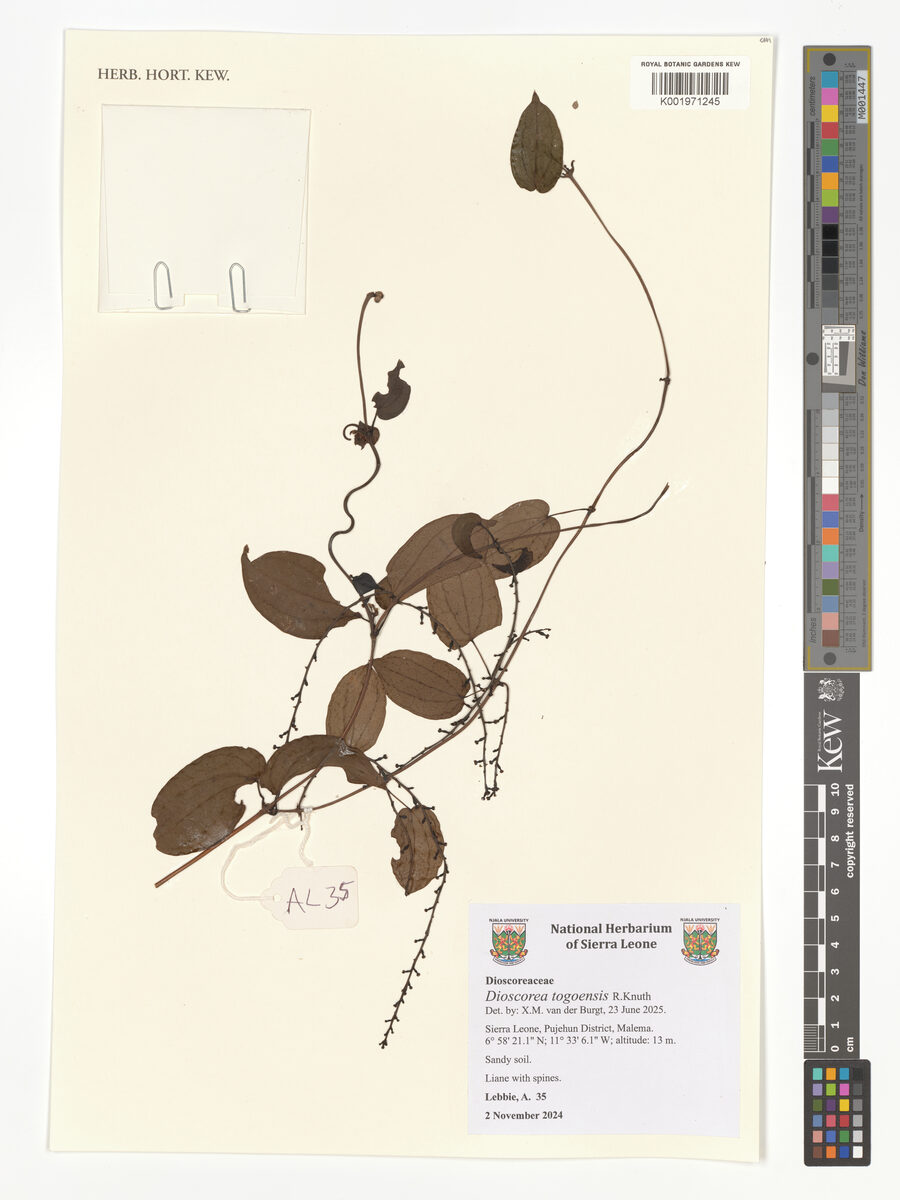
A yam. It keeps growing from year to year by sprouting from tubers. It is hairy. The vines are 30 m long and twine to the right. The tubers are produced from a woody corm. They can be 2.5 m deep in the soil. They occur as swollen ends on long stalks. The flesh is white. The leaves are simple and opposite. The leaf stalk is 6 cm long. It often has prickles. The leaf blade is 12-25 cm long by 12-22 cm wide. The male flowering stalks are 30 cm long and occur as 1-4 together. The female flowering stalks are 20 cm long. The capsule has wings.
Edible Uses
The tubers are boiled several times or baked before eating.
Traditional Uses
The tubers need to be boiled several times or baked before eating.
This uses section is brief — help expand it
Distribution
A tropical plant. It grows in lower hill forest up to 700 m altiitude.
Where It Grows
Asia, Cambodia, Indochina, Indonesia, Malaysia, SE Asia,
Notes
There are about 650 species of Dioscorea.
Synonyms
Also Known As
Domlong romeat, Kedut
References (6)
- Burkill, I.H., 1966, A Dictionary of the Economic Products of the Malay Peninsula. Ministry of Agriculture and Cooperatives, Kuala Lumpur, Malaysia. Vol 1 (A-H) p 836
- Flora Malesiana Vol 13 p 334
- Lim, T. K., 2015, Edible Medicinal and Non Medicinal Plants. Volume 9, Modified Stems, Roots, Bulbs. Springer p 37
- PROSEA handbook Volume 9 Plants yielding non-seed carbohydrates. p 174
- Turreira Garcia, N., et al, 2017, Ethnobotanical knowledgeof the Kuy and Khmer people in Prey Lang, Cambodia. Cambodian Journal of Natural History 2017 (1): 76-101
Show all 6 references Hide references
- World Checklist of Useful Plant Species 2020. Royal Botanic Gardens, Kew