Quercus dumosa
Nutt.
California scrub oak
iNaturalist· cc-by-nc
(c) Melanie Barnett, some rights reserved (CC BY-NC), uploaded by Melanie Barnett
gbif· cc-by
Don Loarie
iNaturalist· cc-by-nc
(c) Eric Koberle, some rights reserved (CC BY-NC), uploaded by Eric Koberle
iNaturalist· cc-by-nc
(c) Morgan Stickrod, some rights reserved (CC BY-NC), uploaded by Morgan Stickrod
iNaturalist· cc-by-nc
(c) Jordan Collins, some rights reserved (CC BY-NC), uploaded by Jordan Collins
iNaturalist· cc-by-nc-nd
(c) Keir Morse, some rights reserved (CC BY-NC-ND), uploaded by Keir Morse
Summary
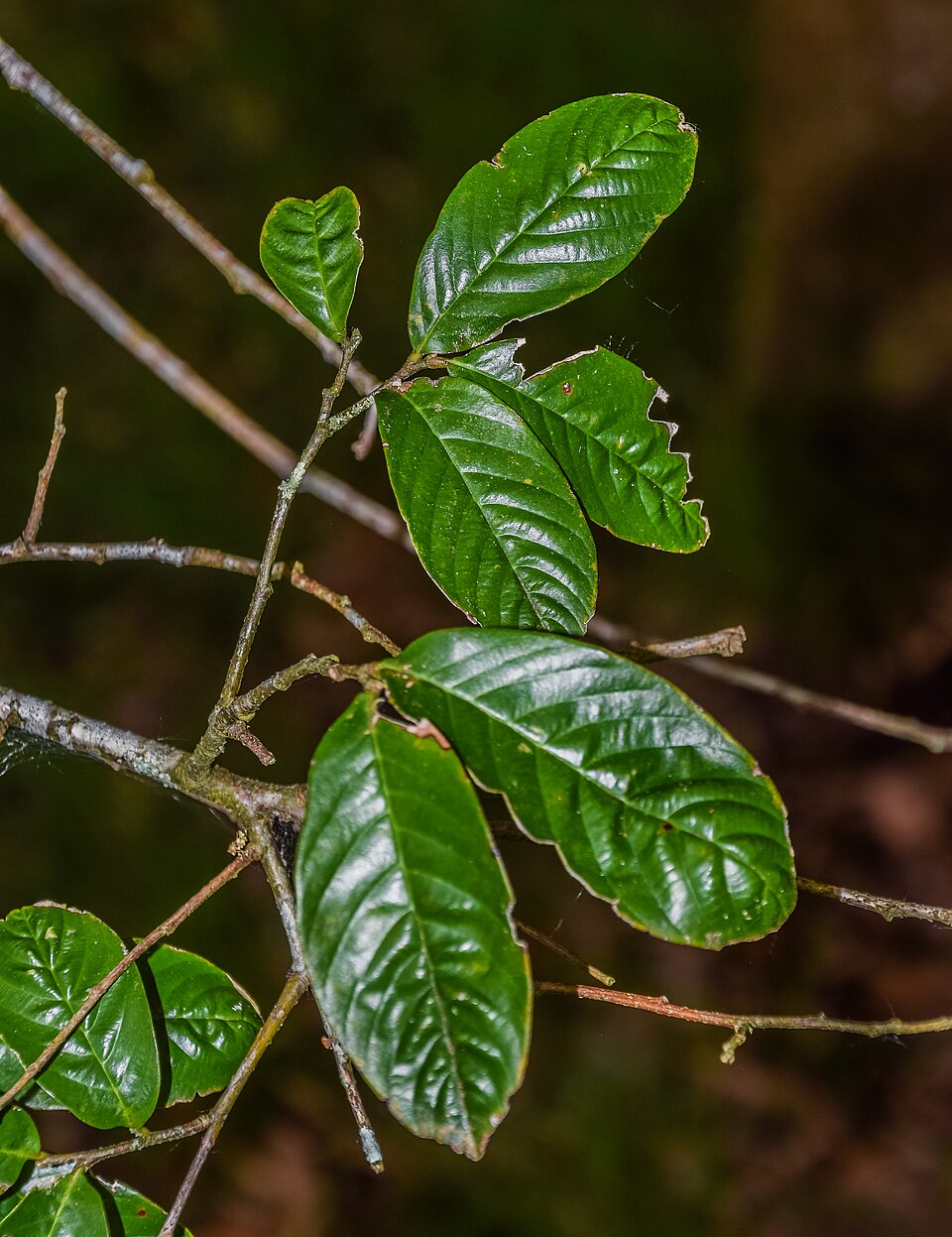
Source: WikipediaQuercus dumosa, commonly known as Nuttall's scrub oak or coastal sage scrub oak, is a species of scrub oak belonging to the white oak group (subgenus Quercus, section Quercus). It is a shrub typically reaching heights of 1–3 m (3.3–9.8 ft), characterized by a scraggly and rounded appearance, with dense tangled reddish branches, small dark green leaves with distinct teeth, curly trichomes on the lower leaf surfaces, and narrow acute acorns. Native to the United States and Mexico, it is a rare species found in chaparral and coastal sage scrub on sandy soils often within sight of the ocean, and is found in disjunct populations ranging from Santa Barbara County, California south to the vicinity of Punta Colonet, Baja California. It is perhaps one of the rarest and most threatened species of oak in California, as the human development of coastal southern California has left very little habitat intact.
Description
A small temperate tree in the Fagaceae (oak) family producing acorns that are a traditional food source.
This description is brief — help expand it
Edible Uses
The acorns are ground into a fine powder and used to make bread, sometimes after leaching to remove tannins, and can be stored for later use.
Traditional Uses
The acorns are ground into a fine powder and used to make bread. Sometimes they are leached. They can also be stored for later use.
This uses section is brief — help expand it
Distribution
It is a temperate plant. .
Where It Grows
North America, USA,
Notes
There are about 600 Quercus species.
References (4)
- Beckstrom-Sternberg, Stephen M., and James A. Duke. "The Foodplant Database." http://probe.nalusda.gov:8300/cgi-bin/browse/foodplantdb.(ACEDB version 4.0 - data version July 1994)
- Moerman, D. F., 2010, Native American Ethnobotany. Timber Press. p 460
- N. Amer. Sylv. 1:7. 1842
- World Checklist of Useful Plant Species 2020. Royal Botanic Gardens, Kew