Coreopsis auriculata
L.
Mouse ear coreopsis
iNaturalist· cc-by-nc
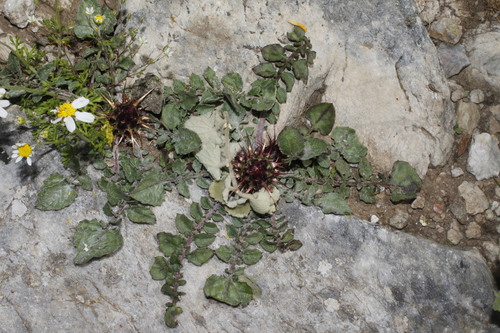
(c) owentucker576, some rights reserved (CC BY-NC)
iNaturalist· cc-by-nc
(c) David L Whitehurst, some rights reserved (CC BY-NC)
iNaturalist· cc-by-nc
(c) Milo Pyne, some rights reserved (CC BY-NC)
Summary
Source: WikipediaCoreopsis auriculata, the lobed tickseed or mouse-ear tickseed, is a North American plant species of the family Asteraceae. It is native to the southeastern and east-central United States, from Louisiana east to the Florida Panhandle and as far north as Kentucky, Maryland, and West Virginia.
Description
A hermaphroditic perennial reaching 1.5 meters tall, growing at a medium rate, hardy to UK zone 4. Blooms July to August. Prefers well-drained light sandy to medium loamy soils with mildly acid to mildly alkaline pH. Requires full sun and tolerates both dry and moist conditions including drought. Attracts bees and wildlife.
Edible Uses
None known.
Medicinal Uses
None known.
Distribution
It is a temperate plant. It suits hardiness zones 4-9.
Where It Grows
North America, USA,
Cultivation
Succeeds in ordinary garden soil. Prefers a fertile well-drained moisture retentive medium soil. Requires a sunny position. Established plants are drought resistant. Plants are apt to die out overwinter if they are grown on clay soils. A good bee plant. The shorter cultivar Coreopsis auriculata 'Nana' (Dwarf Mouse-ear Tickseed, Lobed Tickseed 'Nana’) is useful for borders, edging, rock gardens and ground cover performing best with consistent moisture. It spreads by stolons but is not invasive. Height: 15-30 cm (6-12 in) Spread: 15-30 cm (6-12 in).
Propagation
Sow seed in March in a cold frame. Prick seedlings into individual pots once large enough to handle and plant out into permanent positions in summer. Seed can also be sown in an outdoor seedbed in mid-spring; once seedlings exceed 15cm in height, plant them out into permanent positions in summer. Divide plants in spring or autumn — larger clumps can go directly into permanent positions, while smaller clumps are best potted up in a cold frame until rooting well, then planted out in summer or the following spring. Basal shoot cuttings can be taken in May/June in a frame; harvest shoots when about 10cm long with plenty of underground stem, pot individually, and keep in light shade in a cold frame or greenhouse until rooting well before planting out in summer.
Other Uses
An orange to red-orange dye is obtained from the flowers and stems. Established plants are drought resistant. The shorter cultivar 'Nana' works well as a low ground cover and performs best with consistent moisture. Suitable for use in borders, containers, and mass plantings; attracts birds and butterflies and is suitable for cut flowers.
Synonyms
Also Known As
The shorter cultivar Coreopsis auriculata 'Nana' is known as Dwarf Mouse-ear Tickseed, Lobed Tickseed 'Nana’.
References (1)
- Jackes, D. A., Edible Forest Gardens