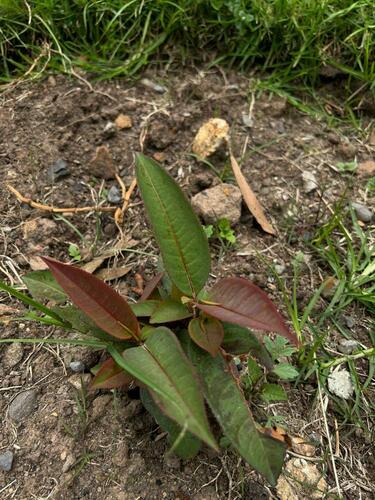
Eurya acuminata
DC.
Sagoler bori
iNaturalist· cc-by-nc-sa
(c) Reuben C. J. Lim, some rights reserved (CC BY-NC-SA)
iNaturalist· cc-by-nc
(c) ab_satta, some rights reserved (CC BY-NC)
iNaturalist· cc-by-nc
(c) ab_satta, some rights reserved (CC BY-NC)
Summary
An evergreen tree growing to 3 m tall and wide. Frost tender. Maintains foliage year-round with May flowers. Dioecious species—both male and female plants required to produce seed. Adapts to sandy, loamy, and clay soils with a preference for well-drained conditions. Tolerates mildly acid to basic soils and grows in semi-shade or full sun. Prefers moist soil.
Description
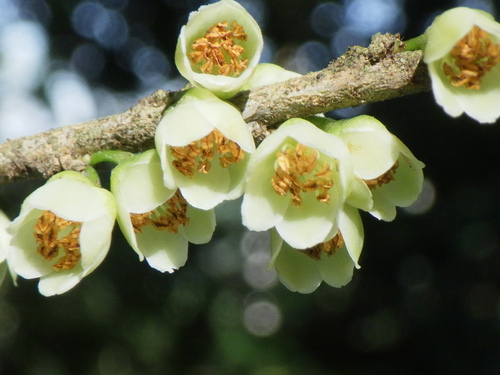
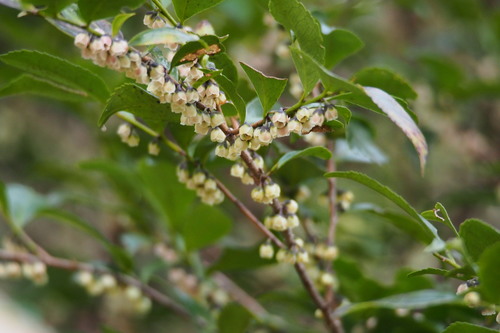
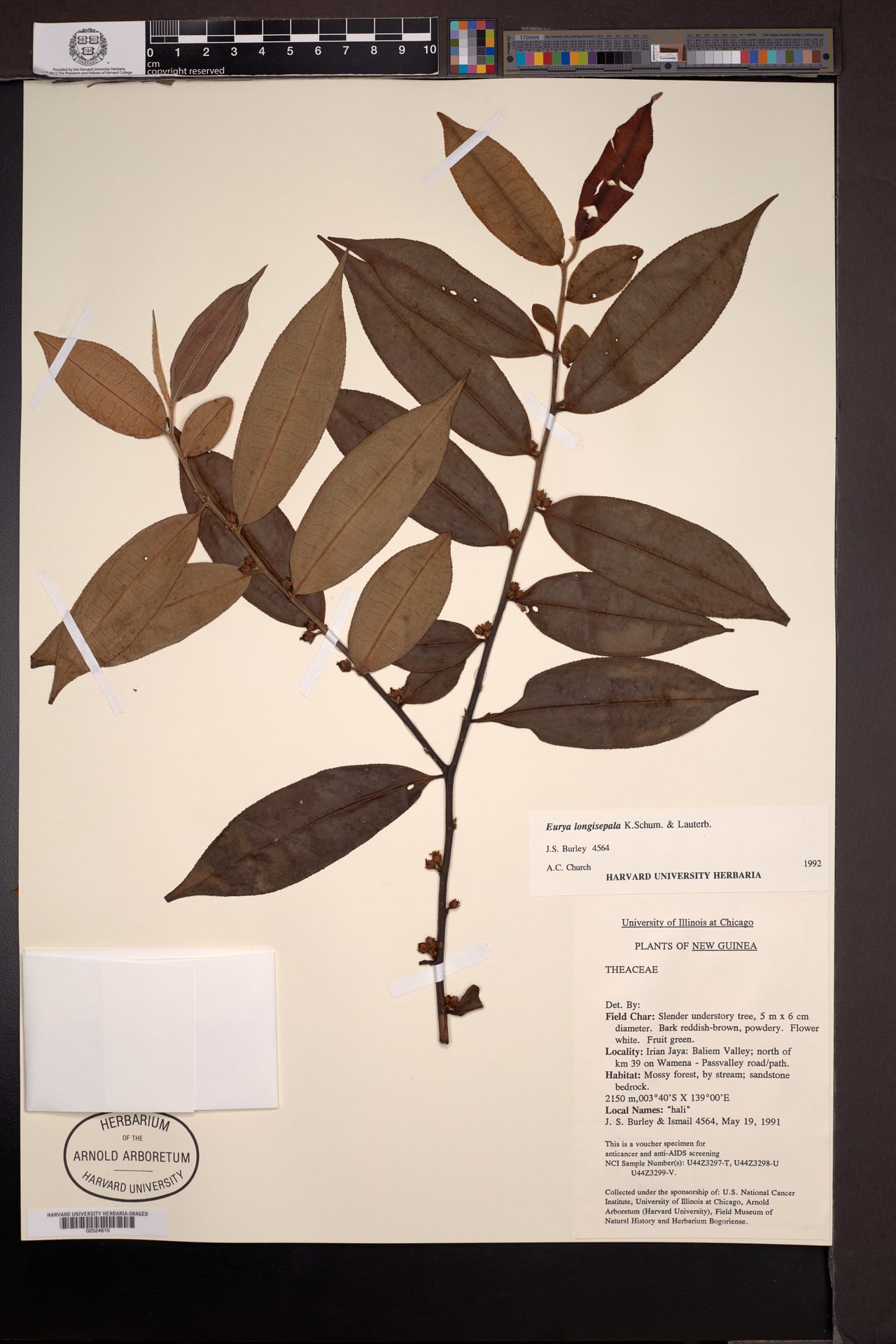
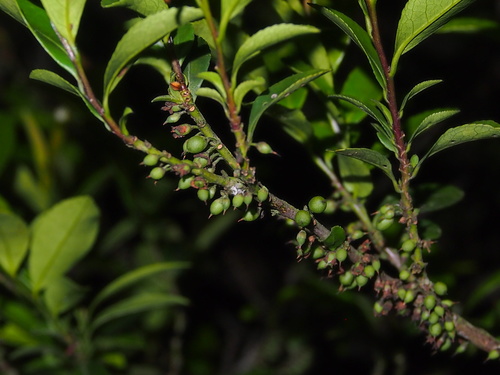
A shrub or small tree. The leaves are oblong and 6-10 cm long by 2-3 cm wide. They are pale green underneath. The flowers can occur singly or in groups of up to 3 in the axils of leaves. Male and female flowers are separate. The fruit is round and 3-4 mm across.
Edible Uses
The leaves are used to adulterate tea (Camellia sinensis). The leaves are eaten as a vegetable. They are made into a paste and cooked with a protein food. The leaves are a part of traditional food preparation among the ethnic groups of Mizoram.
Traditional Uses
The young leaves are cooked and eaten as a vegetable. They are made into a paste and cooked with pork. They can be dried and stored for later use.
This uses section is brief — help expand it
Medicinal Uses
No medicinal uses are known.
Distribution
It is a subtropical plant. In Sikkim it grows between 1,000-2,200 m above sea level. In SE China it grows in forests on mountain slopes between 700-3,000 m above sea level. In Yunnan.
Where It Grows
Asia, Bhutan, China, Himalayas, India, Indochina, Indonesia, Laos, Malaysia, Myanmar, Nepal, Northeastern India, SE Asia, Sikkim, Sri Lanka, Thailand, Tibet, Vietnam,
Cultivation
Prefers a moderately fertile free-draining moisture retentive soil in sun or part shade with shelter from cold drying winds. This species is not very hardy in Britain, plants must be protected from frost when they are young. Dioecious, male and female plants must be grown if seed is required.
Propagation
Sow seed as soon as it is ripe in a cold frame, or in early spring in a greenhouse. Once large enough to handle, prick seedlings out into individual pots and grow on in a greenhouse for at least their first winter. Plant out into permanent positions in late spring or early summer, after the last expected frosts. Alternatively, take cuttings of half-ripe wood, 6–8 cm with a slight heel, in July or August, and root in individual pots in a frame. Success rate is high.
Other Uses
The wood is soft, even-grained, and moderately hard. It is used mainly as fuel and is considered an excellent fuel wood.
Other Information
Leaves are sold in local markets.
Notes
Also put in the family Theaceae.
Synonyms
Also Known As
Chizou, Eurya, Jhinganu, Jhinginey, Jhingini, Misimbua, Moriisii, Murmura, Phalame, Sa-mu, Shizou, Sijou manam Silhetia, Sizou, Sylhet, Theng hanjang, Uyangan
References (17)
- Aryal, K., Moe, A.T., Hein, P.P., Bay, Y.H.S., Htay, T., Aung, H.W., Shakya, B., Xuefei, Y., Shaoliang, Y. , 2020, Wild and non- cultivated edible plants and their contribution to local livelihoods in Putao, Myanmar. ICIMOD.
- Gangte, H. E., et al, 2013, Wild Edible Plants used by the Zou Tribe in Manipur, India. International Journal of Scientific and Research Publications, Volume 3, Issue 5
- Konsam, S., et al, 2016, Assessment of wild leafy vegetables traditionally consumed by the ethnic communities of Manipur, northeast India. Journal of Ethnobiology and Ethnomedicine, 12:9
- Medhi, P. & Borthakur, S. K., 2012, Phytoresources from North Cachur Hills of Assam -3: Edible plants sold at Hflong market. Indian Journal or Natural Products and Resources. 3(1) pp 84-109
- Medhi, P. & Borthakur, S. K., 2013, Wild edible plants sold by the Zeme Nagas at the makeshift market of Mahur, Dima Hasao district of Assam. Pleione 7(1): 84 - 93. 2013
Show all 17 references Hide references
- Medhi, P., Sarma, A and Borthakur, S. K., 2014, Wild edible plants from the Dima Hasao district of Assam, India. Pleione 8(1): 133-148
- Meitei, L. R., et al, 2022, An ethnobotanical study on the wild edible plants used by forest dwellers in Yangoupokpi Lokchao Wildlife Sanctuary, Manipur, India. Ethnobotany Research and Application 23:15
- Pfoze, N. L., et al, 2012, Assessment of Local Dependency on Selected Wild Edible Plants and fruits from Senapati district, Manipur, Northeast India. Ethnobotany Research & Applications 10:357-367
- Pfoze, N. L., et al, 2012, Survey and assessment of floral diversity on wild edible plants from Senapati district of Manipur, Northeast India. Journal or Biodiversity and Environmental Sciences. 1(6):50-52
- Singh, B., et al, 2012, Wild edible plants used by Garo tribes of Nokrek Biosphere Reserve in Meghalaya, India. Indian Journal of Traditional Knowledge. 11(1) pp 166-171
- Singh, V. B., et al, (Ed.) Horticulture for Sustainable Income and Environmental Protection. Vol. 1 p 220
- Sukarya, D. G., (Ed.) 2013, 3,500 Plant Species of the Botanic Gardens of Indonesia. LIPI p 628
- Sundriyal, M., et al, 1998, Wild edibles and other useful plants from the Sikkim Himalaya, India. Oecologia Montana 7:43-54
- Sundriyal, M., et al, 2004, Dietary Use of Wild Plant Resources in the Sikkim Himalaya, India. Economic Botany 58(4) pp 626-638
- Sundriyal, M. & Sundriyal, R. C., 2004, Structure, Phenology, Fruit Yield, and Future Prospects of some Prominent Wild Edible Plant Species of the Sikkim Himalaya, India. Journal of Ethnobiology 24(1): 113-138
- Teron, R. & Borthakur, S. K., 2016, Edible Medicines: An Exploration of Medicinal Plants in Dietary Practices of Karbi Tribal Population of Assam, Northeast India. In Mondal, N. & Sen, J.(Ed.) Nutrition and Health among tribal populations of India. p 156
- World Checklist of Useful Plant Species 2020. Royal Botanic Gardens, Kew