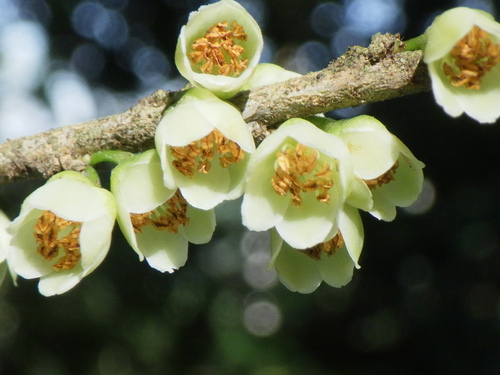
Eurya japonica
Thunberg
iNaturalist· cc-by-sa
(c) harum.koh, some rights reserved (CC BY-SA), uploaded by harum.koh
iNaturalist· cc-by-sa
(c) harum.koh, some rights reserved (CC BY-SA), uploaded by harum.koh
iNaturalist· cc-by-sa
(c) harum.koh, some rights reserved (CC BY-SA), uploaded by harum.koh
Summary
Source: WikipediaEurya japonica, known as East Asian eurya, is a 1–3.5 m tall shrub in the Pentaphylacaceae family. It is found in eastern China, Korea, and Japan. It is used as an ornamental plant. In shinto it is a sacred tree, whose leaves are used as sacrificial offerings.
Description
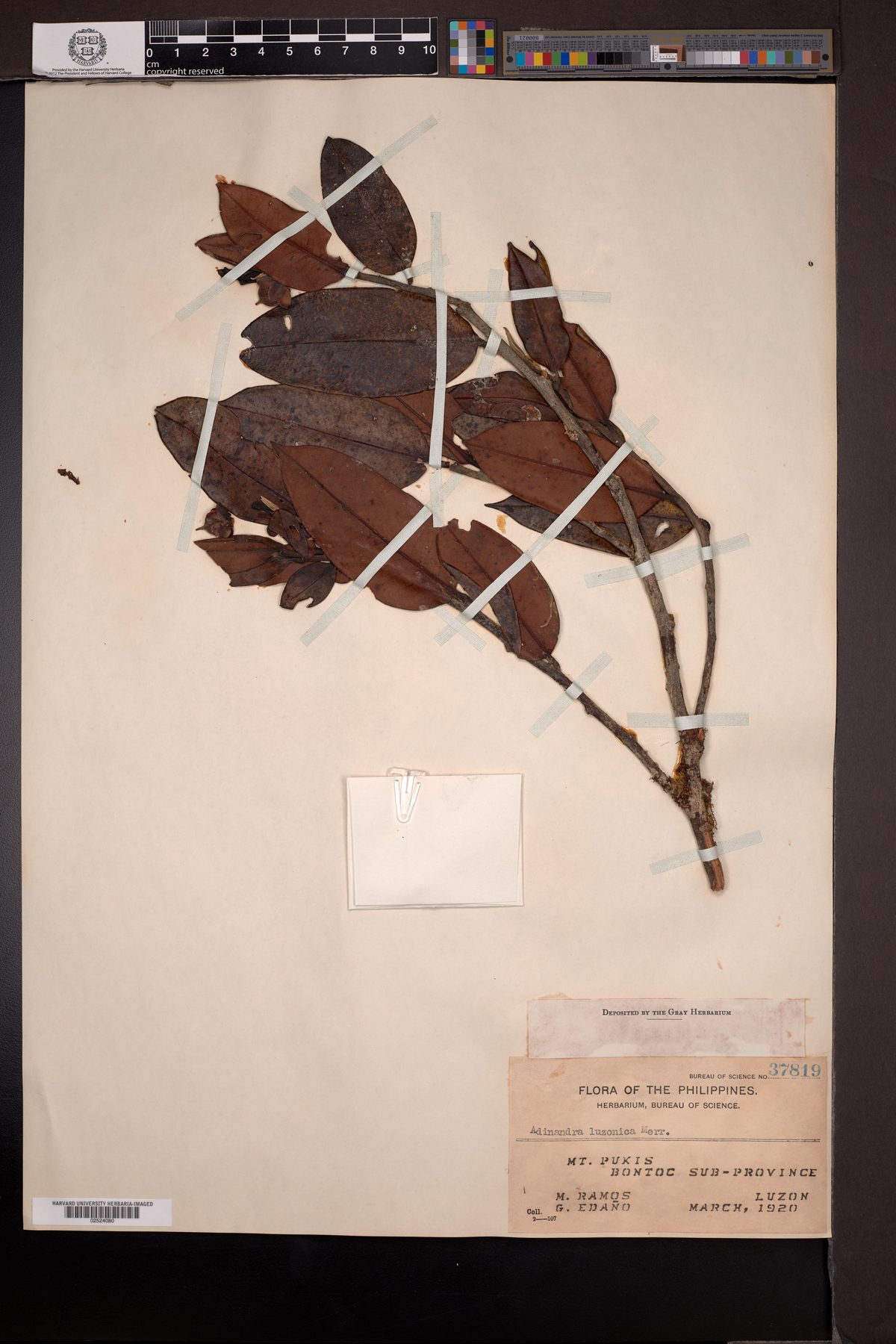
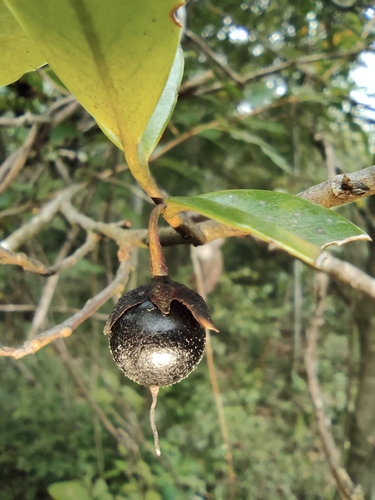
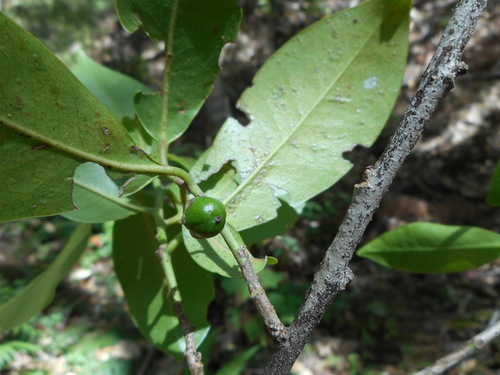
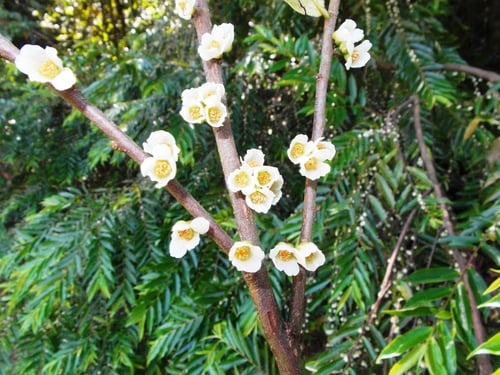
A shrub or small tree. It grows 3-6 m high. It spreads 2.4-6 m wide. The leaves are broadly oval. They are leathery and 3-5 cm long. They taper at both ends. There are teeth along the edges. The flowers are white or cream with pink tints. They are of one sex. The fruit are purple-black berries. They are 5 mm across.
Edible Uses
The leaves are used as a tea substitute or to adulterate China tea.
Medicinal Uses
No medicinal uses are known.
Distribution
It is a warm temperate to subtropical plant. In E China it grows on mountain slopes and in valleys between 300-2,500 m above sea level. It suits hardiness zones 7-10.
Where It Grows
American Samoa, Asia, Australia, China, Hawaii, India, Indochina, Japan, Korea, Malaysia, Micronesia, Myanmar, Northeastern India, Pacific, Palau, SE Asia, Sikkim, USA, Vietnam,
Cultivation
Prefers a moderately fertile free-draining moisture retentive soil in sun or part shade with shelter from cold drying winds. Probably best grown in a well-drained lime-free humus-rich soil. Plants grow much taller in the milder areas of Britain. Protect plants from frost when they are young. The dwarf form that is grown in Britain is quite hardy once it is established. The flowers are malodorous. The trees are pollarded in the Himalayas and the leaves used for leaf manure. Dioecious, male and female plants must be grown if seed is required.
Propagation
Sow seed as soon as it is ripe in a cold frame, or in early spring in a greenhouse. Once large enough to handle, prick seedlings out into individual pots and grow on in a greenhouse for at least their first winter. Plant out into permanent positions in late spring or early summer, after the last expected frosts. Alternatively, take cuttings of half-ripe wood, 6–8 cm with a slight heel, in July or August, and root in individual pots in a frame. Success rate is high.
Other Uses
The wood is soft and close-grained and is used mainly as fuel.
Notes
Also put in the family Theaceae.
Synonyms
Also Known As
Arruttuvarai, Baunra, Chontra nhat, Deura, Gonte, Hisakaki, Huluni, Jhingni, Murmura, Saseni, Sihneh, Taung-laphet, Taw-laphet, Tukcheong, Tuksol, Tungchung
References (8)
- Ambasta, S.P. (Ed.), 2000, The Useful Plants of India. CSIR India. p 215
- Cundall, P., (ed.), 2004, Gardening Australia: flora: the gardener's bible. ABC Books. p 590
- Etherington, K., & Imwold, D., (Eds), 2001, Botanica's Trees & Shrubs. The illustrated A-Z of over 8500 trees and shrubs. Random House, Australia. p 318
- Lalfakzuala, R., 2007, Ethnobotanical usages of plants in western Mizoram. Indian Journal of Traditional Knowledge. Vol 6(3) pp 480-493
- Nov. gen. pl. 3:67. 1783
Show all 8 references Hide references
- Savita, et al, 2006, Studies on wild edible plants of ethnic people in east Sikkim. Asian J. of Bio Sci. (2006) Vol. 1 No. 2 : 117-125
- Staples, G.W. and Herbst, D.R., 2005, A tropical Garden Flora. Bishop Museum Press, Honolulu, Hawaii. p 546
- World Checklist of Useful Plant Species 2020. Royal Botanic Gardens, Kew