Capparis zeylanica
L.
Ceylon caper, Indian caper
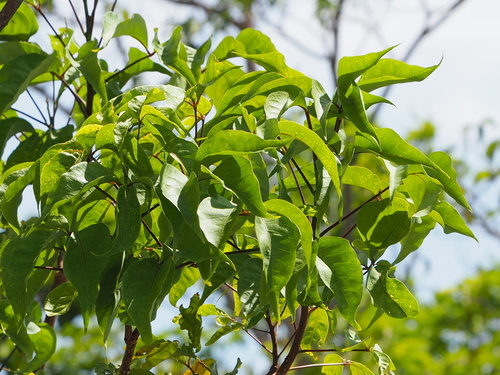
iNaturalist· cc-by-nc
(c) Shiwalee Samant, some rights reserved (CC BY-NC), uploaded by Shiwalee Samant
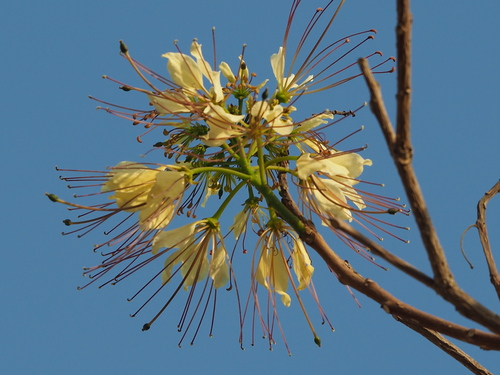
iNaturalist· cc-by-nc
(c) V.Arun, some rights reserved (CC BY-NC)
Summary
Source: WikipediaCapparis zeylanica is a climbing shrub common in the forests of the Indian subcontinent, Indo-China, China and Malesia; no subspecies are listed in the Catalogue of Life. Several species of Lepidopteran larvae feed on its leaves.
Description
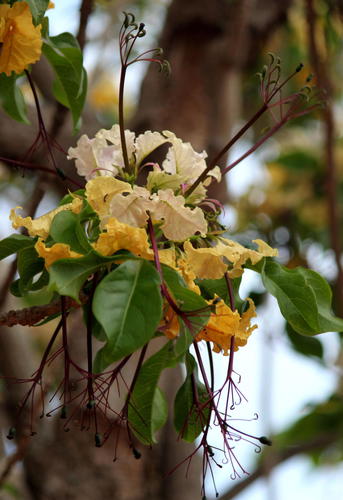
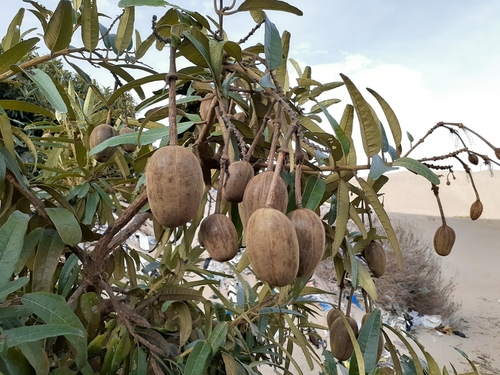
A climber or shrub. It grows 2-5 m tall. The small branches zigzag. There are thorns that curve backwards. These are 3-6 mm long. A vine with alternate leaves. The leaves are hairy, with pointed tips and rounded base. The flowers are fairly large and pink turning to purple. The fruit are berries that are red then black. They can be 5 cm long by 4 cm wide. They have a woody skin. There are many seeds. These are in a fleshy pulp.
Edible Uses
The ripe fruit are pickled after being soaked overnight and boiled; they are bitter and must be processed before eating. Young fruit are cooked and eaten as a vegetable. The flowers are eaten as a vegetable despite being somewhat bitter. The seeds from ripe fruit are eaten roasted.
Traditional Uses
The ripe fruit are made into pickles. The fruit are bitter. They are soaked overnight and boiled in water. Young fruit are cooked and eaten as a vegetable. The flowers are eaten as a vegetable. They are somewhat bitter. The seeds of the ripe fruit are eaten roasted.
Medicinal Uses
The leaves are employed as a counter-irritant, and are made into a poultice for treating boils, swellings and haemorrhoids. They are also used to reduce perspiration and to improve the appetite. A decoction of the root-bark is used as a remedy for vomiting and to improve the appetite.
Distribution
A tropical plant. It grows near the foothills of the Himalayas up to 800 m altitude. It grows in dry deciduous forest. In the Philippines reported only from Luzon and Mindanao.
Where It Grows
Asia, Bangladesh, Cambodia, China, Himalayas, India, Indochina, Indonesia, Laos, Malaysia, Myanmar, Nepal, Northeastern India, Pacific, Pakistan, Philippines, SE Asia, Sri Lanka*, Thailand, Vietnam,
Cultivation
Plants can be raised from seed.
Production
In China it flowers in February to April and fruits in July.
Notes
There are about 250 Capparis species. There are about 50 Capparis species in tropical America.
Synonyms
Also Known As
Aathandai, Adonda, Adonda teega, Adondai, Ardanda, Asadua, Asaria, Bagh mukhwa, Bagnai, Baralauik, Cap tichlan, Cap tieh pan, Gai den, Gitoran, Gobindaphal, Govindi, Govind-phal, Halubagat-baging, Halubagat, His, Kaathatikaai, Kalookra, Karaluwa, Karambha, Karvila, Kevisi, Kolokera, Mai-nam-lawt, Mani-thani-yet, Mari punp, Melada, Nah-ma-nee-tanyet, Nwamani-than-lyet, Orkali, Rook saa, Sa-rae, Suduthoratti, Tarabtab, Thaolang-makkep, Toratti, Tottula, Vaghati, Wagat, Waghata, Waghati, Waghoti, Waghutale, Walakenaru, Yieokai
References (47)
- Acharya K. P. and Acharya, R., 2010, Eating from the Wild: Indigenous knowledge on wild edible plants in Parroha VDC of Rupandehi District, Central Nepal. International Journal of Social Forestry. 3(1):28-48
- Ambasta S.P. (Ed.), 2000, The Useful Plants of India. CSIR India. p 103
- Arinathan, V., et al, 2007, Wild edibles used by Palliyars of the western Ghats, Tamil Nadu. Indian Journal of Traditional Knowledge. 6(1) pp 163-168
- Ashton, M. S., et al 1997, A Field Guide to the Common Trees and Shrubs of Sri Lanka. WHT Publications Ltd. p 136
- Behera K. K., et al, 2008, Wild Edible Plants of Mayurbhanj District, Orissa, India. J. Econ. Taxon. Bot. Vol. 32 (Suppl.) pp 305-314
Show all 47 references Hide references
- Bircher, A. G. & Bircher, W. H., 2000, Encyclopedia of Fruit Trees and Edible Flowering Plants in Egypt and the Subtropics. AUC Press. p 81 (As Capparis horrida)
- Brown, W.H., 1920, Wild Food Plants of the Philippines. Bureau of Forestry Bulletin No. 21 Manila. p 60 (As Capparis horrida)
- Coronel, R.E., 1982, Fruit Collections in the Philippines. IBPGR Newsletter p 6 (As Capparis horrida)
- Davis, S.D., Heywood, V.H., & Hamilton, A.C. (eds), 1994, Centres of plant Diversity. WWF. Vol 1 or 2. p 117
- Dangol, D. R. et al, 2017, Wild Edible Plants in Nepal. Proceedings of 2nd National Workshop on CUAOGR, 2017.
- Dey, A. & Mukhererjee, A., 2015, Living and Survival Amidst Hunger: Wild Edible Botanicals as a Prime Forest Productivity in the Rural Purulia District, West Bengal, India from Colonial to Present. Research Journal of Forestry 9(3): 71-86
- Dobriyal, M. J. R. & Dobriyal, R., 2014, Non Wood Forest Produce an Option for Ethnic Food and Nutritional Security in India. Int. J. of Usuf. Mngt. 15(1):17-37
- Gautam, R. S., et al, 2020, Wild Edible Fruits of Nepal. Int. J. Appl. Sci. Biotechnol. Vol 8(3): 289-304
- Gautam, R. S., et al, 2022, Ethnobotanical Review of Wild Edible Plants of Nepal. Journal of Natural History Museum Volume 32, 2021-22 p 109
- Hedrick, U.P., 1919, (Ed.), Sturtevant's edible plants of the world. p 151 (As Capparis horrida)
- Jadhav, R., et al, 2015, Forest Foods of Northern Western Ghats: Mode of Consumption, Nutrition and Availability. Asian Agri-History Vol. 19, No. 4: 293-317
- Kannan, M., et al, 2015, Ethnobotanical survey on wild edible plants of Kalrayan Hills, Salem District, Tamil Nadu, India. Global J. Res. Med Plants & Indigen. med. 4(12): 236-246
- Kiran, K. C., et al, 2019, Diversity and Seasonal Availability of Potential Wild Edible Plants from Vidarbha Region of Maharashtra State, India. Int.J.Curr.Microbiol.App.Sci (2019) 8(2): 1434-1446
- Kuhnlein, H. V., et al, 2009, Indigenous Peoples' food systems. FAO Rome p 193 (As Capparis horrida)
- Masoodi, H. U. R. & Sundriyal, R. C., 2020, Richness of non-timber forest products in Himalayan communities—diversity, distribution, use pattern and conservation status. Journal of Ethnobiology and Ethnomedicine 16:56
- Misra, S., 2020, Survey of edible plants for human consumption in south Odisha, India. Journal of Emerging Technologies and Innovative Research (JETIR) Vol. 7, Issue 12 p 278
- Monsalud, M.R., Tongacan, A.L., Lopez, F.R., & Lagrimas, M.Q., 1966, Edible Wild Plants in Philippine Forests. Philippine Journal of Science. p 450 (As Capparis horrida)
- Pasha, M. K. & Uddin, S. B., 2019, Minor Edible Fruits of Bangladesh. Bangladesh J. Plant Taxon. 26(2): 299–313
- Patiri, B. & Borah, A., 2007, Wild Edible Plants of Assam. Geethaki Publishers. p 6
- Pham-Hoang Ho, 1999, An Illustrated Flora of Vietnam. Nha Xuat Ban Tre. p 597 and p 592 (As Capparis horrida)
- Prachi, K., et al, 2012, Underutilized wild fruits of North Maharashtra. Journal of Research in Plant Sciences. (2012) 1:071-076
- Prafulla, S., 2017, Wild Food Diversity of Nawegaon-Nagzira Tiger Reserve in Gondia-Bhandara district of Maharashtra, India. Int. J. of Life Sciences, 2017, Vol. 5 (4): 620-626
- PROSEA (Plant Resources of South East Asia) handbook, Volume 12 (2), 2001, Medicinal and poisonous plants 2.
- Ramakrishna, N. & Singh, DSR, R., 2020, Ethno-Botanical Studies of Edible Plants Used by Tribal Women in Nirmal District. IJSRSET p 309
- Rao, M. L. S., et al, 2014, Indigenous Plant Foods which are commonly consumed by the tribal communities in Dumbriguda Area of Visakhapatnam District, Andhra Pradesh, India. Biolife. Vol 2, Issue 3
- Rasingam, L., 2012, Ethnobotanical studies on the wild edible plants of Irula tribes of Pillur Valley, Coimbatore district, Tamil Nadu, India. Asian Pacific Journal of Tropical Biomedicine. (2012) S1493-S1497
- Sadhale, A., et al, 1991, Ethnobotanical studies of sacred grove at Ajiwali, Pune district. J. Econ. Tax. Bot. Vol. 15 No. 1 pp 167-172
- Shah, G.L., 1984, Some economically important plant of Salsette Island near Bombay. J. Econ. Tax. Bot. Vol. 5 No. 4 pp 753-765
- Sharma, B.D., & Lakshminarasimhan, P., 1986, Ethnobotanical Studies on the Tribals of Nasik District (Maharashtra). J. Econ. Tax. Bot. Vol. 8 No. 2 pp 439-446
- Singh, H.B., Arora R.K.,1978, Wild edible Plants of India. Indian Council of Agricultural Research, New Delhi. p 53
- Singh, V. B., et al, (Ed.) Horticulture for Sustainable Income and Environmental Protection. Vol. 1 p 214
- Sp. pl. 2:720. 1762
- Sivakumar, A. & Murugesan, M., 2005, Ethnobotanical Studies of the wild edible plants used by the tribals of the Anaimalai Hills, the Western Ghats. Ancient Science of Life. XXV(2) Oct-Dec.
- Tamil herbs, 2007, Edible Plants of the Tropical Dry Evergreen Forest.
- Terra, G.J.A., 1973, Tropical Vegetables. Communication 54e Royal Tropical Institute, Amsterdam, p 35 (As Capparis horrida)
- Tewari, D.N., 1994, Important Plants of India. International Book Distributors, India. p 93
- Upreti, K., et al, 2010, Diversity and Distribution of Wild Edible Fruit Plants of Uttarakhand. Bioversity Potentials of the Himalaya. p 164
- Uprety, Y., et al, 2016, Traditional use and management of NTFPs in Kangchenjunga Landscape: implications for conservation and livelihoods. Journal of Ethnobiology and Ethnomedicine (2016) 12:19
- Verheij, E. W. M. and Coronel, R.E., (Eds.), 1991, Plant Resources of South-East Asia. PROSEA No 2. Edible fruits and nuts. Pudoc Wageningen. p 322
- www.efloras.org Flora of China Volume 7
- Wild edible plants of Himachal Pradesh
- World Checklist of Useful Plant Species 2020. Royal Botanic Gardens, Kew