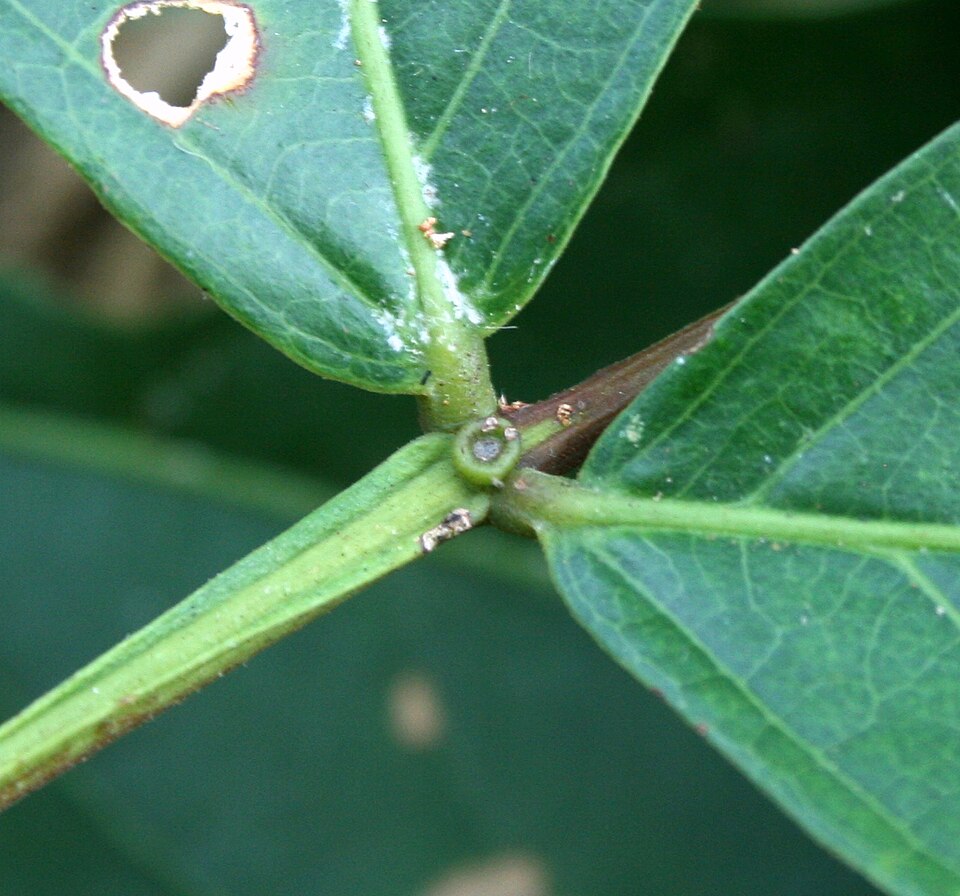
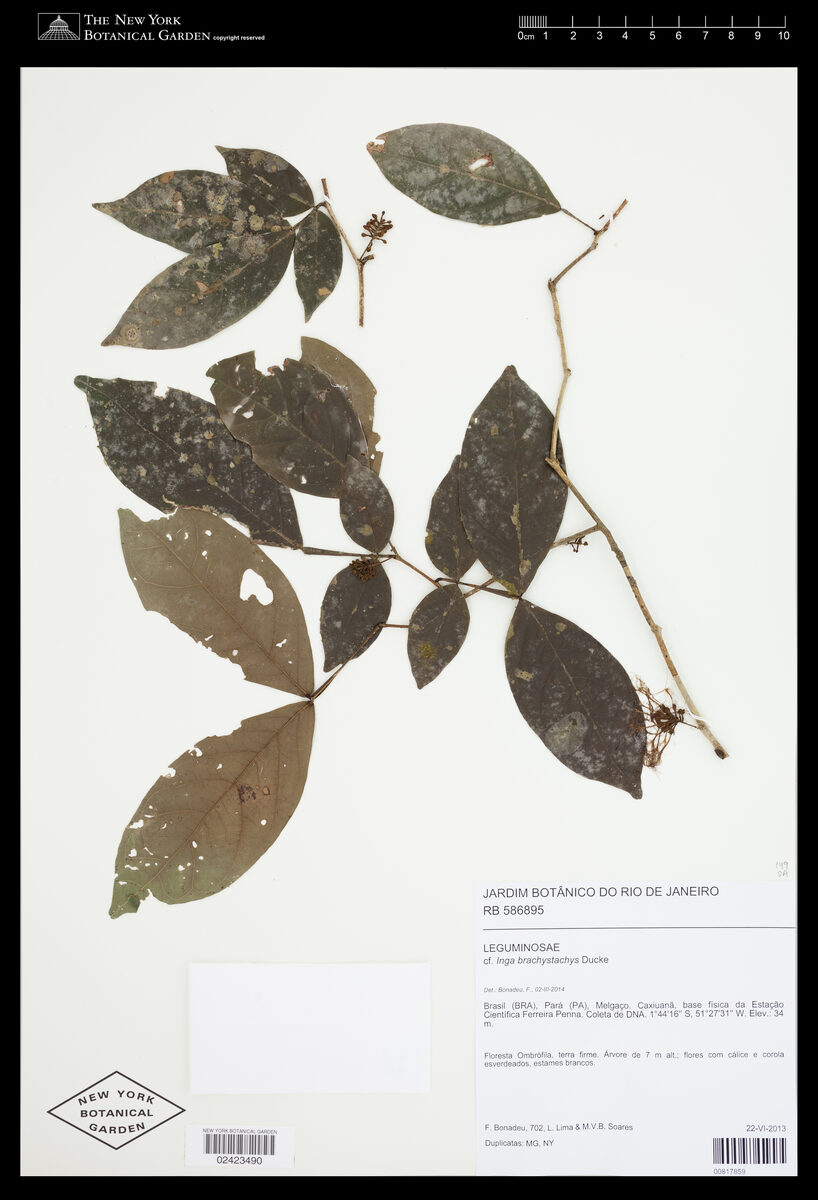
Inga stipularis
DC.
Guamita inga
iNaturalist· cc-by-nc
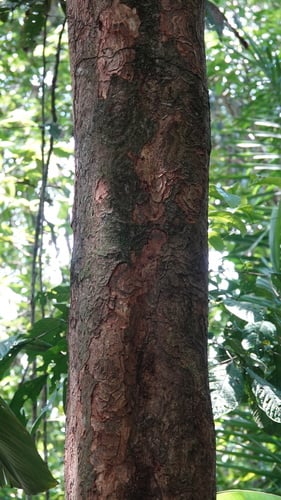
(c) accidentalshrike, some rights reserved (CC BY-NC), uploaded by accidentalshrike
iNaturalist· cc-by-nc
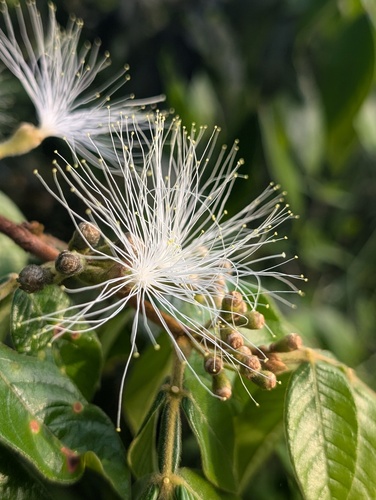
(c) accidentalshrike, some rights reserved (CC BY-NC), uploaded by accidentalshrike
iNaturalist· cc-by-nc
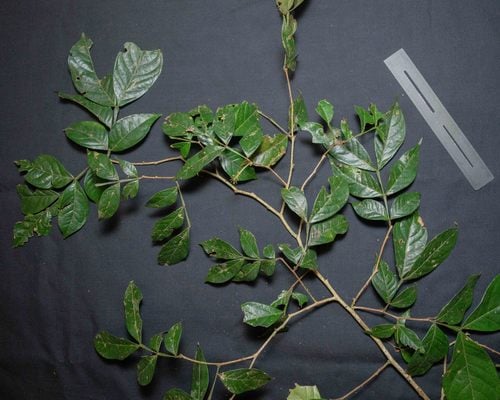
(c) accidentalshrike, some rights reserved (CC BY-NC), uploaded by accidentalshrike
Description
A tropical tree growing to 20 m tall, found in rainforests and along marsh forest edges. It produces elongated seed pods approximately 20 cm long by 2 cm wide containing seeds surrounded by edible pulp.
Edible Uses
Fruit - raw. The white pulp surrounding the seeds is eaten. The seedpod is up to 20cm long and 2cm wide.
Traditional Uses
The pulp around the seeds is eaten raw.
This uses section is brief — help expand it
Distribution
It is a tropical plant. It grows in rainforest and along the edges of marsh forests.
Where It Grows
Amazon, Bolivia, Brazil, Colombia, Ecuador, French Guiana, Guianas, Guyana, Peru, South America, Suriname, Venezuela,
Cultivation
Plants are grown from seeds.
Other Uses
The wood of Inga species is generally attractive, but it has a coarse texture, is susceptible to attack by dry-wood termites and is not durable in the soil.
Other Information
It is a cultivated food plant.
Notes
Also as Mimosaceae.
Synonyms
Also Known As
Guamita, Inga de orelha, Pois sucre, Swietieboontje, Warakosa, Warkusa
References (4)
- Fern, K., 2012, Tropical Species Database http://theferns.info/tropical/
- Grandtner, M. M. & Chevrette, J., 2013, Dictionary of Trees, Volume 2: South America: Nomenclature, Taxonomy and Ecology. Academic Press p 326
- INFOODSUpdatedFGU-list.xls
- Kew Plants of the World On line