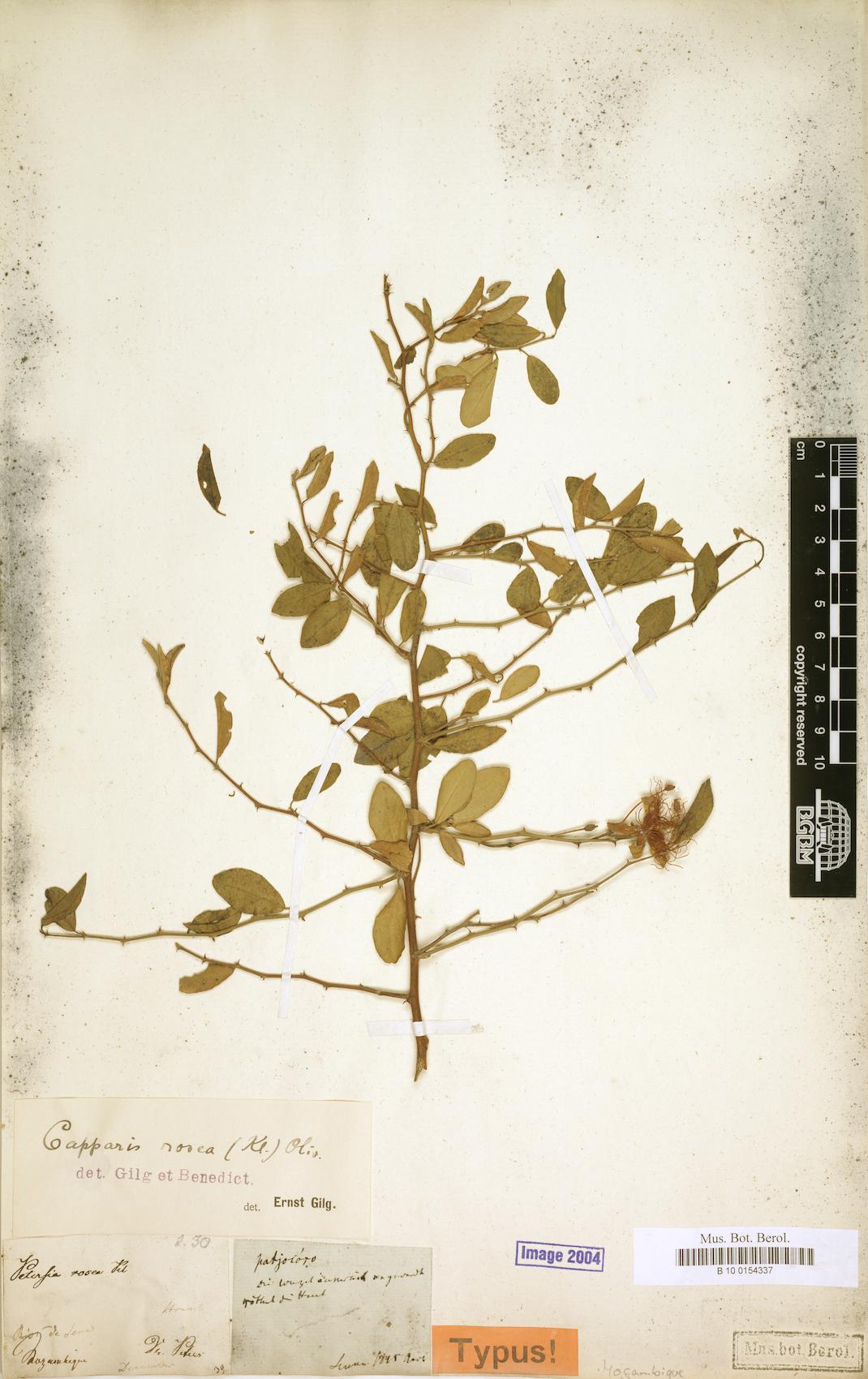
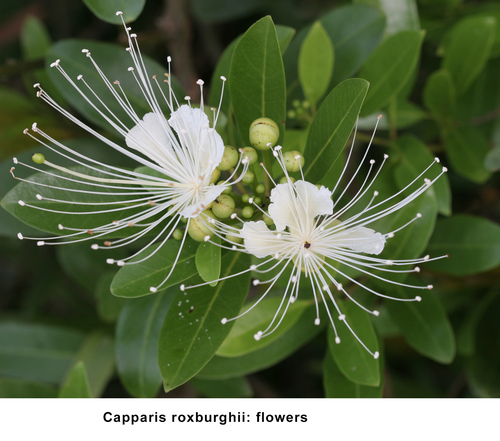
Ritchiea albersii
Gilg.
Description
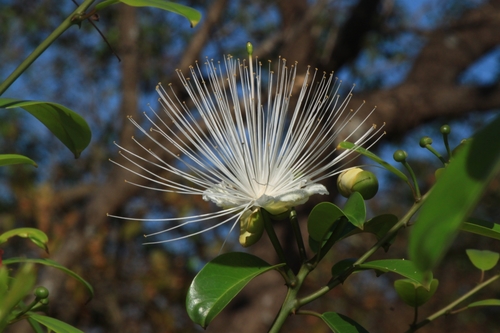
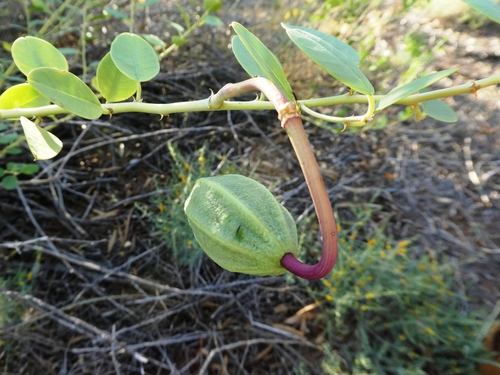
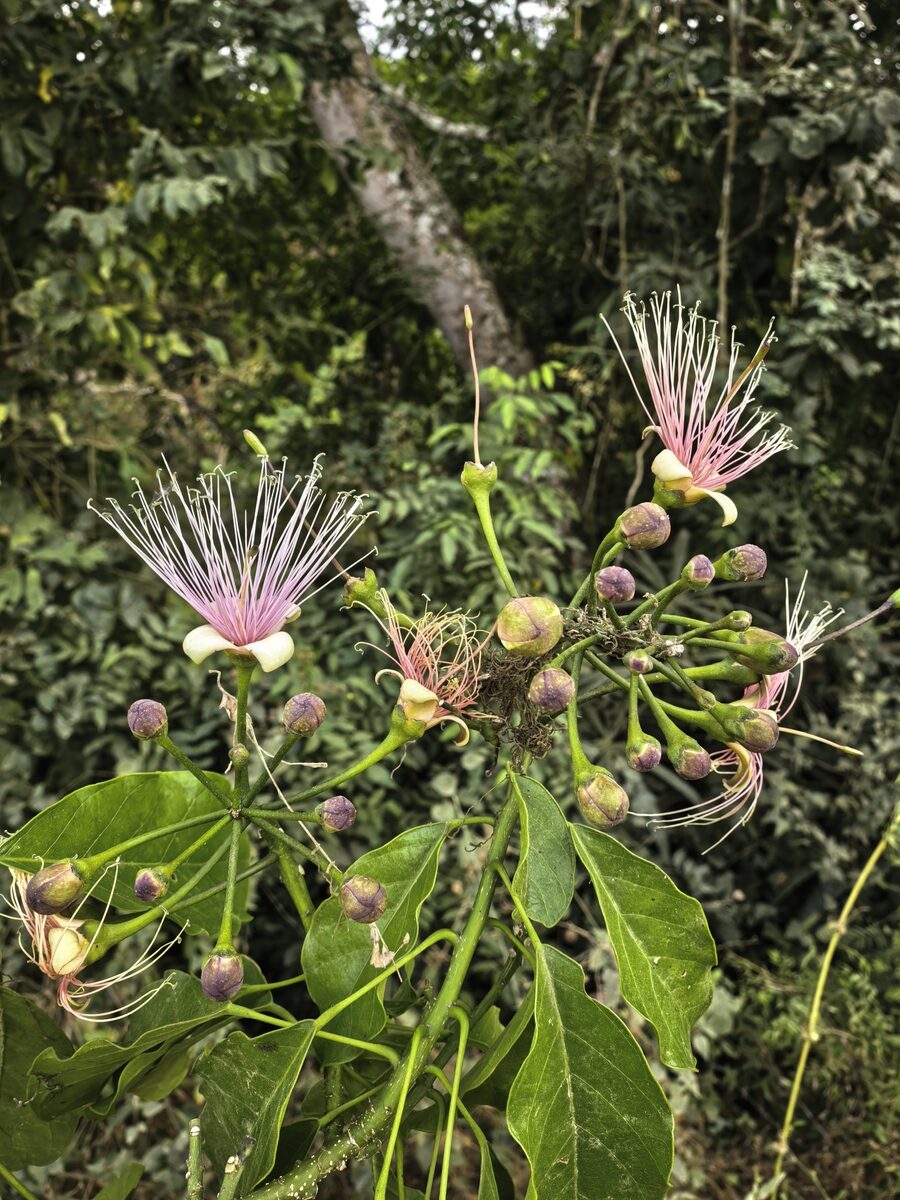
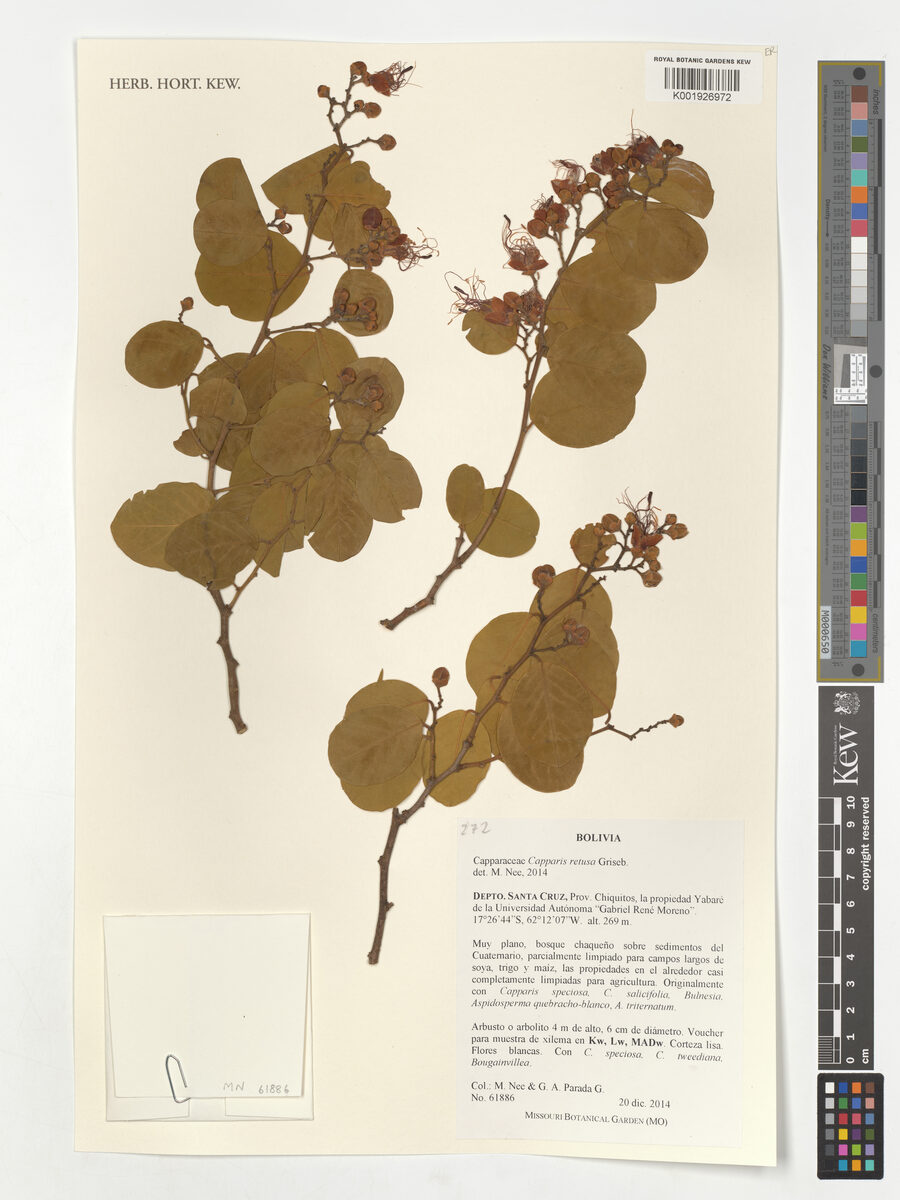
A shrub or small branched tree. It grows 20 m tall. The bark is dark brown. The leaves are simple and can have 3-5 lobes or leaflets. The leaves are alternate. The leaf stalk is 2-12 cm long. The leaf blade can be 20 cm long by 8 cm wide. They are wedge shaped at the base and taper to the tip. The flowers are near the ends of branches. The fruit are brown oval capsules 4.5 cm long. They split open to release the seeds.
Edible Uses
The roots are boiled, peeled, soaked in water for several days, dried in the sun, and pounded into flour for porridge. The ripe fruit are eaten raw. Traditionally used as a famine food.
Traditional Uses
The roots are boiled and eaten as a famine food. They are peeled, soaked in water for several days and then dried in the sun. The dried tubers are pounded into flour that is used to make porridge. Caution: It contains toxic materials that have to be removed during preparation. The ripe fruit are eaten raw.
Known Hazards
The roots contain toxic materials that must be removed during preparation.
Distribution
It is a tropical plant. It grows in dry mountain forest. In Tanzania it grows between, 1,100-2,400 m above sea level.
Where It Grows
Africa, East Africa, Ethiopia, Kenya, Nigeria, South Africa, Southern Africa, Sudan, Tanzania, Uganda, West Africa,
Cultivation
Plants can be grown from seeds or cuttings.
Propagation
Seed - Cuttings
Other Uses
The white wood is soft. It is used to make tool handles. The wood is used for fuel.
Production
Tubers are dug during the rainy season. The flour can be stored for several weeks.
Other Information
A famine food.
Also Known As
Baxaraqicho, Deqoo, Dhakacabsi, Gabo, Mdudu, Mtunguru, Mwaza-njama
References (6)
- Lovett, J. C. et al, Field Guide to the Moist Forest Trees of Tanzania. p 34
- Lulekal, E., et al, 2011, Wild edible plants in Ethiopia: a review on their potential to combat food insecurity. Afrika Focus - Vol. 24, No 2. pp 71-121
- Regassa, T., et al, 2014, Ethnobotany of Wild and Semi-Wild Edible Plants of Chelia District, West-Central Ethiopia. Science, Technology and Arts Research Journal. 3(4): 122-134
- Ruffo, C. K., Birnie, A. & Tengnas, B., 2002, Edible Wild Plants of Tanzania. RELMA p 568
- Senbeta, F. et al, 2013, Diversity of Useful Plants in the Coffee Forests of Ethiopia. Ethnobotany Research & Applications 11:049-069
Show all 6 references Hide references
- Sina, B. & Degu, H. D., 2015, Knowledge and use of Wild Edible Plants in the Hula District of the Sidama Zone. International Journal of Bio-resource and Stress Management 6(3):352-365