Dimocarpus fumatus
(Blume) Leenh.
gbif· cc0
President and Fellows of Harvard College
gbif· cc0
President and Fellows of Harvard College
gbif· cc0
President and Fellows of Harvard College
Summary
Source: WikipediaDimocarpus fumatus is an Asian tree species in the family Sapindaceae.
Description
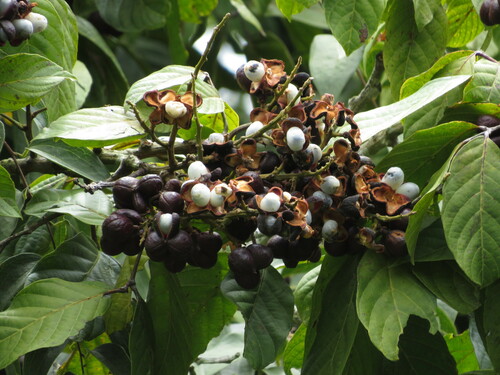
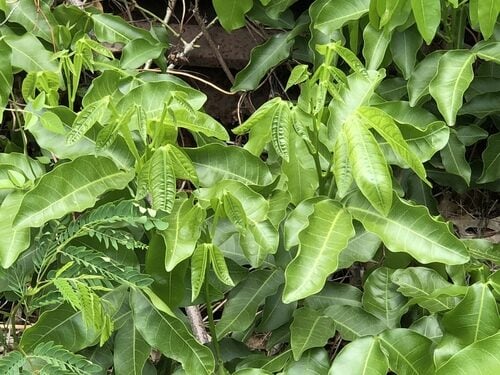
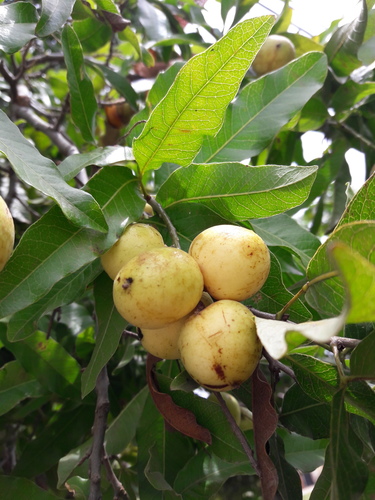
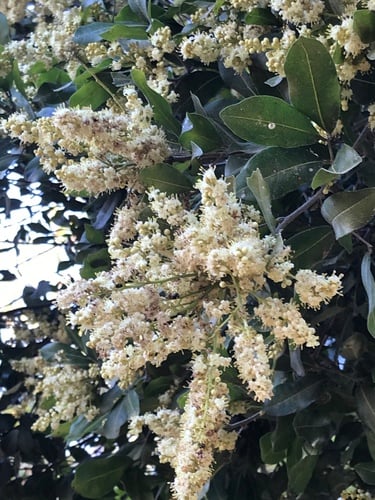
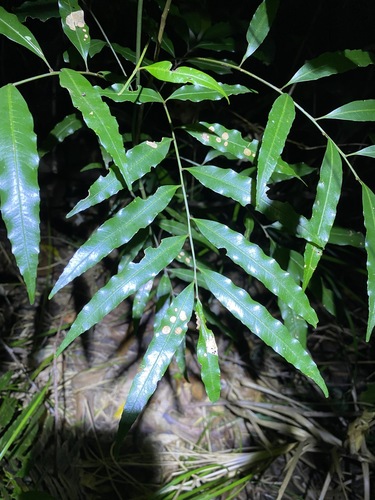
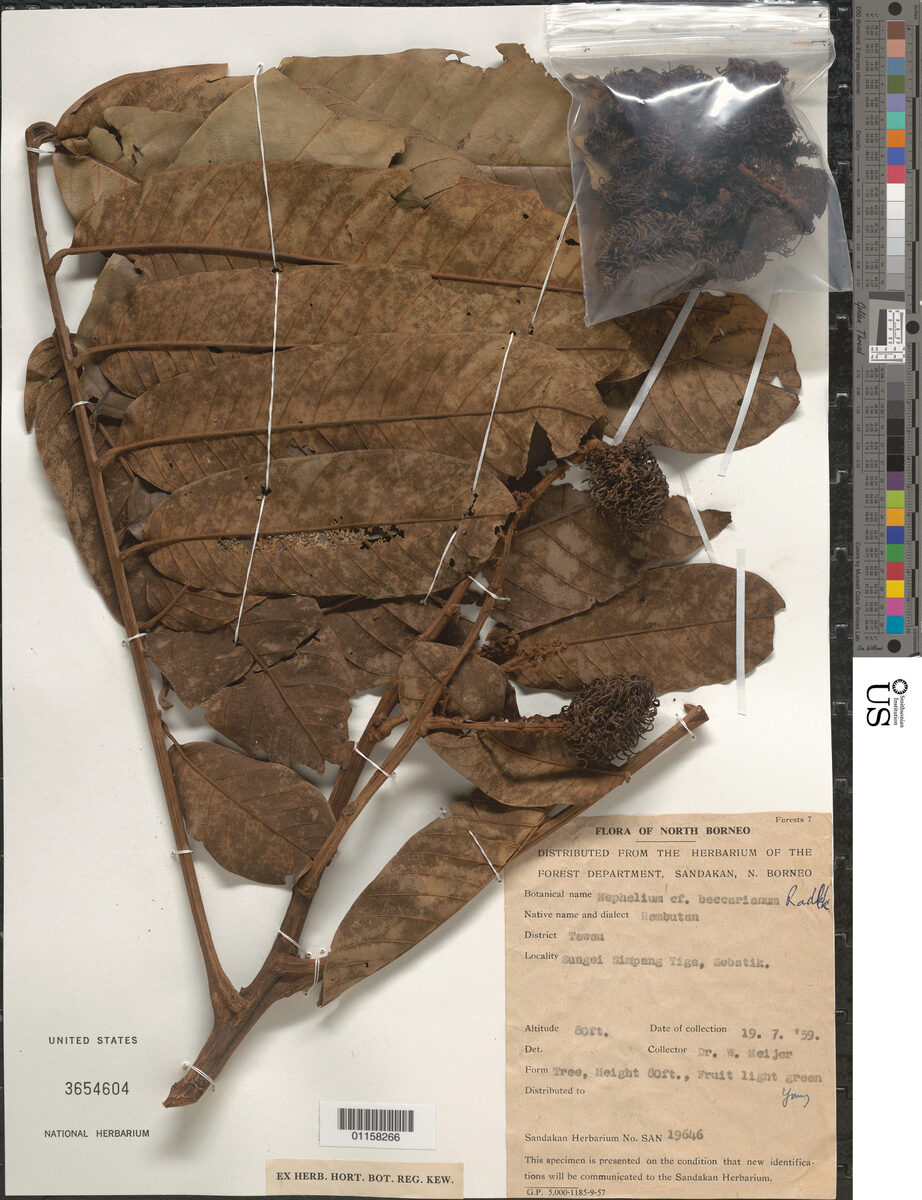
A tree. It grows 35 m high. The leaves are alternate and compound. The leaflets sometimes have teeth along the edge. The flowers are 4 mm across. They are white to yellow. They are in groups. The fruit are 2 cm long and greenish-yellow. They can be warty. The seeds have a fleshy layer or aril around them.
Edible Uses
The ripe fruit are eaten.
Traditional Uses
The ripe fruit are eaten.
This uses section is brief — help expand it
Distribution
It is a tropical plant. It grows up to 1,500 m above sea level. It grows on alluvial soil along streams and rivers.
Where It Grows
Asia, China, Indochina, Indonesia, Laos, Malaysia, Myanmar, Philippines, Sarawak, SE Asia, Thailand,
Cultivation
The tree grows mainly on sandy soils in the wild, but is also found on limestone.
Synonyms
Also Known As
Kakus, Katumbar, Mambuakat, Meliking, Merakiang, Taw-kyat-mauk
References (3)
- Chai, P. P. K. (Ed), et al, 2000, A checklist of Flora, Fauna, Food and Medicinal Plants. Lanjak Entimau Wildlife Sanctuary, Sarawak. Forestry Malaysia & ITTO. p 170
- Shin, T., et al, 2018, Traditional knowledge of wild edible plants with special emphasis on medicinal uses in Southern Shan State, Myanmar. Journal of Ethnobiology and Ethnomedicine (2018) 14:48
- Slik, F., www.asianplant.net