Cassia sophora
(L.) Wall.
iNaturalist· cc-by-nc
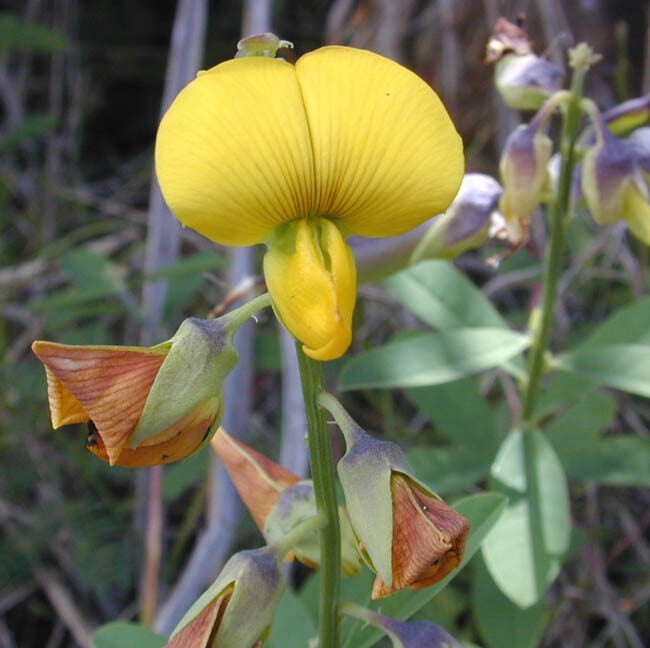
(c) MP Zhou, some rights reserved (CC BY-NC)
iNaturalist· cc-by-nc-sa
(c) Kuan-Chieh (Chuck) Hung, some rights reserved (CC BY-NC-SA)
iNaturalist· cc-by-nc-sa
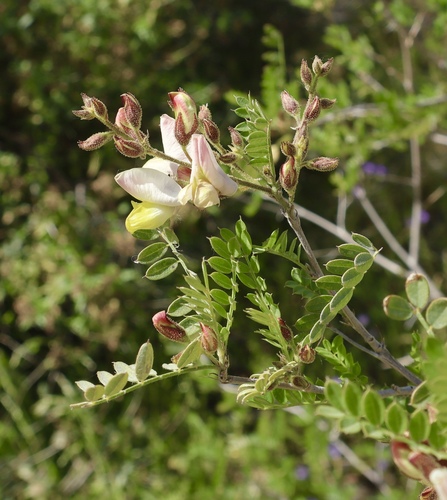
(c) Kuan-Chieh (Chuck) Hung, some rights reserved (CC BY-NC-SA)
Description
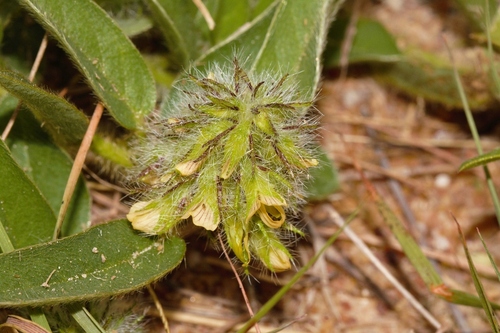
A shrub 2-3 m tall. The stems have few hairs. The leaf stalks have a club shaped gland near the base. The leaflets are in 4-10 pairs and they are 2-7 cm long by 0.8-2 cm wide. The flowers are in very short clusters in the axils of upper leaves. The flower stalks are 0.8-2.5 cm long. The petals are yellow and 1-1.5 cm long. The fruit are oblong, thin, slightly curved pods. They are 5-10.5 cm long by 0.6-1.1 cm wide. The pods are divided by partitions. The seeds are grey-brown and rounded. They are 4-4.5 mm long by 3.5-4.5 mm wide. They lie at right angles to the long axis of the pod.
Edible Uses
The shoots, leaves, seeds, and flowers are edible. The leaves contain purgative compounds (senna and chrysophanic acid) that should be removed by boiling and washing before consumption.
Traditional Uses
CAUTION: Leaves contain senna and chrysophanic acid, which are purgative. The bitter element is removed by boiling and washing.
This uses section is brief — help expand it
Medicinal Uses
The leaves have traditional purgative uses due to their senna and chrysophanic acid content.
Known Hazards
The leaves contain senna and chrysophanic acid, which are purgative and can cause strong laxative effects.
Distribution
A tropical plant. It grows throughout the tropics.
Where It Grows
Asia, China, India, Indochina, Laos, Pacific, Papua New Guinea, PNG, SE Asia, Tonga, Vietnam,
Notes
It is not known if they are used for food in Papua New Guinea. There are 100 Cassia species. This group has been revised to a smaller more consistent group. Also as Caesalpinaceae. This name needs clarifying. Possibly Cassia sophera now Senna sophera.
Synonyms
Also Known As
Cacay, Jamgli takla, Kashawada, Muong ngot, Poonaverie, Pydee tanghadu, Ran takla
References (11)
- GAMMIE,
- Gunjatkar, N., & Vartak, V.D., 1982, Enumeration of wild edible legumes from Pune District, Maharashtra State. J.Econ. Tax. Bot. Vol 3 pp 1-9
- Hedrick, U.P., 1919, (Ed.), Sturtevant's edible plants of the world. p 174
- Hu, Shiu-ying, 2005, Food Plants of China. The Chinese University Press. p 470
- Pham-Hoang Ho, 1999, An Illustrated Flora of Vietnam. Nha Xuat Ban Tre. p 850
Show all 11 references Hide references
- READ,
- SHORTT,
- Sp. pl. 1:379. 1753
- Verdcourt, B., 1979, Manual of New Guinea Legumes. Botany Bulletin No 11, Division of Botany, Lae, Papua New Guinea. p 54
- WATT,
- Yuncker, T.G., 1959, Plants of Tonga, Bernice P. Bishop Museum, Hawaii, Bulletin 220. p 136