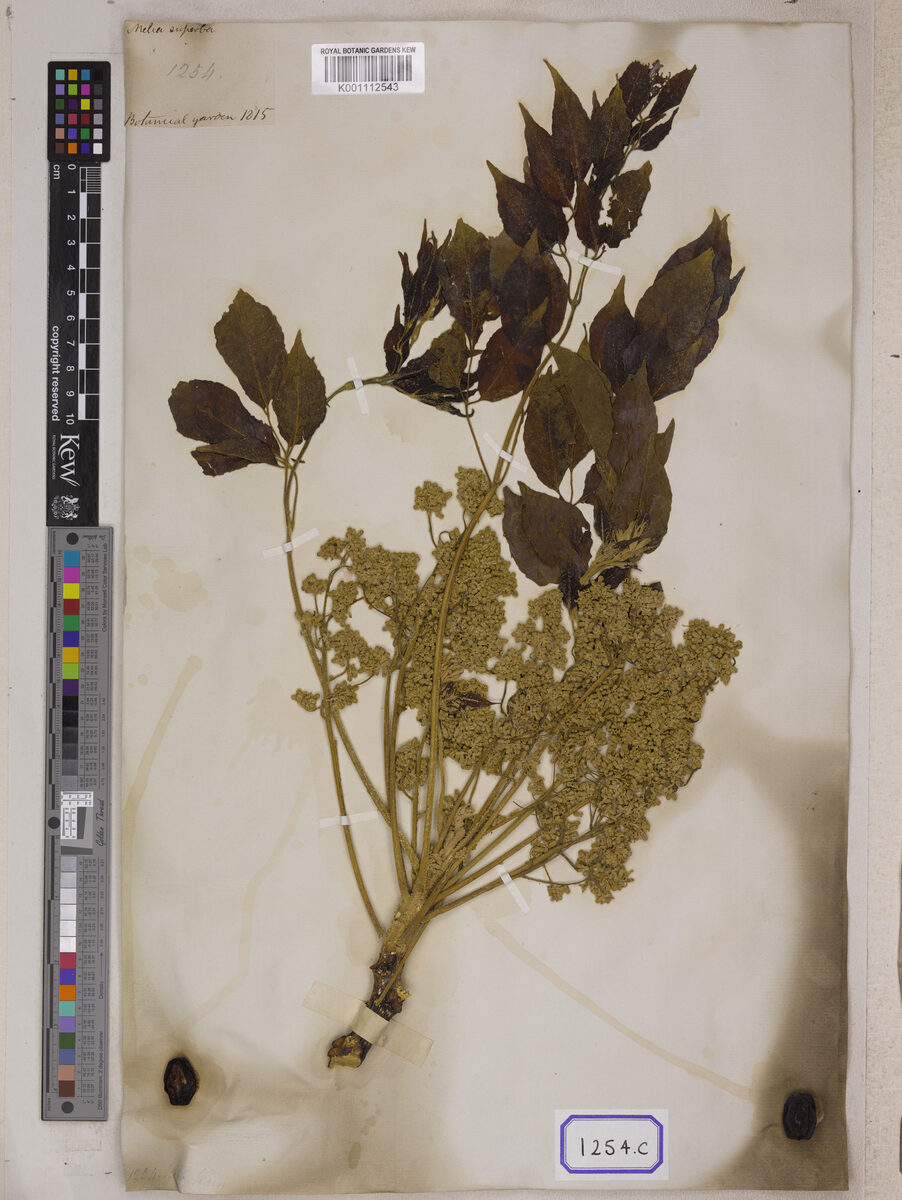
Aglaia leucophylla
King
iNaturalist· cc-by-nc-sa
(c) filibot.web, some rights reserved (CC BY-NC-SA)
gbif· cc0
President and Fellows of Harvard College
Summary
Source: WikipediaAglaia leucophylla is a species of flowering plant in the family Meliaceae. It is found in Brunei, Indonesia, Malaysia, the Philippines, and Thailand.
Description
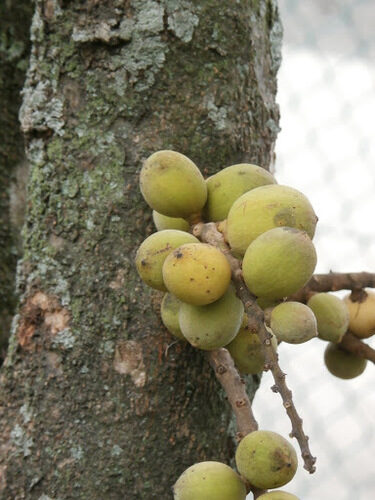
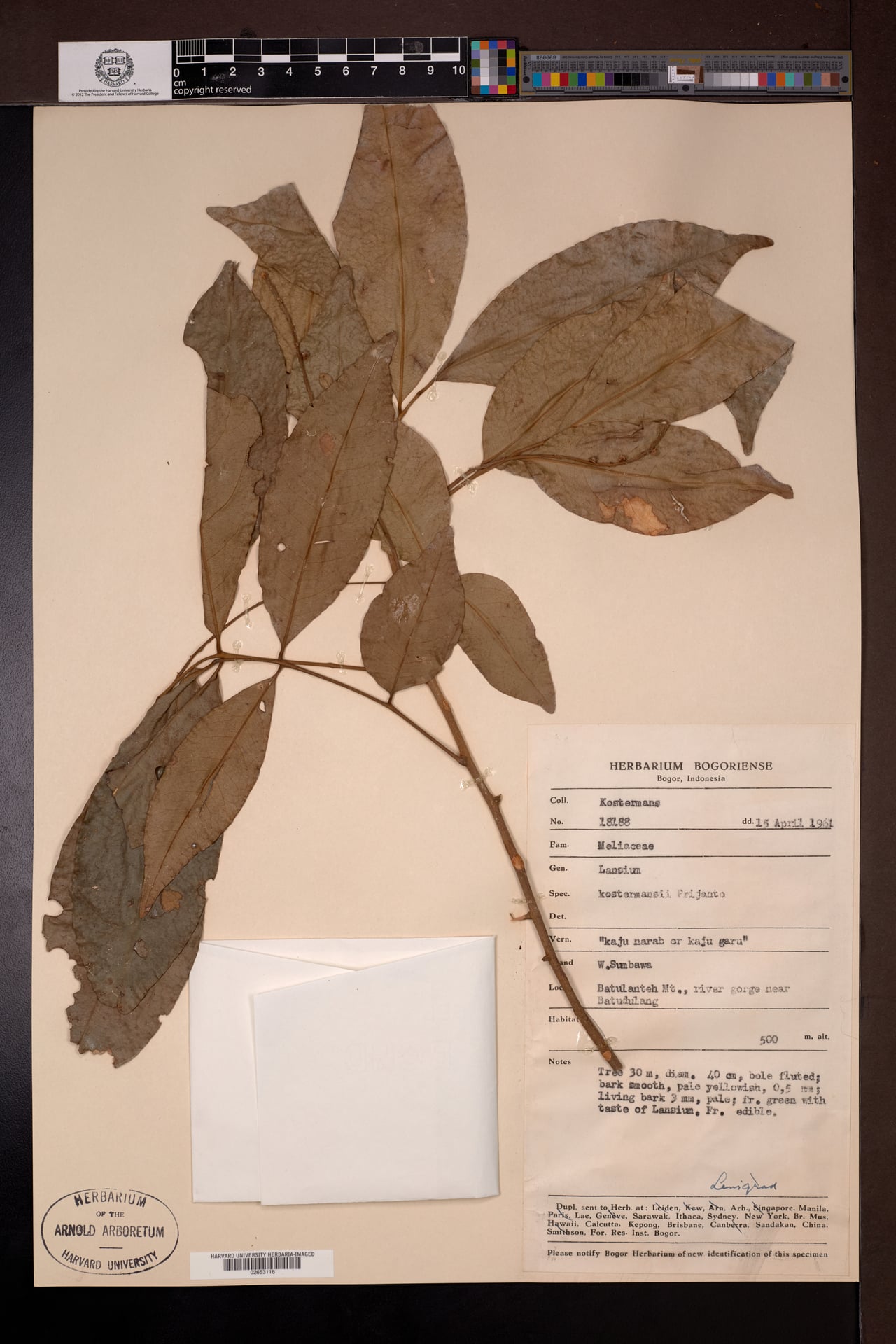
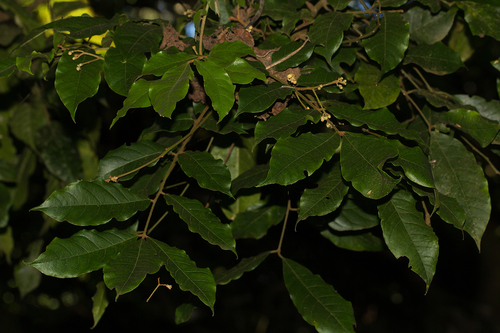
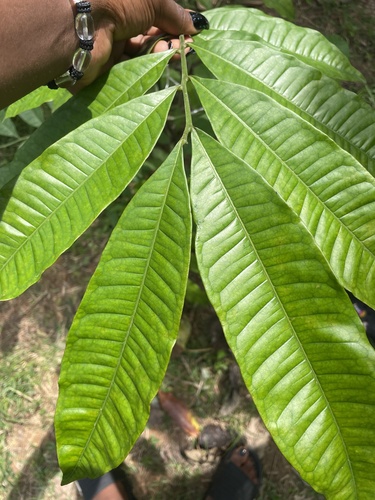
A small tree. It grows up to 25 m tall. The leaves are alternate and compound. The leaflets are slightly hairy underneath. The flowers are about 1 mm across. They are pale yellow. They are in groups. The fruit are 3 cm across. They are a greyish yellow. The seeds have a white to red fleshy layer around them.
Edible Uses
Fruit - raw. The seed is covered with a white or red flesh (aril) that can be sweet or sour in flavour. The fruits are up to 45mm in diameter, containing 2 seeds.
Medicinal Uses
The genus 'Aglaia' is the only source of the group of about 50 known representatives of compounds that bear a unique cyclopenta[b]tetrahydrobenzofuran skeleton. These compounds are more commonly called rocaglate or rocaglamide derivatives, or flavaglines, and most have been found to have potent insecticidal properties, antifungal, antiviral, antibacterial or anthelmintic bioactivity. Several of them exhibit pronounced cytotoxic activity against a range of human cancers. Since the first representative in this group was only discovered in 1982, this is one of the few recent examples of a completely new class of plant secondary metabolites of biological promise (see B. G. Wang et al., Biochem. Syst. Ecol. 32: 1223-1226. 2004; L.W. Chaidir et al., J. Nat. Prod. 64: 1216-1220. 2001).
Distribution
It is a tropical plant. It grows in evergreen forests near streams. It is usually on limestone bedrock and in Thailand grows between 100-300 m above sea level.
Where It Grows
Asia, Brunei, Indochina, Indonesia, Malaysia, Philippines, SE Asia, Thailand,
Cultivation
Trees can start flowering when only 150cm tall. A dioecious species, both male and female forms need to be grown if fruit and seed are required.
Other Uses
The genus 'Aglaia' is the only source of the group of about 50 known representatives of compounds that bear a unique cyclopenta[b]tetrahydrobenzofuran skeleton. These compounds are more commonly called rocaglate or rocaglamide derivatives, or flavaglines, and most have been found to have potent insecticidal properties, antifungal, antiviral, antibacterial or anthelmintic bioactivity. Several of them exhibit pronounced cytotoxic activity against a range of human cancers. Since the first representative in this group was only discovered in 1982, this is one of the few recent examples of a completely new class of plant secondary metabolites of biological promise (see B. G. Wang et al., Biochem. Syst. Ecol. 32: 1223-1226. 2004; L.W. Chaidir et al., J. Nat. Prod. 64: 1216-1220. 2001). The sapwood is reddish-brown or white. The wood is used as house poles in traditional buildings.
Production
In Thailand it usually flowers June to September and fruits November to May.
Synonyms
Also Known As
Kantupak, Makhuang, Merabakan, Pangak, Perumpong hutan, Sang ka tong
References (2)
- Slik, F., www.asianplant.net
- Wongprasert, T. et al, 2011, A Synoptic Account of the Meliaceae of Thailand. Thai For. Bull. 39:210-266