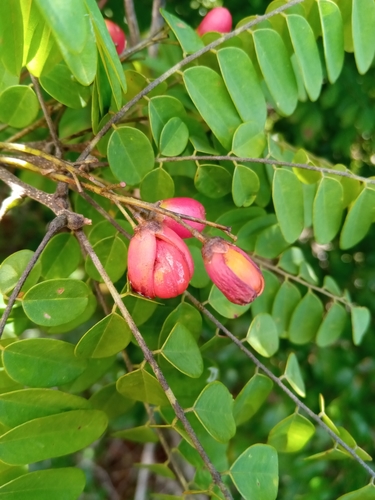
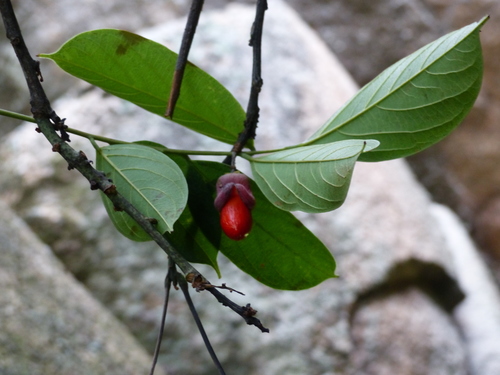
Cnestis ferruginea
Vahl ex DC.
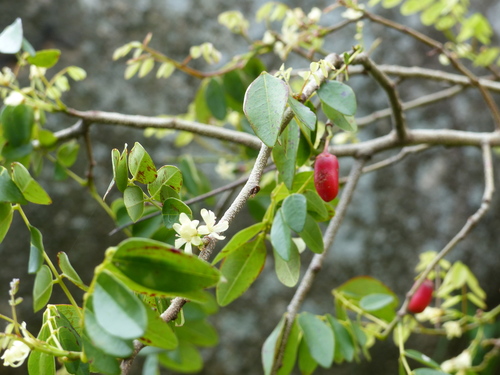
iNaturalist· cc-by-nc
(c) Bart Wursten, some rights reserved (CC BY-NC), uploaded by Bart Wursten
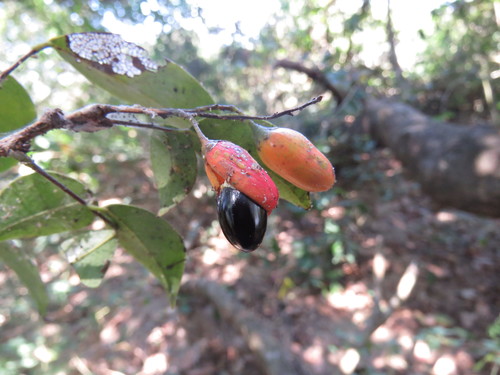
iNaturalist· cc-by-nc
(c) Babajide Agboola, some rights reserved (CC BY-NC)
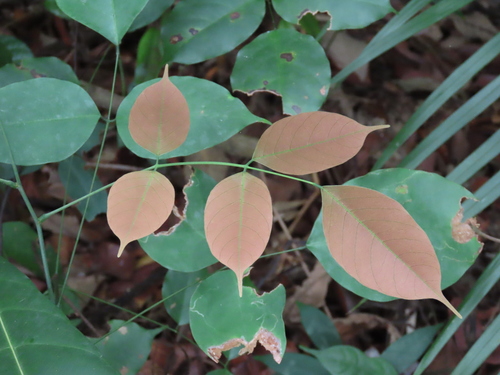
iNaturalist· cc-by-nc
(c) Babajide Agboola, some rights reserved (CC BY-NC)
Summary
Source: WikipediaThe shrub Cnestis ferruginea is native to Africa. It is best known for its uses in herbal medicine.
Description
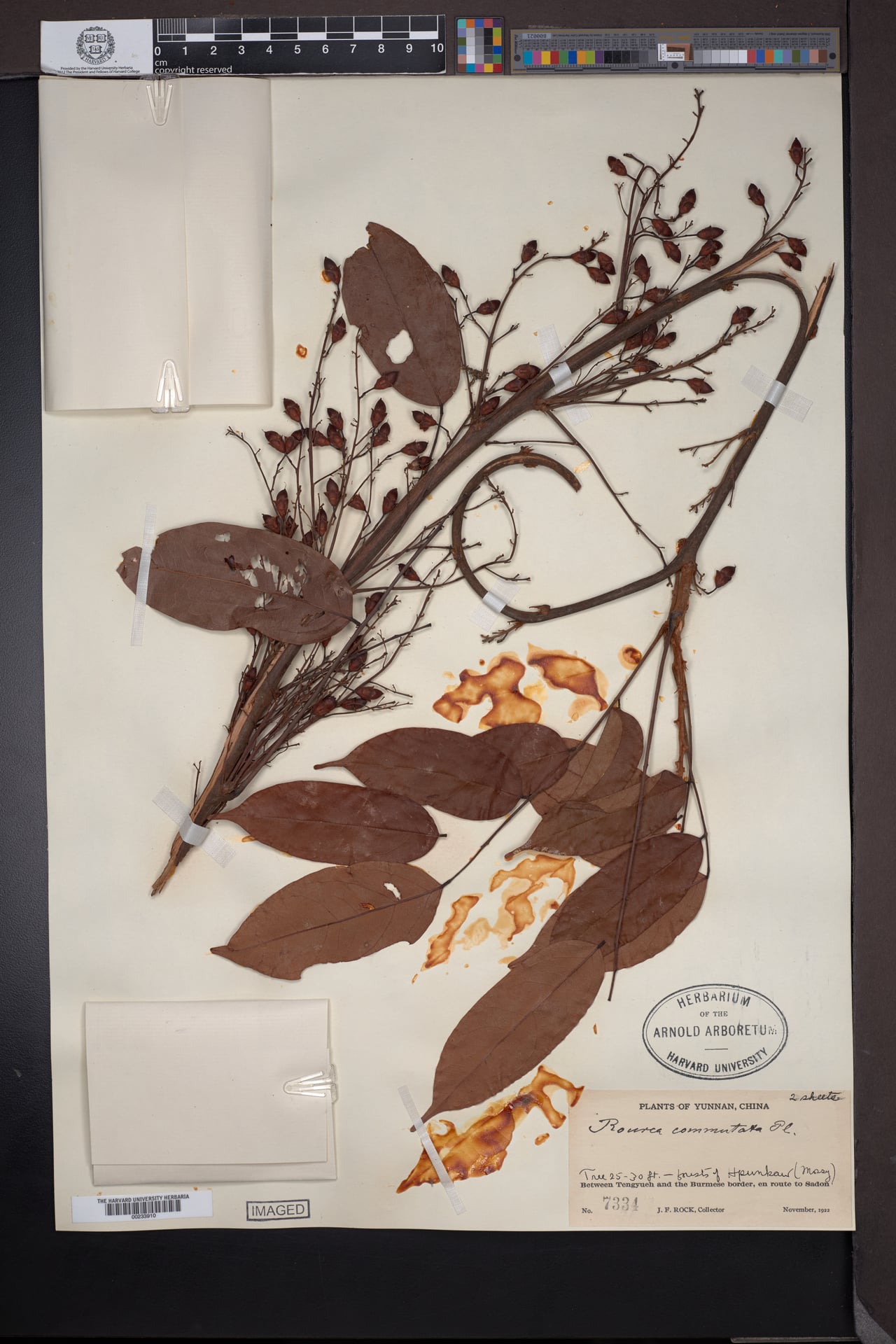
A tropical shrub or woody climber (Connaraceae) growing up to 8 m tall, found in forests, woodlands, and palm groves of tropical regions at elevations up to at least 1,060 m.
Edible Uses
The fruit is eaten.
Medicinal Uses
The tart, astringent fruit is chewed for oral hygiene. Extracts from the fruit have been found to have antimicrobial effects, especially against gram-positive bacteria.It is used in the Nigerian polyherbal mixture Aju Mbaise along with other plant species.
Known Hazards
Although widely used as a medicine and tooth cleaner in many parts of Africa, the fruits are considered toxic in Senegal.
Distribution
It is a tropical plant. It grows in forest and woodland. It can also be in palm groves. It has been recorded at 1,060 m above sea level in Nigeria.
Where It Grows
Africa, Angola, Benin, Central Africa, Central African Republic, CAR, Congo DR, Gabon, Guinea, Guinée, Guinea-Bissau, Nigeria, Sao Tome and Principe, Senegal, West Africa,
Other Uses
The bitter fruits are used to clean the teeth. The fruit contains a soft, juicy, somewhat bitter and acid pulp. This is widely used in many parts of Africa to rub on the teeth to clean and whiten them. It leaves a refreshing taste in the mouth. The bark yields a red dye which is used for dyeing clothing. The stems are used to make bows.
Synonyms
Also Known As
Barniate, Bdutubus, Bedito-ubule, Cupeleen, Dutubule, Godoakomoa, Kulenhimaba, Manterim-o, Manterinterim, N'jete-nambel, N'xetenhembele, Naporo, Ojo-di-onca, Peduto-ubusse, Talquibare, Talquidqga, Toen-toloe, Treventi-ito, Tulu-nereure, Utonque-ubusse, Utunque-ubule
References (5)
- Achigan-Dako, E, et al (Eds), 2009, Catalogue of Traditional Vegetables in Benin. International Foundation for Science.
- Bonou, A., et al, 2013, Valeur economique des Produits Forestiers Non Ligneux (PFNL) au Benin. Editions Universitaires Europeennes p 92
- Chapman, J. D. & Chapman, H. M., 2001, The Forest Flora of Taraba and Andamawa States, Nigeria. WWF & University of Canterbury. p 173
- Lautenschläger, T., et al, 2018, First large-scale ethnobotanical survey in the province of Uíge, northern Angola. Journal of Ethnobiology and Ethnomedicine (2018) 14:51
- World Checklist of Useful Plant Species 2020. Royal Botanic Gardens, Kew