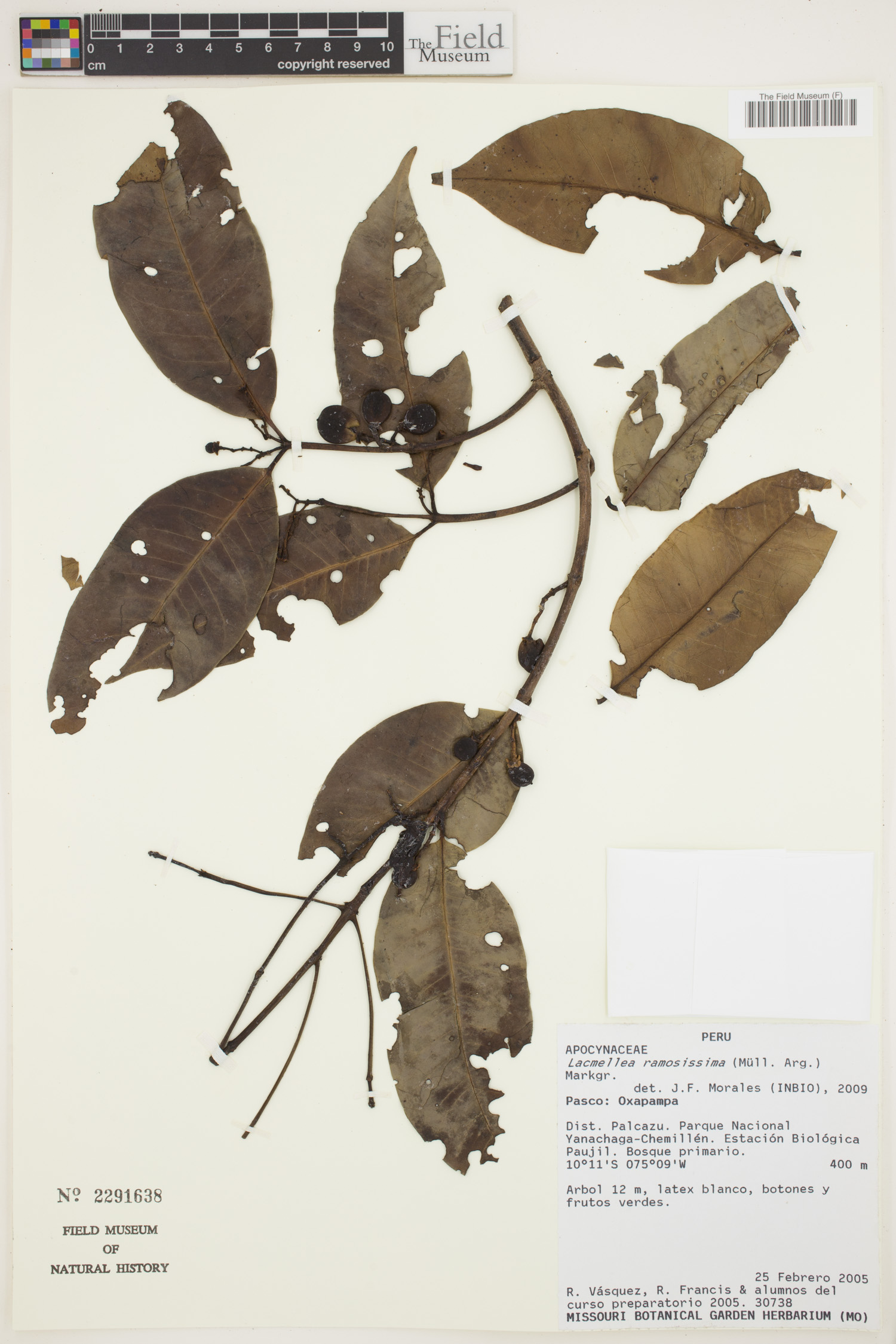
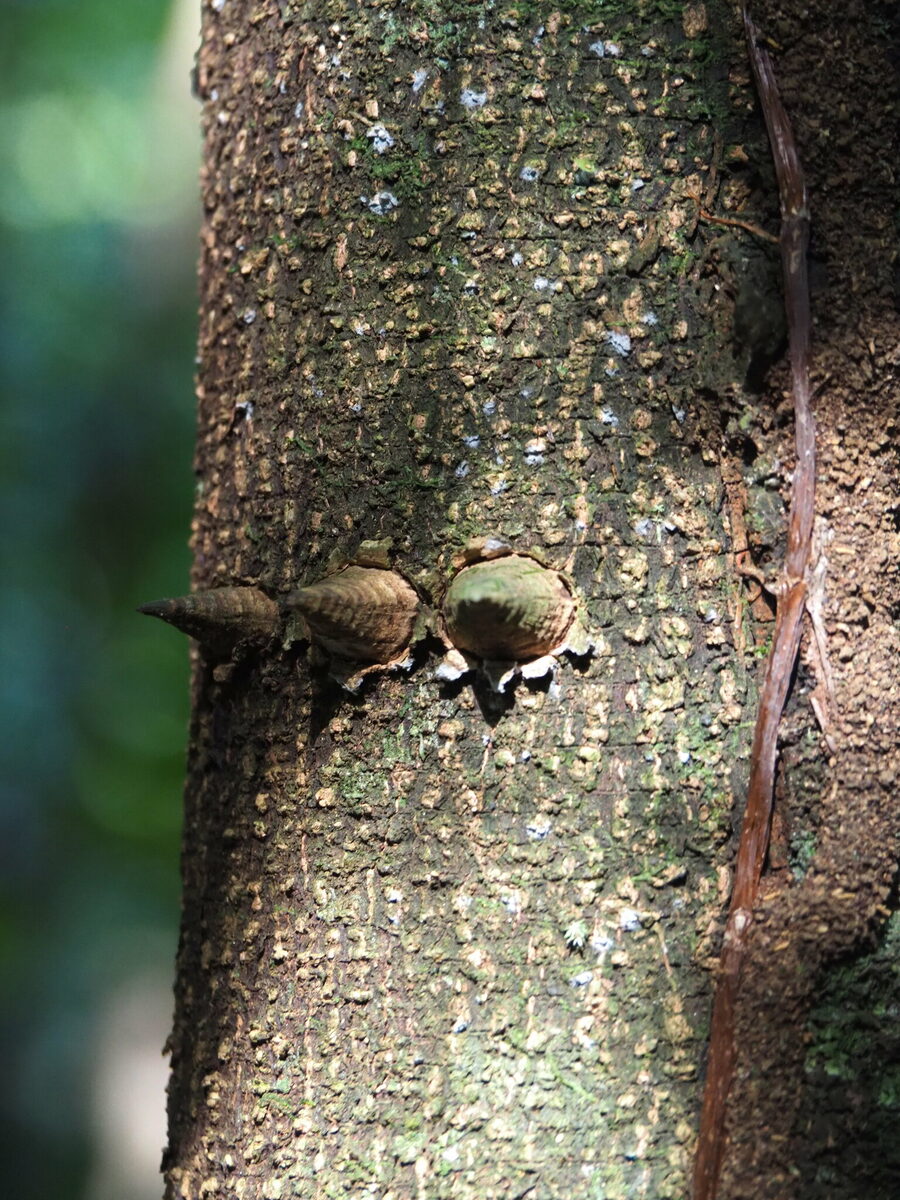
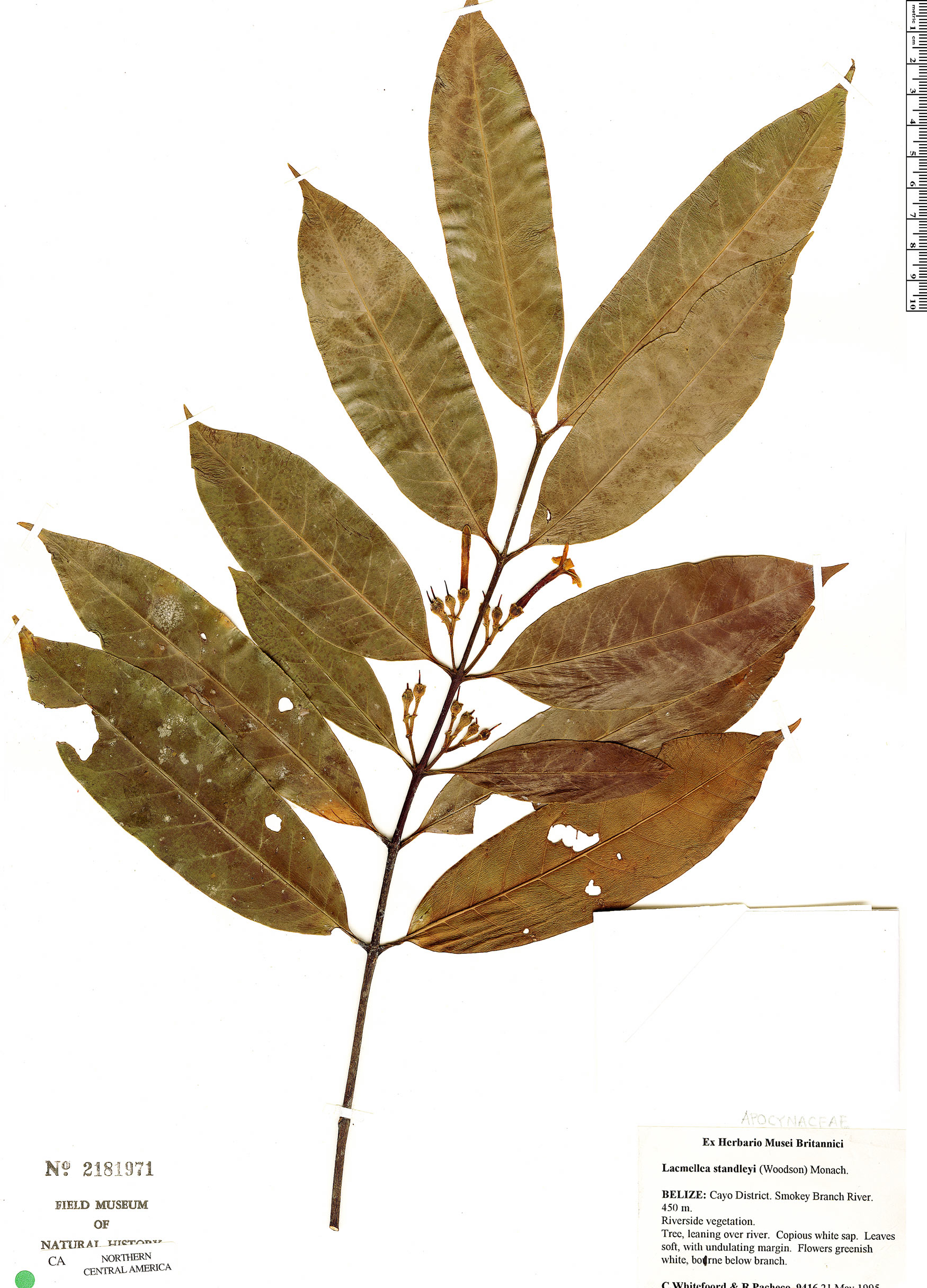
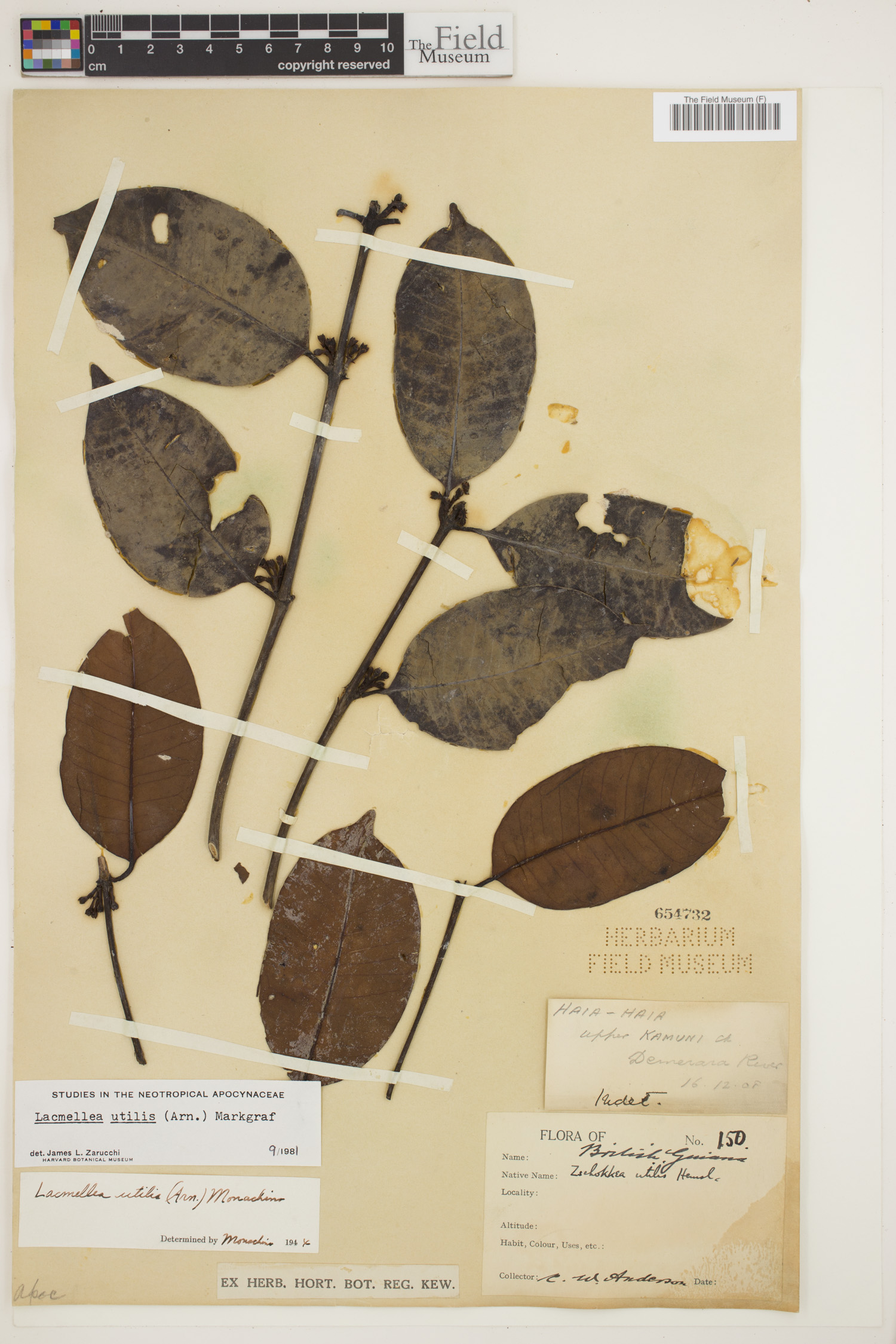
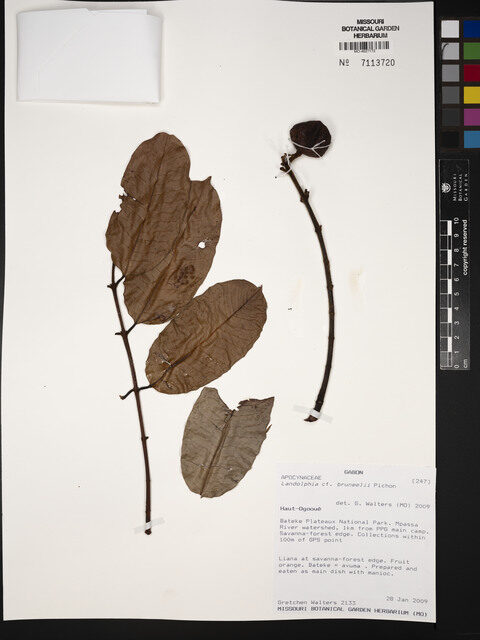
Lacmellea speciosa
Woodson
Showy lacmellea
Apocynaceae Edible: Fruit, Sap
gbif· cc-by-nc
D. M. Le : Field Museum of Natural History - Botany Department
Description
A tropical tree in the Apocynaceae family.
This description is brief — help expand it
Edible Uses
The fruit pulp is eaten. The sap is also edible.
Traditional Uses
The fruit pulp is eaten.
This uses section is brief — help expand it
Distribution
It is a tropical plant.
Where It Grows
Amazon, Andes, Central America, Colombia, Costa Rica, Ecuador, Panama, Peru, South America,
Also Known As
Arbol vaca, Copal, Perillo, Popa, Sande cupa, Sande negro, Wepemonkamo, Wepemonkawe
References (7)
- Grandtner, M. M. & Chevrette, J., 2013, Dictionary of Trees, Volume 2: South America: Nomenclature, Taxonomy and Ecology. Academic Press p 340
- Kermath, B. M., et al, 2014, Food Plants in the Americas: A survey of the domesticated, cultivated and wild plants used for Human food in North, Central and South America and the Caribbean. On line draft. p 467
- Kew Plants of the World onLine
- Lopez-Diago, D. & Garcia, N., 2021, Wild edible fruits of Colombia. Biota ColomBiana 22 (2) p 29
- Martin, F. W., et al, 1987, Perennial Edible Fruits of the Tropics. USDA Handbook 642 p 82 (As Lacmelia)
Show all 7 references Hide references
- Roa, J. A. G. & Boada, D. S. G., 2018, Fundación para el Fortalecimiento de la Fruticultura y Plantas Alimenticias no Convencionales en Colombia.
- Torre, de la L., et al, 2008, Enciclopedia de las Plantas Útiles del Ecuador. Herbario QCA. Pontificia Universidad Católica del Ecuador. p 173